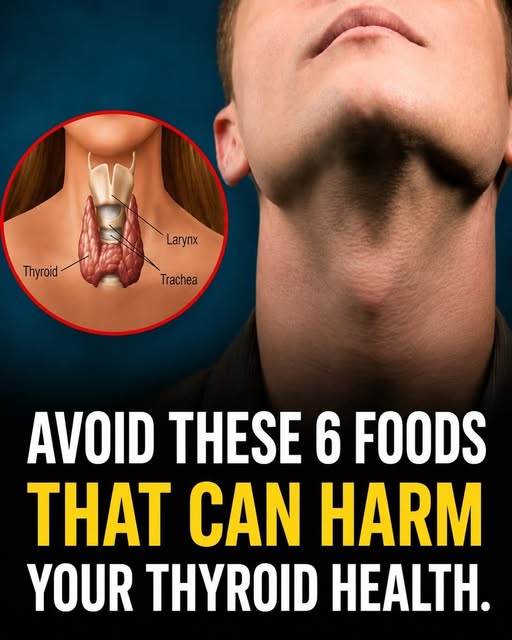
Have a thyroid condition? Learn which foods may interfere with thyroid medication, affect iodine intake, or make a thyroid-friendly diet harder to manage—and what to eat instead.
Your thyroid is a small, butterfly-shaped gland in your neck, but it has an enormous influence on your body. It helps regulate metabolism, body temperature, heart rate, energy production, and many other functions.
Because diet affects nutrient intake and medication absorption, people with thyroid disorders often wonder whether certain foods should be avoided completely.
The truth is more balanced than many viral health posts suggest.
There are no six ordinary foods that everyone with a thyroid condition must permanently eliminate. However, some foods and eating habits deserve attention—especially if you have hypothyroidism, Hashimoto’s disease, hyperthyroidism, or take thyroid hormone medication.
Here are six categories worth discussing.
1. Soy Foods Around the Time of Thyroid Medication
Soybeans, tofu, tempeh, soy milk, and other soy foods can be part of a healthy diet.
The concern is mainly about timing if you take levothyroxine or another thyroid hormone replacement.
Soy can interfere with the absorption of levothyroxine in some circumstances. This does not mean you need to eliminate soy completely.
Instead, consistency and proper medication timing are important.
Take your thyroid medication exactly as prescribed and ask your doctor or pharmacist how long you should wait before consuming soy or other potentially interfering foods.
2. High-Fiber Foods Taken Too Close to Thyroid Medicine
Fiber is essential for a healthy diet and is found in foods such as:
- Oats
- Beans
- Lentils
- Vegetables
- Fruits
- Whole grains
- Nuts and seeds
You should not avoid fiber simply because you have hypothyroidism.
However, very high fiber intake can affect the absorption of levothyroxine in some people.
The practical solution is usually to separate your medication from meals according to your healthcare professional’s instructions rather than eliminating nutritious high-fiber foods.
3. Cruciferous Vegetables in Extremely Large Amounts
Broccoli, cabbage, cauliflower, kale, Brussels sprouts, and similar vegetables are sometimes called “goitrogenic foods.”
That sounds alarming, but these vegetables are highly nutritious and generally do not need to be removed from a normal diet.
The concern is greater when someone consumes very large quantities of raw cruciferous vegetables, particularly when iodine intake is inadequate.
Cooking these vegetables reduces their goitrogenic activity.
For most people, enjoying reasonable portions of cooked broccoli, cabbage, cauliflower, or kale is perfectly compatible with a healthy diet.
4. Highly Processed Foods
Highly processed foods aren’t specifically “thyroid poisons,” but eating a diet dominated by them can make overall health and weight management more difficult.
Examples include:
- Sugary drinks
- Packaged sweets
- Chips
- Processed meats
- Refined snack foods
- Fast food
- Highly processed desserts
These foods can be high in calories, sodium, added sugars, and unhealthy fats while providing relatively few essential nutrients.
If you have hypothyroidism and are struggling with weight gain, replacing some highly processed foods with vegetables, fruits, whole grains, legumes, lean proteins, and healthy fats may be more helpful than searching for a single “thyroid cleansing” food.
5. Excessive Iodine
Iodine is essential because the thyroid uses it to produce thyroid hormones.
But more iodine is not necessarily better.
Very high iodine intake can cause thyroid problems in susceptible people, including people with certain autoimmune thyroid disorders.
Sources of iodine include:
- Iodized salt
- Seafood
- Dairy products
- Eggs
- Some supplements
The biggest problem can occur when people take iodine supplements or consume products marketed as “thyroid boosters” without medical guidance.
If you have Hashimoto’s disease or another thyroid disorder, don’t automatically assume an iodine supplement will improve your thyroid function.
Ask your healthcare professional whether you actually need additional iodine.
6. Coffee and Other Drinks Too Close to Thyroid Medication
You don’t necessarily have to give up coffee if you have hypothyroidism.
The issue is timing.
Coffee taken too soon after levothyroxine can interfere with its absorption in some people.
This is why many patients are advised to take levothyroxine with water on an empty stomach and wait before eating or drinking other beverages.
Follow the specific instructions provided with your medication because formulations and recommendations can differ.
What Should You Eat for Better Thyroid Health?
Instead of focusing entirely on foods to eliminate, build a balanced eating pattern.
Good choices can include:
Protein
Eggs, fish, chicken, beans, lentils, yogurt, and other protein-rich foods provide nutrients needed for overall health.
Fruits and Vegetables
A variety of colorful fruits and vegetables provides vitamins, minerals, fiber, and beneficial plant compounds.
Whole Grains
Oats, brown rice, whole-grain bread, and other whole grains can provide fiber and important nutrients.
Healthy Fats
Nuts, seeds, olive oil, and fatty fish can contribute healthy fats to the diet.
Selenium-Rich Foods
Selenium is involved in thyroid hormone metabolism.
Sources include seafood, eggs, meat, dairy products, and some nuts.
However, supplements are not automatically better. Excessive selenium can be harmful.
What If You Have Hashimoto’s Disease?
Hashimoto’s disease is an autoimmune condition in which the immune system attacks the thyroid.
There is no universally proven “Hashimoto’s diet” that cures the condition.
Some people notice that particular foods worsen digestive symptoms or make them feel unwell, but individual tolerance varies.
Gluten, dairy, soy, and other foods are frequently blamed online, but automatically eliminating all of them isn’t appropriate for everyone.
If you suspect a particular food is causing problems, discuss the symptoms with your healthcare professional or a registered dietitian rather than starting a highly restrictive diet.
The Most Important Rule If You Take Levothyroxine
For many people with hypothyroidism, how they take their medication can matter as much as what they eat.
Levothyroxine absorption can be affected by food and by certain supplements and medications.
Common examples that may interfere include calcium and iron supplements.
A consistent routine helps your healthcare professional interpret your thyroid blood tests accurately.
If your thyroid levels suddenly change despite taking your medication regularly, tell your doctor about any changes in diet, supplements, medications, or the timing of your thyroid pill.
Don’t Stop Your Thyroid Medication Because of a Food List
This is particularly important.
Foods generally aren’t a substitute for thyroid hormone replacement when your body does not produce enough thyroid hormone.
If you have been prescribed levothyroxine, don’t stop taking it because an internet article says that a particular food is “destroying your thyroid.”
Likewise, don’t begin iodine, selenium, or other thyroid supplements without discussing them with a healthcare professional.
Final Thoughts
The idea that your thyroid is “begging you to stop eating” six specific foods makes a catchy headline, but thyroid nutrition is more complicated than that.
Soy, high-fiber foods, cruciferous vegetables, processed foods, excessive iodine, and coffee can all deserve consideration in particular circumstances—but they are not universally forbidden foods.
For most people with thyroid disease, the goal should be a balanced, nutrient-rich diet, appropriate iodine intake, careful medication timing, and regular medical monitoring.
If you take thyroid medication, consistency is especially important. Before making major dietary changes, speak with your doctor or pharmacist so that your treatment and diet can work together rather than against each other.