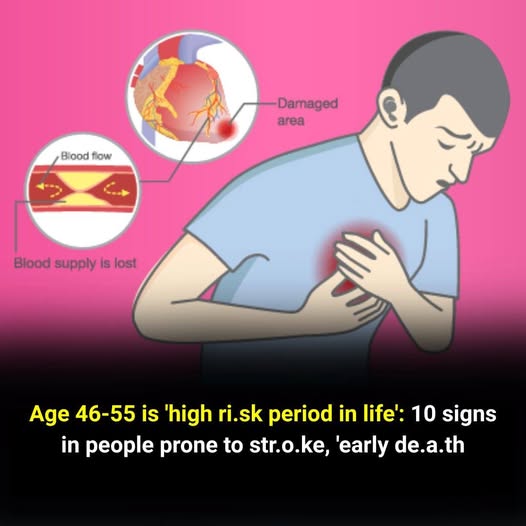
10 important warning signs and risk factors linked to stroke, including sudden weakness, vision changes, speech problems, high blood pressure, diabetes, and more. Know when emergency care is needed.
A stroke can happen suddenly, sometimes without much warning.
One moment a person may feel completely normal, and minutes later they may have trouble speaking, walking, seeing, or moving one side of the body.
That is why recognizing the warning signs matters so much.
A stroke occurs when blood flow to part of the brain becomes blocked or when a blood vessel in the brain ruptures. Without enough oxygen and nutrients, brain cells can become damaged very quickly. Stroke is a medical emergency, and rapid treatment can reduce the risk of serious brain injury and disability.
But there is an important distinction to understand:
Some things are warning signs that a stroke may already be happening, while others are risk factors that increase the likelihood of having a stroke in the future.
Here are 10 important things to watch for.
1. Sudden Weakness or Numbness on One Side
One of the classic warning signs of stroke is sudden weakness or numbness involving the face, arm, or leg—particularly on one side of the body.
For example, a person may suddenly notice that:
- One arm feels unusually weak.
- One side of the face feels numb.
- One leg becomes difficult to move.
- One side of the mouth begins to droop.
- An arm drifts downward when both arms are raised.
These symptoms can occur because the affected part of the brain is no longer receiving adequate blood flow.
Do not wait to see whether the weakness disappears.
Sudden one-sided weakness requires emergency evaluation.
2. Sudden Trouble Speaking or Understanding
Another important warning sign is a sudden change in speech or language.
Someone having a stroke may:
- Slur their words.
- Have difficulty finding the right words.
- Speak in a way that doesn’t make sense.
- Suddenly struggle to understand what others are saying.
- Be unable to repeat a simple sentence.
The change may be very obvious—or surprisingly subtle.
If someone’s speech suddenly becomes unusual, especially when combined with facial weakness or arm weakness, treat it as an emergency.
3. Sudden Vision Changes
Stroke can affect the parts of the brain involved in vision.
A person may suddenly experience:
- Blurred vision
- Double vision
- Loss of vision in one or both eyes
- Difficulty seeing normally
- A sudden visual disturbance accompanied by dizziness or weakness
Sudden vision changes should not automatically be blamed on tired eyes, aging, or a headache.
They can be a warning sign requiring urgent medical assessment.
4. Sudden Loss of Balance or Coordination
Have you ever suddenly felt as though the room was moving, your legs weren’t cooperating, or you couldn’t walk normally?
Sudden dizziness or loss of coordination can have many causes, but it can also occur during a stroke.
Watch particularly closely when sudden balance problems occur together with:
- Difficulty walking
- Weakness
- Vision changes
- Speech problems
- Severe headache
- Numbness
The CDC specifically lists sudden trouble walking, dizziness, loss of balance, and lack of coordination among stroke symptoms.
5. A Sudden, Severe Headache
A sudden severe headache with no known cause can also be a stroke warning sign, particularly in certain types of stroke.
It may feel dramatically different from a person’s usual headaches.
A severe headache becomes even more concerning when it occurs with:
- Vomiting
- Confusion
- Weakness
- Vision problems
- Loss of balance
- Difficulty speaking
A sudden, severe headache should not be dismissed simply because the person doesn’t have other classic stroke symptoms.
6. High Blood Pressure
Unlike the warning signs above, high blood pressure usually does not produce obvious symptoms.
That’s exactly why it can be dangerous.
High blood pressure is one of the most important controllable risk factors for stroke. Over time, uncontrolled hypertension can damage blood vessels and increase the risk of both blocked and ruptured blood vessels in the brain.
Regular blood-pressure checks can therefore be much more valuable than waiting for symptoms.
If you have been diagnosed with high blood pressure, taking prescribed medication and following your healthcare professional’s recommendations can help lower your stroke risk.
7. Diabetes or Persistently High Blood Sugar
Diabetes is another established stroke risk factor.
Over time, high blood sugar can contribute to blood-vessel damage and is often associated with other stroke risk factors, including high blood pressure and abnormal cholesterol levels.
Warning signs of diabetes can include increased thirst, frequent urination, fatigue, and unexplained weight changes, but diabetes may also exist without obvious symptoms.
That’s why appropriate screening and management are important, particularly for people with other risk factors.
8. Irregular Heart Rhythm
Certain heart conditions can increase stroke risk.
One important example is atrial fibrillation (AFib), an irregular heart rhythm that can allow blood clots to form in the heart. A clot can potentially travel to the brain and block blood flow.
Other heart conditions can also contribute to stroke risk. The CDC lists irregular heartbeat, heart-valve problems, and certain structural heart conditions among conditions that can increase stroke risk.
Symptoms of an abnormal heart rhythm can include:
- Racing heartbeat
- Fluttering or pounding in the chest
- Shortness of breath
- Dizziness
- Fatigue
Some people, however, have AFib without noticeable symptoms.
9. Smoking and Tobacco Use
Smoking doesn’t necessarily cause an immediate symptom that tells you a stroke is coming.
Instead, it increases the underlying risk.
Tobacco smoke can damage blood vessels, contribute to cardiovascular disease, and increase stroke risk. Nicotine can also raise blood pressure.
Quitting smoking is therefore one of the meaningful steps a person can take to reduce cardiovascular and stroke risk.
Secondhand smoke exposure can also contribute to cardiovascular risk.
10. A Previous TIA or “Mini-Stroke”
A transient ischemic attack, commonly called a TIA, can produce stroke-like symptoms that disappear after a short time.
Someone might suddenly experience:
- Facial drooping
- Arm weakness
- Numbness
- Difficulty speaking
- Vision changes
- Dizziness or balance problems
The symptoms may disappear, but that does not mean everything is fine.
A TIA is considered a warning stroke and requires urgent medical evaluation because it can signal a higher risk of a future stroke. The CDC emphasizes that there is no reliable way to determine at the beginning whether symptoms are from a TIA or a major stroke, so emergency care is necessary.
Remember B.E. F.A.S.T.
One of the easiest ways to remember the major warning signs is B.E. F.A.S.T.
B — Balance
Sudden loss of balance, dizziness, or difficulty walking.
E — Eyes
Sudden vision changes or loss of vision.
F — Face
One side of the face droops or becomes numb.
A — Arms
One arm becomes weak or numb, or one arm drifts downward.
S — Speech
Speech suddenly becomes slurred, strange, or difficult to understand.
T — Time
Time to call emergency medical services immediately.
The CDC and American Stroke Association both emphasize acting immediately when these symptoms appear.
What If the Symptoms Go Away?
This is extremely important.
Suppose someone suddenly develops weakness or difficulty speaking, but after 10 or 20 minutes they seem completely normal again.
It can be tempting to assume that the problem has passed.
Don’t.
Temporary stroke-like symptoms can occur during a TIA, which is a medical emergency and an important warning of possible future stroke.
Symptoms disappearing does not make them safe to ignore.
How Can You Lower Your Stroke Risk?
You cannot control every stroke risk factor. Age and family history, for example, cannot be changed.
But many important risk factors can be managed.
Helpful steps include:
- Check and control blood pressure.
- Manage diabetes if you have it.
- Know your cholesterol levels.
- Don’t smoke.
- Stay physically active.
- Maintain a healthy weight.
- Eat a balanced diet.
- Limit alcohol.
- Follow prescribed medications.
- Discuss irregular heart rhythms with your healthcare professional.
- Attend recommended medical checkups.
The CDC identifies high blood pressure, high cholesterol, diabetes, heart disease, obesity, tobacco use, physical inactivity, and excessive alcohol use among factors associated with increased stroke risk.
The Most Important Takeaway
There isn’t always a dramatic warning before a stroke.
Sometimes the first sign is sudden weakness. Sometimes it is difficulty speaking, a vision change, loss of balance, or a severe unexplained headache.
The key is suddenness.
If you or someone around you suddenly develops symptoms that could indicate a stroke, don’t wait for them to improve and don’t try to diagnose the cause at home.
Call your local emergency medical service immediately, note the time the symptoms began, and follow the emergency operator’s instructions.
Every minute matters when the brain’s blood supply is interrupted.