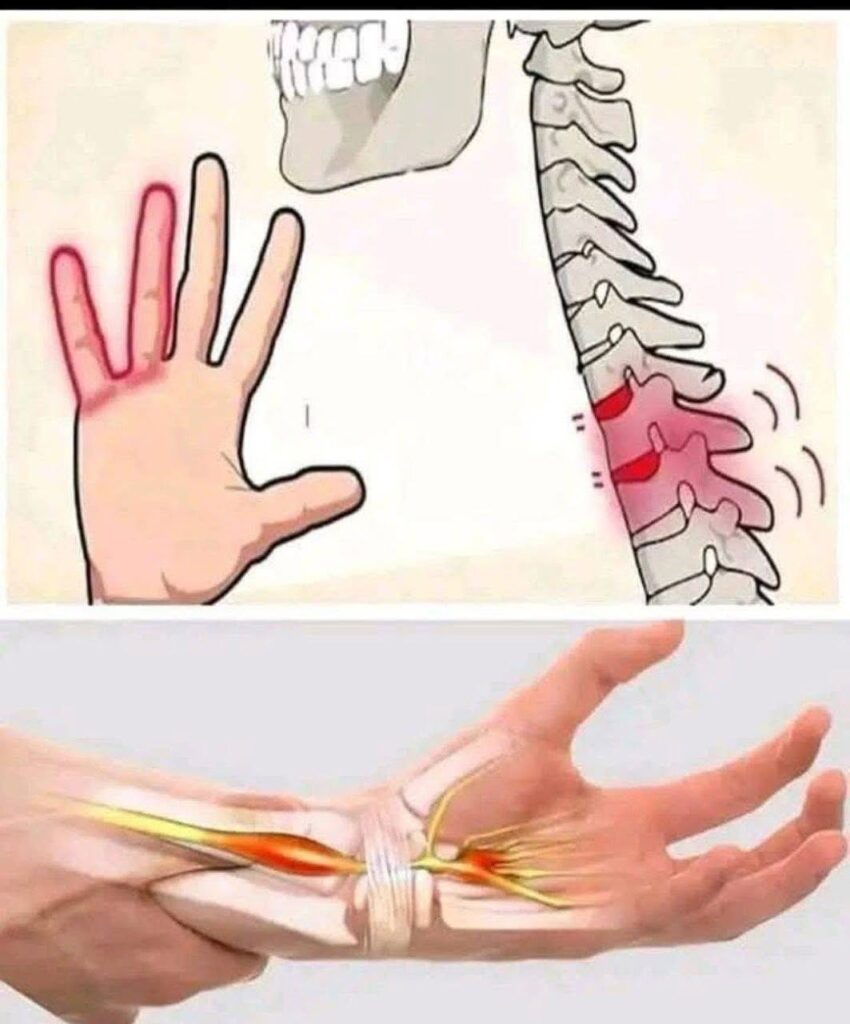
Have you ever woken up with your hand feeling numb, tingling, or “asleep”? While occasional pins and needles are usually harmless, frequent or persistent numbness can sometimes indicate a problem with a nerve.
The image you shared illustrates carpal tunnel syndrome (CTS), in which the median nerve is compressed at the wrist. However, having your hands fall asleep does not automatically mean you have carpal tunnel syndrome—and it certainly isn’t a clear sign of cancer.
What Is Carpal Tunnel Syndrome?
Carpal tunnel syndrome occurs when the median nerve becomes compressed as it passes through a narrow passageway in the wrist called the carpal tunnel.
The median nerve provides sensation to the:
- Thumb
- Index finger
- Middle finger
- Part of the ring finger
It also controls some muscles involved in thumb movement.
When the nerve is compressed, you may experience tingling, numbness, burning, or weakness, particularly in these fingers.
Common Symptoms
Carpal tunnel syndrome may cause:
- 🖐️ Numbness or tingling in the hand
- ⚡ “Pins and needles” sensations
- 🔥 Burning or aching in the wrist or hand
- 🌙 Symptoms that become worse at night
- 🤏 Difficulty gripping objects
- 💪 Weakness of the thumb or hand
- 📱 Symptoms after prolonged wrist bending or repetitive hand use
Some people wake up at night feeling as though they need to shake their hand to make the sensation go away.
Why Do Hands Fall Asleep?
Carpal tunnel syndrome is only one possible cause. Temporary numbness can happen simply because you’ve slept on your arm or kept your wrist in an awkward position.
Other possible causes include:
- A pinched nerve in the neck
- Pressure on a nerve at the elbow or wrist
- Diabetes-related nerve damage
- Vitamin deficiencies
- Certain medications
- Nerve disorders
- Reduced blood flow
- Other medical conditions
Therefore, the symptom alone isn’t enough to determine the cause.
What Can You Do About It?
If your symptoms are mild and resemble carpal tunnel syndrome, several measures may help.
1. Keep Your Wrist Straight
Try to avoid prolonged wrist bending, particularly while sleeping. A wrist splint that keeps the wrist in a neutral position at night may help some people with carpal tunnel symptoms.
2. Take Breaks
If your work involves typing, using tools, gaming, or repetitive hand movements, take regular breaks and avoid keeping your wrist in an uncomfortable position for long periods.
3. Reduce Activities That Trigger Symptoms
Pay attention to which activities make the tingling or numbness worse and modify your technique or take breaks when possible.
4. See a Doctor if It Persists
If numbness keeps returning, interferes with sleep, causes weakness, or doesn’t improve, a doctor can examine your hand and determine whether the median nerve is involved. In some cases, nerve-conduction testing or other investigations may be appropriate.
Treatment can range from wrist splinting and activity modification to medications, corticosteroid injections, or—when nerve compression is severe or persistent—carpal tunnel release surgery.
Is It a Sign of Cancer?
Usually, no.
Occasional hand numbness is not a clear sign of cancer. Social-media posts that claim “your hands falling asleep means you have cancer” are misleading.
The important thing is the pattern and accompanying symptoms. Persistent or progressively worsening numbness should be evaluated because there are many possible causes, most of which have nothing to do with cancer.
When Should You Seek Medical Attention?
Contact a healthcare professional if you have persistent or recurring numbness, particularly if you notice weakness, frequently drop objects, or have significant pain.
Seek urgent medical attention if numbness begins suddenly along with symptoms such as facial drooping, difficulty speaking, severe weakness, confusion, or other signs of a possible stroke.
Bottom Line
Hands falling asleep does not automatically mean you have cancer. The illustration you provided is showing carpal tunnel syndrome, a common condition caused by compression of the median nerve at the wrist. If your symptoms are frequent or getting worse, getting the underlying cause checked is much more useful than assuming it is a particular disease.