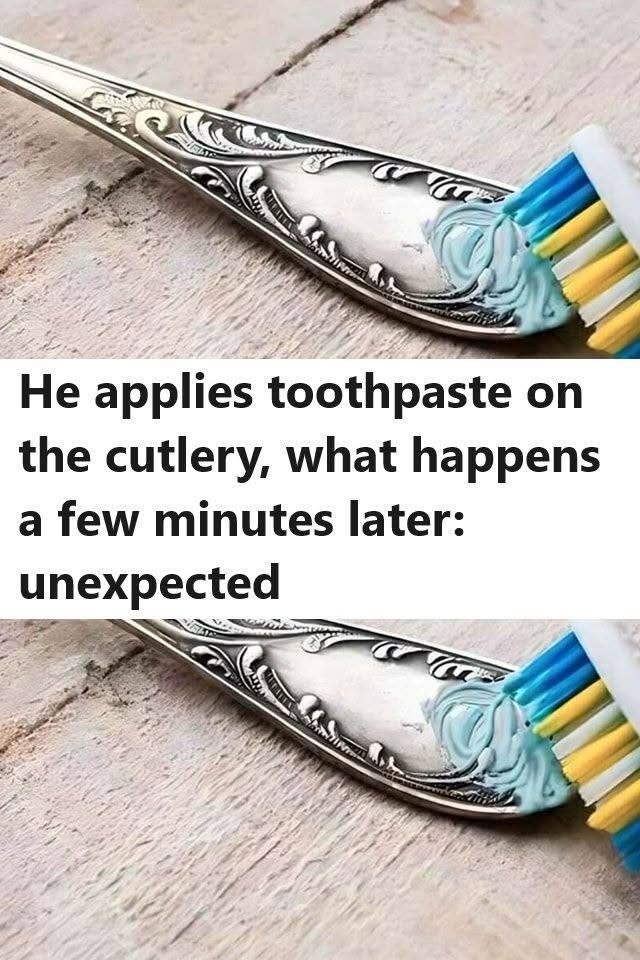
Discover how ordinary toothpaste can help polish dull cutlery and remove light stains, plus the right way to use this simple household cleaning trick.
Have you ever looked at your stainless-steel cutlery and noticed that it has lost its shine?
Forks, spoons, and knives can develop dull spots, water marks, light discoloration, and fingerprints over time. Before reaching for an expensive metal polish, there is a surprisingly simple household trick you can try: a small amount of plain toothpaste.
But there is an important detail—this works mainly as a light polishing method, not as a magical deep-cleaning solution.
Why Does Toothpaste Work?
Many ordinary toothpastes contain very mild abrasive ingredients. These particles can help loosen surface residue and gently polish some hard surfaces.
That’s why toothpaste is sometimes used for small household cleaning jobs.
For stainless-steel cutlery, it may help improve the appearance of:
- Light water spots
- Fingerprints
- Mild surface dullness
- Some superficial stains
- Small amounts of residue
The result can be a cleaner-looking and shinier surface.
How to Try the Toothpaste Trick
Step 1: Rinse the Cutlery
First, wash the spoon, fork, or knife with warm water and ordinary dish soap.
Remove grease and food residue before attempting to polish it.
Step 2: Apply a Small Amount
Put a small dab of plain, non-gel toothpaste onto a soft, damp cloth.
You don’t need much. A pea-sized amount is generally enough for one or several pieces of cutlery.
Step 3: Gently Rub
Rub the toothpaste over the surface using gentle circular motions.
Don’t press aggressively.
Spend extra time on areas with light water marks or visible dullness.
Step 4: Rinse Thoroughly
After a minute or two of gentle polishing, rinse the cutlery thoroughly under clean running water.
This step is important because you don’t want toothpaste residue remaining on utensils that will be used for eating.
Step 5: Dry and Buff
Use a clean, soft towel to dry the cutlery.
Then gently buff the surface until it looks clean and shiny.
That’s the unexpected part: a dull-looking spoon or fork may appear noticeably brighter after a few minutes of gentle polishing.
Important: Not All Cutlery Should Be Treated This Way
Before using toothpaste, check what your cutlery is made from.
Plain stainless steel is generally more suitable for this type of gentle polishing than delicate, coated, plated, or highly polished surfaces.
Avoid aggressive scrubbing, especially on:
- Silver-plated cutlery
- Gold-colored finishes
- Decorative coatings
- Antique pieces
- Soft metals
- Items with delicate patterns or finishes
Abrasive products can potentially scratch or damage delicate surfaces.
What About Tarnished Silver?
If you have genuine silver or silver-plated cutlery, toothpaste isn’t necessarily the best choice.
Silver can be delicate, and abrasive cleaning may cause unwanted surface wear over time.
For valuable or antique silverware, use a product specifically designed for silver or follow the manufacturer’s care instructions.
A Simple Alternative for Everyday Cleaning
For ordinary stainless-steel cutlery, you often don’t need toothpaste at all.
Warm water, dish soap, and a soft microfiber cloth are usually sufficient for routine cleaning.
For stubborn water spots, wiping the clean surface with a suitable diluted vinegar solution can sometimes help—but rinse thoroughly afterward and avoid mixing cleaning products.
Does Toothpaste Really “Restore” Cutlery?
Not exactly.
Toothpaste can polish the surface and improve its appearance, but it doesn’t restore damaged metal, remove deep scratches, or repair corrosion.
If the cutlery has severe rust, pitting, peeling, or permanent discoloration, a different cleaning or restoration method may be necessary.
The Bottom Line
The toothpaste trick isn’t magic, but it can be a handy little household hack for light polishing of suitable stainless-steel surfaces.
A tiny amount of plain toothpaste, a soft cloth, gentle rubbing, thorough rinsing, and careful drying may be enough to make dull cutlery look noticeably cleaner and brighter.
Just remember: test a small inconspicuous area first, avoid delicate finishes, and always rinse utensils thoroughly before using them for food.