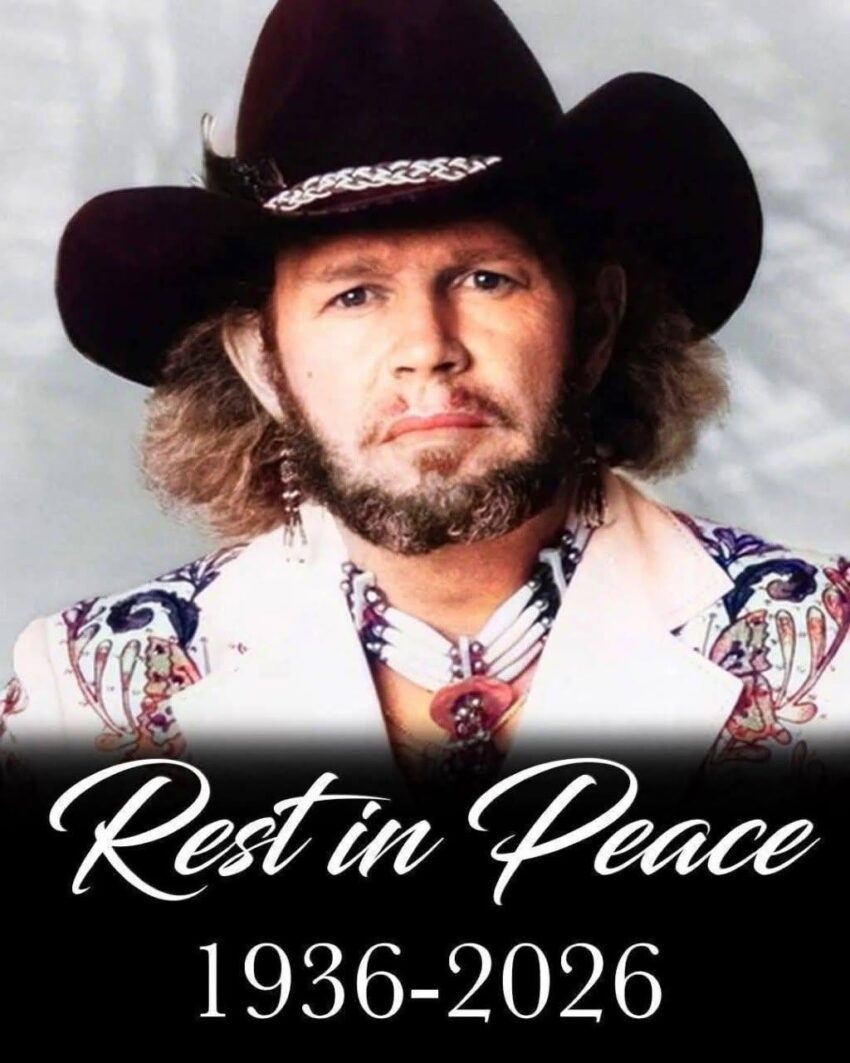
Country music legend David Allan Coe has died at 86. Explore the remarkable life, outlaw-country legacy, biggest songs, and lasting influence of the controversial singer-songwriter.
Country Music Legend David Allan Coe Dies at 86
The country music world has lost one of its most distinctive and controversial voices.
David Allan Coe, the legendary outlaw-country singer and songwriter, died on April 29, 2026, at the age of 86. His wife, Kimberly Hastings Coe, confirmed his death, while a representative said he died in intensive care at approximately 5 p.m. The exact cause of death was not initially disclosed.
For nearly six decades, Coe carved out a unique place in country music. He was never an ordinary Nashville star. Instead, he became known for his rebellious image, unconventional lifestyle, raw songwriting, and unmistakable personality.
A True Outlaw-Country Original
David Allan Coe was born on September 6, 1939, in Akron, Ohio. His early life was troubled, and he spent significant periods in correctional facilities.
After his release in the 1960s, he headed toward Nashville and began building a career that would eventually make him one of the defining figures of the outlaw-country movement.
His image was unlike that of the polished country stars of the era. Coe cultivated an outsider persona, eventually becoming known as “The Mysterious Rhinestone Cowboy.”
The Songs That Made Him Famous
Coe’s songwriting was a major part of his legacy.
Among his best-known songs was “You Never Even Called Me by My Name,” which became one of his signature recordings.
He also wrote “Take This Job and Shove It,” a working-class anthem that became a major hit for Johnny Paycheck in 1977. Coe also wrote “Would You Lay with Me (In a Field of Stone),” which became a hit for Tanya Tucker.
His recordings included songs such as “The Ride” and “Longhaired Redneck,” further establishing his reputation as one of country music’s most unconventional performers.
His Influence Extended Beyond His Own Records
One of the most important parts of Coe’s legacy is that he was not simply a performer.
He was also a prolific songwriter whose work was recorded by other successful artists.
His songwriting connected him with some of the biggest names in country music, while his own recordings developed a loyal following among fans of outlaw country.
He also became associated with artists including Willie Nelson, Neil Young, and Kid Rock, reflecting the wide range of musicians attracted to his unconventional style.
The Story Behind “Tennessee Whiskey”
Coe was also the first country singer to record “Tennessee Whiskey,” a song written by Dean Dillon and Linda Hargrove.
The song later became strongly associated with artists including George Jones and, decades later, Chris Stapleton, whose version introduced it to another enormous audience.
That connection is another example of how Coe’s musical history intersected with songs that continued to live on long after their original recordings.
A Career Filled With Controversy
David Allan Coe’s career was never without controversy.
Some of his later recordings contained extremely offensive and explicit material, and those works have been widely criticized for racist, homophobic, and sexually explicit content. These recordings remain a controversial part of his legacy.
That complicated history is important when remembering Coe. His influence on outlaw country was significant, but his career also included material and behavior that drew serious criticism.
His “Outlaw” Image Became Part of His Identity
Coe’s reputation as an outsider wasn’t simply a marketing label.
His early experiences, distinctive appearance, tattoos, long hair, and rebellious songwriting all contributed to the image that followed him throughout his career.
He became one of the recognizable faces of the outlaw-country movement, a musical style that pushed against the polished Nashville sound and embraced more independent, rebellious personalities.
A Legacy That Will Continue
David Allan Coe’s career stretched across almost six decades.
He released numerous albums, toured extensively, collaborated with musicians from different genres, and influenced the broader outlaw-country tradition.
His final studio album was released in 2006, and his music continued to attract a dedicated audience long after his biggest commercial years had passed.
For some listeners, he represented the rebellious spirit of country music. For others, his controversial material remains an unavoidable part of his story.
Either way, his impact on outlaw country is difficult to ignore.
Fans Remember a One-of-a-Kind Voice
Following his death, tributes have focused on Coe’s unusual career and unmistakable place in country music history.
His wife described him as her husband, friend, and confidant and said she would never forget him.
David Allan Coe was never an artist who fit neatly into a category.
He was a songwriter, performer, outsider, controversial figure, and one of the most recognizable personalities associated with outlaw country.
A Complicated but Lasting Legacy
David Allan Coe leaves behind a musical legacy that is both influential and complicated.
His songs helped define an era of country music, his songwriting influenced other performers, and his rebellious persona made him impossible to overlook.
At 86, the “Mysterious Rhinestone Cowboy” has taken his final bow.
His music—and the debates surrounding his remarkable career—will continue to be remembered by country music fans for years to come.