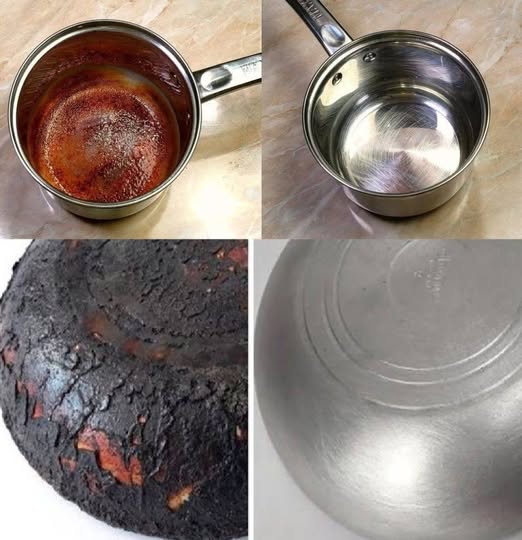
Discover a simple household ingredient that can help loosen stubborn burnt food from pots and pans. Learn an easy soaking method and tips for cleaning without damaging your cookware.
A burnt pot can look like it’s ready for the trash, especially when a thick layer of blackened food is stuck firmly to the bottom. But before you reach for an abrasive scrubber, there’s a much gentler trick worth trying.
The simple ingredient is baking soda.
Baking soda can help loosen baked-on food and make stubborn residue easier to remove. It won’t magically restore every badly damaged pan, but for many everyday burnt spots, it can make cleanup considerably easier.
What You’ll Need
- 2–3 tablespoons of baking soda
- Water
- A soft sponge or non-abrasive scrubber
- Dish soap
- A wooden or silicone spatula
How to Rescue a Burnt Pot
1. Let the Pot Cool
Never pour cold water into an extremely hot pot. Sudden temperature changes can damage some cookware.
Allow the pot to cool down first.
2. Remove Loose Food
Use a wooden or silicone spatula to gently lift away any pieces of food that come off easily.
Don’t aggressively scrape the surface, particularly if you’re cleaning nonstick cookware.
3. Add Baking Soda and Water
Sprinkle approximately 2–3 tablespoons of baking soda over the burnt area.
Add enough water to cover the stuck-on residue.
4. Simmer Gently
Place the pot on the stove and bring the mixture to a gentle simmer.
Let it simmer for around 10–15 minutes, keeping an eye on it. The heat and alkaline baking soda solution can help soften and loosen the burnt residue.
5. Turn Off the Heat and Let It Soak
Remove the pot from the heat and allow it to cool enough to handle safely.
For particularly stubborn residue, leave the solution sitting for several hours or overnight.
6. Gently Scrub
Pour away the loosened water and use a soft sponge or non-abrasive scrubber to clean the remaining residue.
Add a little dish soap if necessary.
You may need to repeat the process rather than trying to remove everything with force.
For Extremely Stubborn Burnt Food
If the first treatment doesn’t completely remove the blackened layer, repeat the baking-soda soak.
Patience is usually better than aggressive scrubbing. Several gentle cleaning sessions are less likely to damage cookware than one extremely abrasive session.
What You Should Avoid
Not every cleaning trick you see online is suitable for every pan.
Avoid Steel Wool on Nonstick Cookware
Steel wool and harsh abrasive pads can scratch nonstick surfaces and compromise the coating.
Don’t Use Knives to Scrape the Bottom
A knife can scratch the cooking surface and create permanent damage.
Be Careful With Aluminum
Strong alkaline cleaners can discolor or damage aluminum cookware. If the pot is aluminum, use a milder approach and check the manufacturer’s cleaning recommendations.
Don’t Mix Cleaning Chemicals
Never combine household cleaning products randomly. In particular, don’t mix bleach with acids such as vinegar or other cleaners because dangerous gases can form.
Can Baking Soda Remove Every Burn Mark?
Not necessarily.
Baking soda is useful for loose, baked-on food residue, but a pan with severely damaged enamel, burned-through coating, deep scratches, or permanent discoloration may not be completely restored.
If a nonstick coating is peeling, flaking, or badly damaged, cleaning it won’t repair the coating. The cookware may need to be replaced.
A Simple Prevention Trick
The easiest burnt-pot cleanup is the one you never have to do.
When cooking foods that can stick easily, keep the heat under control and avoid leaving the pan unattended. If something does burn, soak the cookware as soon as it has cooled to a safe temperature.
Don’t let the residue dry out for days.
Final Thoughts
A badly burnt pot doesn’t always need to be thrown away. Baking soda, warm water, gentle heat, and a little patience can help loosen stubborn burnt food and make the cleanup much easier.
The most important rule is to match the cleaning method to the cookware. Gentle treatment is especially important for nonstick, aluminum, enamel, and other delicate surfaces.