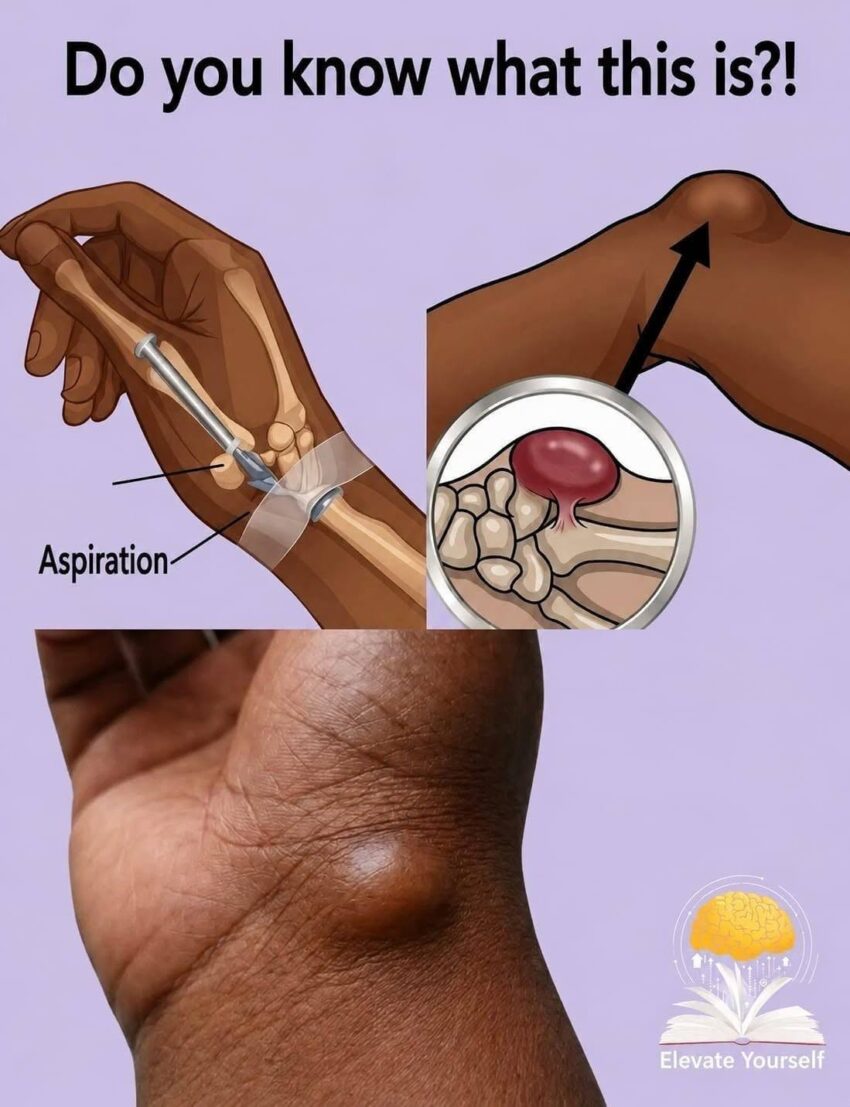
Found a lump on your wrist? Learn what may cause it, why you should avoid squeezing or popping it, which symptoms need medical attention, and when a wrist lump should be checked by a healthcare professional.
A small lump on your wrist can be surprisingly concerning. You may notice it while moving your hand, putting on a watch, or simply looking at your wrist one day. Some lumps are harmless and may disappear or remain unchanged for years, while others need to be evaluated by a healthcare professional.
One of the most important things to remember is this: don’t automatically squeeze, puncture, hit, or try to pop a wrist lump yourself. The appearance of a lump alone usually isn’t enough to determine exactly what it is.
Here are five things worth knowing before you touch or attempt to treat one.
1. A Wrist Lump May Have Several Different Causes
One of the most common causes of a lump around the wrist is a ganglion cyst. These are fluid-filled lumps that commonly develop near joints or tendons. They can vary in size and may become more noticeable when the wrist is being used.
However, a wrist lump isn’t automatically a ganglion cyst.
Other possibilities can include:
- A tendon or joint-related swelling
- Arthritis-related changes
- A lipoma or other benign soft-tissue growth
- A cyst caused by irritation or inflammation
- A previous injury or trauma
- Less commonly, other types of growths or masses
Because several conditions can look similar from the outside, trying to diagnose the lump by appearance alone isn’t reliable.
2. Don’t Try to Pop or Puncture It Yourself
A tempting reaction is to squeeze the lump or try to make it disappear by puncturing it. This is not a good idea.
If the lump is a cyst, puncturing it at home can introduce bacteria and potentially cause an infection. You could also injure nearby skin, blood vessels, tendons, or nerves.
Hitting a lump with a heavy object—an old home remedy sometimes suggested for ganglion cysts—is also risky. Even if the lump temporarily becomes smaller, the underlying problem may remain, and the impact can cause unnecessary injury.
A lump that looks harmless isn’t necessarily safe to manipulate.
3. Pay Attention to Pain, Movement, and Numbness
A lump that isn’t painful and hasn’t changed may be less concerning than one that is rapidly changing or causing symptoms, but symptoms matter.
Take note of whether you experience:
- Persistent or increasing pain
- Tenderness when touching the area
- Difficulty moving your wrist or fingers
- Weakness in your hand
- Tingling or numbness
- A feeling of pressure
- Redness or warmth around the lump
- Rapid changes in size
A cyst or other mass can sometimes put pressure on nearby structures. If you develop numbness, weakness, or significant difficulty moving your hand, it is especially important to have the area assessed.
4. The Location and Behavior of the Lump Can Provide Clues
Where the lump appears and how it behaves can give a healthcare professional useful information.
For example, some ganglion cysts occur on the back of the wrist, while others develop on the palm side. Some become more prominent with certain wrist movements, while others remain relatively constant.
A healthcare professional may examine the lump, check your wrist and hand movement, and ask whether you’ve had an injury or whether the lump has changed over time.
Depending on the findings, an imaging test such as an ultrasound or another examination may sometimes be recommended.
The important point is that you don’t need to figure out the diagnosis yourself before seeking help.
5. Know When a Wrist Lump Should Be Checked
Many wrist lumps are not emergencies, but certain changes shouldn’t be ignored.
Arrange a medical evaluation if the lump:
- Continues growing
- Becomes increasingly painful
- Interferes with normal hand or wrist movement
- Causes numbness, tingling, or weakness
- Appears after an injury and doesn’t improve
- Becomes red, hot, or significantly swollen
- Is accompanied by fever or other signs of infection
- Has an unusual appearance or feels firmly fixed
Seek prompt medical attention if you have severe pain, significant swelling after an injury, loss of sensation, or difficulty using your hand.
What Should You Do If You Already Have a Wrist Lump?
Start by leaving it alone rather than repeatedly pressing or squeezing it.
You can keep track of its size, location, and symptoms. If it isn’t going away, keeps returning, becomes painful, or interferes with everyday activities, make an appointment with a healthcare professional.
If it turns out to be a ganglion cyst, treatment isn’t always necessary. Depending on the symptoms and location, a healthcare professional may recommend observation, activity modification, aspiration, or another treatment.
The Bottom Line
A lump on your wrist isn’t necessarily something dangerous, but it also isn’t something you should try to diagnose or remove at home.
Don’t pop it, puncture it, or hit it. Instead, pay attention to changes in size, pain, movement, sensation, redness, and other symptoms. When you’re unsure about a new or changing lump, getting it examined is the safest way to find out what you’re dealing with.