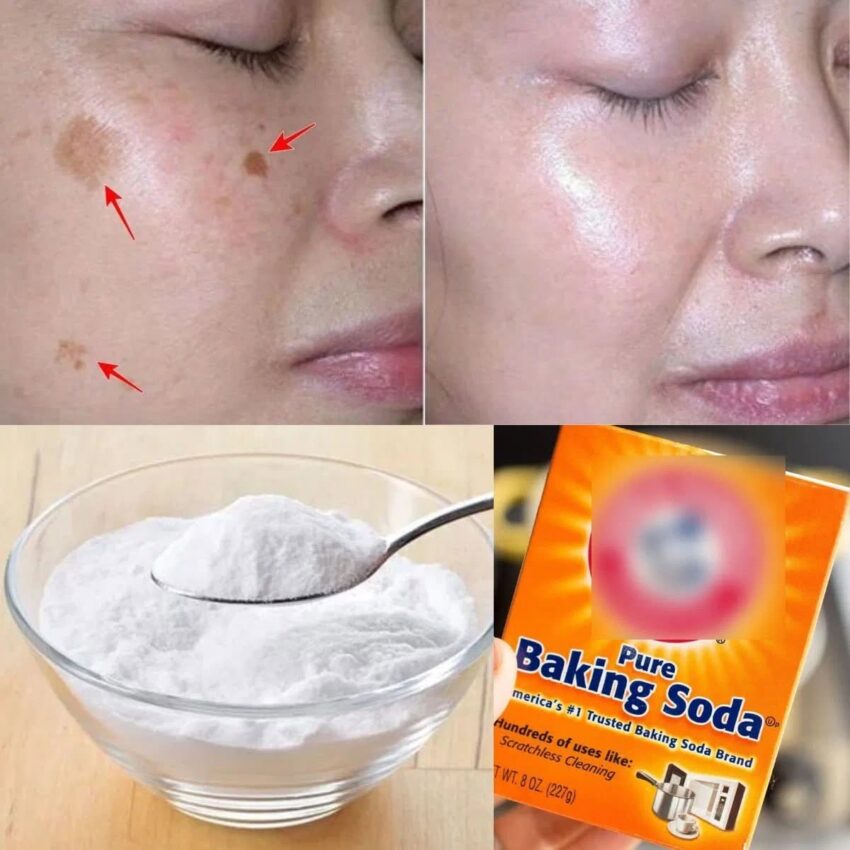
Baking soda may have mild cleansing and abrasive properties, but it isn’t a proven treatment for age spots. In fact, applying it directly to the skin can sometimes cause irritation, dryness, or damage—especially if it’s rubbed aggressively or used repeatedly.
Before trying a kitchen remedy, it’s worth understanding what age spots actually are and what approaches have better evidence behind them.
What Are Age Spots?
Age spots are commonly called solar lentigines or liver spots.
They are usually flat areas of increased pigmentation that develop after years of exposure to ultraviolet (UV) radiation.
Despite the name, they aren’t caused simply by getting older.
Sun exposure is a major factor.
That’s why age spots commonly appear on parts of the body that spend a lot of time exposed to sunlight.
They can vary in color from light tan to brown or darker brown and may range from small spots to larger patches.
Why Do Age Spots Develop?
Your skin contains cells called melanocytes, which produce melanin—the pigment responsible for much of your skin’s color.
Repeated UV exposure can stimulate pigment production and contribute to changes in the skin over time.
As years of sun exposure accumulate, areas of increased pigmentation may become more noticeable.
This is one reason prevention is so important.
Even if you successfully lighten an existing dark spot, continued UV exposure can encourage new pigmentation to develop.
So, Can Baking Soda Remove Age Spots?
There is no good clinical evidence that baking soda can safely erase age spots.
Baking soda is sodium bicarbonate, a mildly alkaline compound. Because it can act as a gentle abrasive, some people believe that rubbing it on the skin can remove dead skin cells and make darker areas appear lighter.
But there’s a major difference between temporarily changing the surface feel of your skin and actually treating the pigment responsible for an age spot.
Scrubbing doesn’t remove the underlying cause of solar lentigines.
Why Baking Soda Can Irritate Your Skin
Your skin has a natural protective barrier.
Using harsh or abrasive substances can interfere with that barrier.
Repeatedly applying baking soda—particularly when combined with vigorous scrubbing—may lead to:
- Dryness
- Redness
- Burning or stinging
- Irritation
- Increased sensitivity
- Skin-barrier disruption
Irritation can also make pigmentation problems appear worse in some people.
So a remedy intended to fade a dark spot could potentially leave the skin more irritated and uneven.
What About Baking Soda and Lemon Juice?
This combination is frequently promoted online as a natural skin-lightening treatment.
It’s a particularly questionable approach.
Lemon juice is acidic and can irritate the skin. Citrus compounds can also make skin more sensitive to sunlight in certain circumstances.
Combining lemon juice with baking soda doesn’t turn either ingredient into a medically proven age-spot treatment.
If your goal is to improve pigmentation, there are much safer and better-studied approaches.
What Actually Helps With Age Spots?
The best treatment depends on the individual spot, your skin type, and whether the diagnosis has been confirmed.
A dermatologist may recommend different approaches, including certain topical treatments or procedures.
Sunscreen
Sun protection is one of the most important steps.
A broad-spectrum sunscreen with an appropriate SPF can help protect your skin from further UV damage and reduce the likelihood of additional pigmentation developing.
Consistent sun protection is also important when you’re using products or treatments intended to improve existing pigmentation.
Topical Ingredients
Some topical ingredients may help improve uneven pigmentation over time.
Depending on your skin and the diagnosis, a dermatologist may recommend ingredients such as retinoids or other pigment-targeting treatments.
Not every product is appropriate for every person, however.
Some treatments can cause irritation, particularly if used too frequently or combined with other active ingredients.
Professional Treatments
Dermatologists can also use procedures to treat certain solar lentigines.
Depending on the situation, options may include:
- Laser or light-based treatments
- Cryotherapy
- Chemical peels
- Other dermatological procedures
These treatments should be performed or recommended by qualified professionals because pigmentation problems can have different causes, and treatment needs to be tailored to the skin.
Don’t Assume Every Dark Spot Is an Age Spot
This is one of the most important reasons not to aggressively treat an unexplained dark spot at home.
Many harmless skin marks can resemble one another.
But some skin cancers can also appear as pigmented spots.
A dermatologist should evaluate a spot that is new, changing, unusually dark, irregular, bleeding, itching, painful, or otherwise different from your other marks.
A particularly useful rule is to pay attention to change.
If a spot is changing in size, shape, color, or appearance, don’t assume it’s simply an age spot.
Signs That a Spot Should Be Checked
Make an appointment with a dermatologist or healthcare professional if a pigmented spot:
- Is new or rapidly changing
- Has an irregular or uneven border
- Contains several different colors
- Becomes much darker
- Starts bleeding or crusting
- Itches or hurts persistently
- Looks noticeably different from your other spots
It’s much safer to have a questionable spot evaluated than to repeatedly apply home remedies to it.
How to Prevent More Age Spots
If you’re concerned about pigmentation, prevention is just as important as treatment.
Protect Your Skin From the Sun
Use broad-spectrum sunscreen and reapply it as directed, especially when spending extended time outdoors.
Seek Shade
Whenever possible, avoid prolonged direct sunlight, particularly during periods of strong UV exposure.
Wear Protective Clothing
A wide-brimmed hat, sunglasses, and clothing that covers exposed skin can provide additional protection.
Avoid Indoor Tanning
Artificial UV exposure can contribute to skin damage and pigmentation as well.
What About Natural Remedies?
The word “natural” doesn’t automatically mean “safe.”
Skin can react to household ingredients, essential oils, acids, scrubs, and other DIY treatments.
Your skin is a living protective organ, not a kitchen surface that needs to be scrubbed clean.
If a remedy causes burning, significant redness, swelling, blistering, or persistent irritation, stop using it and seek medical advice if symptoms are severe or don’t improve.
A Better Approach to Uneven Skin Tone
If your goal is smoother, more even-looking skin, focus on a consistent routine rather than a quick fix.
A basic approach can include:
Morning
- Gentle cleanser
- Moisturizer
- Broad-spectrum sunscreen
Evening
- Gentle cleanser
- Appropriate treatment recommended for your skin
- Moisturizer
Consistency matters more than using an aggressive DIY treatment once or twice.
And if pigmentation is persistent or bothersome, a dermatologist can help determine what you’re actually dealing with and which treatment is appropriate.
The Bottom Line
Baking soda may be inexpensive and readily available, but there’s no strong evidence that it can erase age spots.
Using it as a scrub may actually irritate the skin and potentially make pigmentation look worse.
If you want to reduce the appearance of age spots, a better strategy is to protect your skin from UV exposure, use evidence-based skincare, and seek professional advice when necessary.
Most importantly, don’t try to treat a suspicious or changing dark spot at home.
Flawless skin isn’t the goal. Healthy, protected skin is.