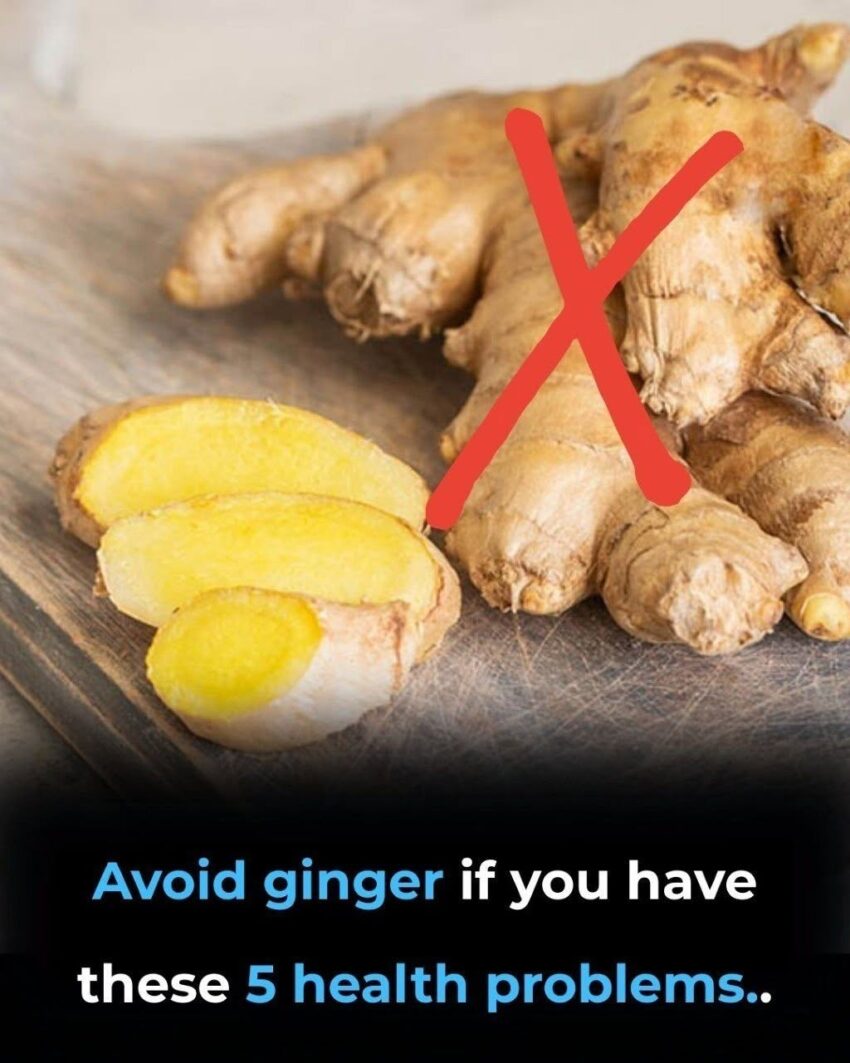
Ginger may offer health benefits, but consuming large amounts or concentrated ginger supplements can cause heartburn, stomach upset and medication interactions. Learn what doctors want you to know.
Ginger has been used in cooking and traditional medicine for centuries. It is often added to tea, meals, smoothies and homemade remedies, and many people use it because of its reputation for supporting digestion and easing nausea.
But there is an important side to the story that is often overlooked.
More ginger is not necessarily better.
While ordinary amounts of ginger used as a food are generally considered safe, consuming large quantities or taking concentrated ginger supplements can cause unwanted effects in some people. Ginger can also interact with certain medicines.
So before turning ginger into a daily high-dose remedy, it is worth understanding what it can actually do inside the body.
1. Ginger May Trigger Heartburn
One of the most common problems associated with taking ginger orally is heartburn.
Ginger can affect the digestive system, and some people may experience burning or discomfort after consuming larger amounts.
The National Center for Complementary and Integrative Health lists abdominal discomfort, heartburn, diarrhea and irritation of the mouth or throat among possible side effects.
This can be especially unpleasant for people who already experience acid reflux or frequent heartburn.
If you notice that ginger tea, ginger shots or concentrated ginger preparations consistently make your burning sensation worse, reducing the amount may be sensible.
2. Too Much Ginger Can Upset Your Stomach
Ginger is often promoted as something that “helps digestion,” but that doesn’t mean unlimited amounts will be beneficial.
Large amounts can cause digestive discomfort.
Possible symptoms include:
- Stomach discomfort
- Heartburn
- Diarrhea
- Mouth irritation
- Throat irritation
The risk may be greater with concentrated preparations than with the small quantities normally used as a cooking spice.
In other words, adding a little ginger to food is very different from consuming several strong ginger shots or large doses of ginger supplements every day.
3. Ginger May Affect Blood Clotting
This is one of the most important precautions.
Ginger contains compounds that may affect platelet aggregation, meaning they can potentially influence the way blood clots.
Memorial Sloan Kettering notes that high doses of fresh ginger may have blood-thinning effects and warns about possible interactions with anticoagulant and antiplatelet medicines.
This doesn’t mean that everyone who eats ginger is suddenly at risk of dangerous bleeding.
The concern is greater with high-dose ginger supplements or concentrated preparations, particularly when combined with medications that already affect clotting.
4. Be Careful If You Take Blood Thinners
People taking medications such as warfarin or other blood-thinning medicines should not start high-dose ginger supplements without discussing them with their healthcare professional.
Some evidence suggests ginger may increase bleeding risk when combined with anticoagulants or antiplatelet drugs, although the overall clinical evidence is not completely conclusive.
Possible warning signs of abnormal bleeding include:
- Unusual bruising
- Frequent nosebleeds
- Bleeding gums
- Blood in urine
- Black or bloody stools
- Bleeding that doesn’t stop normally
Anyone experiencing unexplained or significant bleeding should seek medical attention rather than assuming ginger is the only possible cause.
5. Ginger May Interact With Some Medicines
“Natural” doesn’t automatically mean “interaction-free.”
Ginger supplements may interact with certain medications.
Potential concerns include medicines that affect:
- Blood clotting
- Blood sugar
- Blood pressure
- Immune-system activity
For example, ginger may have an additive blood-glucose-lowering effect when used with insulin or certain diabetes medicines.
That’s why people taking regular prescription medication should tell their doctor or pharmacist about herbal supplements they use.
6. It May Lower Blood Sugar
Ginger has been studied for possible effects on blood glucose.
This can potentially become important for people taking medication to lower blood sugar.
If ginger supplements are combined with diabetes medication, blood glucose could potentially fall more than expected. The clinical importance of this interaction is still uncertain, so people taking glucose-lowering medicines should discuss concentrated ginger products with their healthcare provider.
This is very different from saying that ginger “causes diabetes” or that everyone should avoid it.
The issue is mainly dose, individual circumstances and medication interactions.
7. It May Affect People With Gallstones
People with gallstones should be particularly cautious with concentrated ginger supplements.
Memorial Sloan Kettering notes that ginger may increase bile flow, which is one reason it recommends avoiding ginger supplements in people with gallstones.
If you have known gallstones and are considering a concentrated ginger supplement, ask your healthcare professional first.
8. Ginger Isn’t Automatically Better Because It’s Natural
This is perhaps the most important lesson.
Ginger is a food and spice, but ginger supplements can contain much more concentrated amounts.
A person might use a small piece of ginger in cooking without experiencing any problem, while another person may consume several concentrated ginger products every day.
The form matters.
There is a major difference between:
A small amount of fresh ginger in food
and
high-dose ginger capsules, extracts or concentrated shots.
Many supplement-related concerns are more relevant to concentrated products than to normal culinary use.
But Ginger Also Has Potential Benefits
It would be misleading to present ginger as simply dangerous.
Research has found evidence that ginger may help with certain types of nausea and vomiting, and studies have also investigated its possible effects on menstrual cramps and osteoarthritis symptoms.
Ginger is therefore not something most people need to fear.
The better message is:
Use it appropriately rather than assuming that more is always better.
Ginger Tea vs. Ginger Supplements
These shouldn’t automatically be treated as identical.
A cup of tea containing a modest amount of ginger may contain far less concentrated ginger than a supplement or ginger extract.
If you enjoy ginger tea, you may not need to eliminate it simply because you have read about possible side effects.
However, if you’re consuming very strong preparations multiple times a day, it is worth reconsidering the amount—particularly if you’re experiencing heartburn, stomach upset or other symptoms.
Who Should Be Especially Careful?
Talk to a healthcare professional before using high-dose ginger supplements if you:
- Take blood-thinning medication
- Take medication for diabetes
- Have a bleeding disorder
- Have gallstones
- Are preparing for surgery
- Take multiple prescription medications
- Are considering concentrated herbal supplements
People scheduled for surgery should be particularly cautious because of the potential effect of concentrated ginger products on bleeding. Memorial Sloan Kettering recommends stopping ginger supplements before surgery.
What About Ginger During Pregnancy?
Ginger has been studied for nausea and vomiting associated with pregnancy, and the NCCIH says research suggests it may be helpful for this purpose.
However, pregnancy is a situation where you should avoid experimenting with high-dose supplements on your own.
If you’re pregnant and considering ginger supplements rather than ordinary food amounts, discuss the product and dose with your obstetrician or healthcare provider.
How Much Ginger Is Too Much?
There isn’t one universal amount that is appropriate for every person.
Tolerance can vary depending on:
- The form of ginger
- The concentration
- How frequently it is consumed
- Other foods and supplements
- Prescription medications
- Existing medical conditions
For this reason, simply seeing a number online and assuming it is safe for everyone isn’t a good approach.
If you are using ginger as a supplement rather than as a normal food ingredient, follow the product instructions and discuss regular use with a healthcare professional when you take medications or have an underlying condition.
The Bottom Line
Ginger is not a “poison” and it isn’t something that healthy people automatically need to avoid.
It can be a useful culinary ingredient and may have benefits for certain symptoms, particularly nausea.
But large amounts and concentrated ginger supplements can cause problems, including heartburn, stomach discomfort and diarrhea. Ginger may also interact with blood-thinning and blood-sugar-lowering medicines.
The safest takeaway is simple:
A little ginger in your food is very different from taking large doses of ginger supplements every day.
If you take prescription medication, have a bleeding disorder, gallstones, diabetes, or an upcoming surgery, speak with your healthcare professional before starting concentrated ginger products.
Natural remedies can be useful—but natural does not automatically mean risk-free.