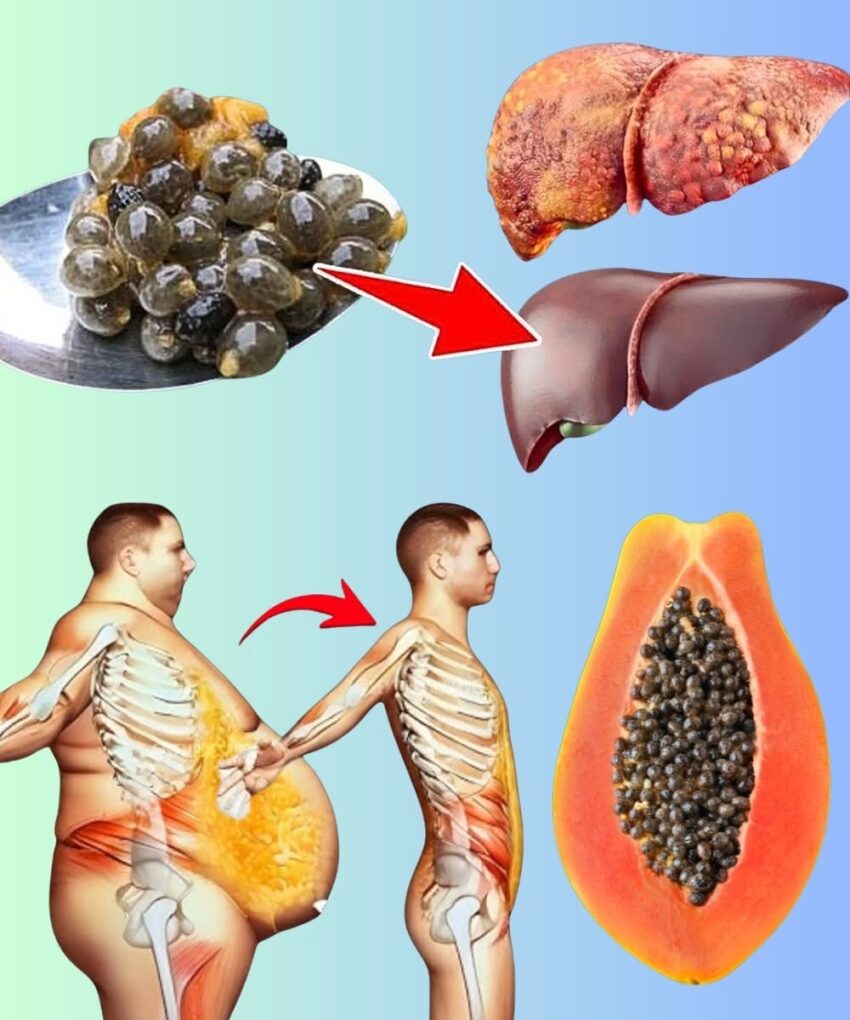
Most people eat the sweet orange flesh of papaya and throw the seeds away. But papaya seeds contain a variety of plant compounds that have attracted scientific interest.
They have a peppery, slightly bitter flavor and are sometimes dried, ground and used in small quantities as a seasoning. Traditional medicine has also used papaya seeds for different purposes.
However, there is an important distinction between traditional use and scientifically proven treatment. Many of the impressive claims circulating online about papaya seeds have not been confirmed by high-quality human clinical trials.
Here are 17 potential benefits and what we actually know about them.
1. They Contain Antioxidant Compounds
Papaya seeds contain phenolic compounds, flavonoids and other substances with antioxidant activity.
Antioxidants help protect cells from oxidative stress. However, laboratory antioxidant activity does not automatically mean that eating papaya seeds prevents a particular disease.
2. They May Support Digestive Health
Papaya seeds have traditionally been consumed for digestive purposes.
Their fiber and plant compounds may contribute to digestive function, but strong human evidence supporting papaya seeds as a treatment for constipation, indigestion or other digestive disorders is limited.
For everyday digestive health, fruits, vegetables, whole grains, legumes and adequate water have much stronger nutritional support.
3. They Contain Fiber
Whole papaya seeds contain dietary fiber.
Fiber is important for normal bowel function and can contribute to fullness after meals.
Because the seeds have a strong taste and are usually consumed in small amounts, they should not be considered a major source of daily fiber.
4. They Have Antimicrobial Activity in Laboratory Studies
Extracts from papaya seeds have demonstrated antimicrobial activity in laboratory research.
This has led scientists to investigate their possible effects against certain microorganisms.
However, laboratory results should not be interpreted as proof that eating papaya seeds can treat infections in humans.
5. They Are Being Studied for Antiparasitic Effects
One of the most frequently repeated claims about papaya seeds is that they can eliminate intestinal parasites.
There is some preliminary human research involving papaya seed preparations, but the evidence is not sufficient to recommend raw papaya seeds as a reliable treatment for intestinal worms.
Anyone with suspected parasites should receive appropriate testing and evidence-based treatment.
6. They Contain Healthy Plant Compounds
Papaya seeds contain several naturally occurring phytochemicals.
These compounds are one reason researchers continue to investigate the seeds in laboratory and nutritional studies.
Still, more research is needed to determine how these substances behave in humans when the seeds are eaten as food.
7. They May Have Anti-Inflammatory Potential
Some compounds found in papaya seeds have shown anti-inflammatory activity in experimental studies.
Inflammation is a complicated biological process, however, and results from laboratory experiments cannot automatically be translated into treatment for inflammatory diseases.
8. They May Support Overall Nutritional Variety
Adding a small amount of papaya seed as a seasoning can introduce different plant compounds into the diet.
Rather than thinking of the seeds as a medicine, it is more reasonable to view them as an optional food ingredient.
9. They Have a Strong, Peppery Flavor
This is not a medical benefit, but it makes the seeds useful in the kitchen.
Dried papaya seeds can be crushed and used in very small amounts as a pepper-like seasoning.
Their flavor is considerably stronger and more bitter than the fruit itself.
10. They Can Be Added to Smoothies in Small Amounts
Some people blend a small quantity of papaya seeds with the fruit.
If you choose to do this, moderation is important. There is no established medical dosage for consuming papaya seeds as a daily remedy.
A food-based use is very different from taking concentrated extracts or supplements.
11. They May Have Antioxidant Effects in Experimental Research
Studies examining papaya seeds and their extracts have reported antioxidant activity.
This is scientifically interesting because oxidative stress is involved in many biological processes.
But it would be misleading to claim that papaya seeds can prevent cancer, heart disease or aging simply because an extract shows antioxidant activity in a laboratory.
12. They Are Being Investigated for Liver-Related Effects
Researchers have investigated papaya and its different parts for possible protective effects on the liver in experimental models.
However, evidence involving papaya seeds specifically is not strong enough to recommend them as a treatment for fatty liver, hepatitis or other liver diseases.
Medical liver conditions require proper diagnosis and management.
13. They May Influence Cholesterol in Experimental Models
Some animal and laboratory studies have explored papaya seed extracts in relation to lipid metabolism.
These findings are interesting but should not be presented as proof that eating papaya seeds will lower cholesterol in humans.
For cholesterol management, dietary patterns, physical activity and prescribed treatment remain much more important.
14. They Are a Source of Bioactive Plant Chemicals
The seeds contain compounds that researchers continue to study for possible biological effects.
This is one reason papaya seeds have received attention in nutritional and pharmacological research.
But “bioactive” does not automatically mean “safe or therapeutic at any dose.”
15. They Can Help Reduce Food Waste
Using a small amount of edible papaya seed as a seasoning can make use of a part of the fruit that is normally discarded.
This is a simple culinary benefit and does not require treating the seeds as a medicinal product.
16. They May Have Potential for Future Research
Scientists are still investigating papaya seeds in laboratory, animal and limited human research.
Future studies may clarify whether particular compounds have useful therapeutic applications.
Until stronger clinical evidence is available, claims about curing diseases should be avoided.
17. They Can Be Part of a Varied Diet in Small Amounts
For most healthy adults, using a small amount of properly prepared papaya seeds as a food ingredient may be reasonable.
The key is moderation.
There is currently no well-established evidence-based daily dose that guarantees the health benefits often claimed online.
How to Use Papaya Seeds
If you want to try them as a food rather than a medicinal treatment, one simple method is:
- Scoop the seeds from a ripe papaya.
- Rinse them thoroughly.
- Remove excess fruit pulp.
- Allow them to dry.
- Use a small amount crushed over salads or other foods as a pepper-like seasoning.
You can also blend a small quantity with the fruit, although the taste can be quite bitter.
There is no need to consume large quantities to obtain nutritional benefits.
Important Safety Considerations
Papaya seeds are not equivalent to a proven medicine.
Large amounts or concentrated extracts may have effects that are different from eating a small culinary quantity. Research has also raised concerns about reproductive effects from papaya seed preparations in experimental settings.
Pregnant women should avoid using papaya seeds as a medicinal remedy or consuming concentrated papaya-seed preparations unless their healthcare professional specifically advises them.
People who are breastfeeding, taking regular medicines, preparing for surgery, or managing a medical condition should also discuss concentrated papaya-seed products with a healthcare professional.
What About Papaya Seeds for Weight Loss?
Social media often claims that papaya seeds “melt belly fat” or dramatically accelerate weight loss.
There is not enough reliable human evidence to support this claim.
If weight management is the goal, the most effective approach is a sustainable eating pattern based on appropriate portions, protein, vegetables, fruits, whole grains and regular physical activity.
The Bottom Line
Papaya seeds are an interesting and underused part of the papaya fruit. They contain fiber and several bioactive plant compounds, and laboratory research has identified antioxidant and antimicrobial properties.
But many of the dramatic health claims surrounding papaya seeds—including claims that they cure infections, eliminate parasites, burn fat or treat serious diseases—go beyond what current human evidence can prove.
For most people, the safest approach is to treat papaya seeds as an optional food ingredient rather than a miracle medicine.
And when it comes to natural remedies, “natural” does not automatically mean harmless. The amount, preparation and individual health circumstances all matter.