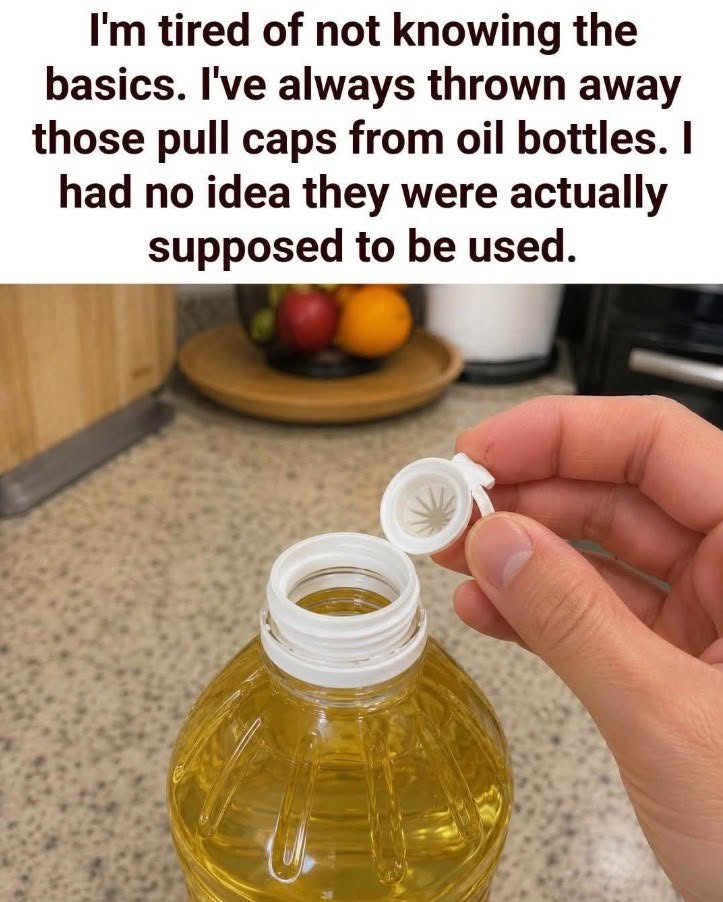
Ever wondered why some cooking oil bottles have a pull tab or foil seal underneath the cap? Learn what it does, why you should not ignore it, and how to safely remove and use it.
If you have ever opened a bottle of cooking oil and found a small plastic or foil tab underneath the cap, you may have wondered what it is actually for.
Some people pull it off immediately. Others leave part of it attached because they are unsure whether it has another purpose. And occasionally, people try to make a small opening in the seal and pour the oil through it.
That little seal is not just an unnecessary piece of packaging.
In most cases, it serves an important purpose: protecting the contents before the bottle is opened and providing evidence that the container has not been opened or tampered with.
What Is the Pull Tab on an Oil Bottle?
The pull tab is generally part of an inner seal placed underneath the bottle cap.
Depending on the manufacturer, it may be made from:
- Foil
- Plastic
- A foil-and-plastic laminate
- Another food-safe sealing material
The seal is attached to the opening of the bottle and is designed to remain intact while the product is being transported and stored.
When you purchase the bottle, the intact seal gives you an important visual indication that the container has not been opened after leaving the manufacturer.
Its Most Important Job: Tamper Evidence
One of the main purposes of an inner seal is tamper evidence.
If the seal is intact, it generally indicates that the bottle has not been opened since it was sealed.
If you find that the seal is:
- Completely missing
- Torn unexpectedly
- Punctured
- Loose
- Damaged
- Already partially removed
you should take a closer look before using the product.
An unusual or damaged seal does not automatically mean that something is wrong, because packaging can occasionally become damaged during transportation. However, an unfamiliar or compromised seal is a reason to be cautious.
It Also Helps Protect the Oil
Cooking oils can gradually change in quality when exposed to oxygen, heat and light.
The inner seal helps reduce exposure to the outside environment before the bottle is opened.
This can help preserve the product’s intended quality during storage and transportation.
Once you remove the seal and open the bottle, however, the oil is exposed to air every time you use it. That’s why proper storage becomes important.
Why Does the Seal Have a Small Tab?
The small tab is there to make removal easier.
Without a tab, it could be difficult to grip the thin foil or plastic material.
Instead of trying to cut into the seal with a knife, you can usually grasp the tab firmly and pull it upward.
The exact design varies between brands, so some seals may have a more obvious tab than others.
Should You Poke a Hole in the Seal?
It is generally better to remove the inner seal according to the manufacturer’s design rather than simply poking a random hole through it.
People sometimes make a small hole because they want to control the flow of oil or avoid completely removing the seal.
However, this can leave pieces of packaging around the opening and may make the bottle harder to clean.
If the manufacturer has designed the seal to be peeled away, using the pull tab is usually the simplest option.
What If the Seal Is Difficult to Remove?
Sometimes the inner seal sticks firmly to the bottle.
Do not use excessive force with a sharp knife while holding the bottle in your hand. A slip could cause an injury.
Instead, try to locate the manufacturer’s intended pull point and slowly lift the seal.
If the seal appears defective, is fused unusually tightly, or breaks apart into small pieces, check the packaging instructions or consider returning the product.
What If the Seal Is Already Broken When You Buy the Bottle?
This is where you should pay attention.
If you purchase a bottle and discover that the inner seal is already broken or missing, don’t simply assume that it is harmless.
Check whether:
- The outer cap is intact
- The bottle appears undamaged
- The seal looks deliberately opened rather than accidentally damaged
- The product smells and looks normal
- There are signs of leakage
If anything seems suspicious, the safest choice is to not use the oil and contact the retailer or manufacturer.
Does the Pull Tab Affect the Taste of the Oil?
The seal itself should not change the taste of properly packaged cooking oil.
Its purpose is primarily related to packaging protection rather than flavor.
If an oil smells strongly rancid, has an unusual odor, or tastes noticeably unpleasant, the problem may be related to the oil’s quality or storage rather than the pull tab.
When in doubt, don’t consume questionable oil.
What Should You Do After Opening the Bottle?
Once the seal has been removed, proper storage becomes more important.
Keep cooking oil:
- Tightly closed
- Away from direct sunlight
- Away from excessive heat
- In a cool, dry place
- Away from sources of steam and moisture
Avoid storing bottles directly next to a hot stove if possible.
Heat and repeated exposure to air can accelerate deterioration of many oils.
Don’t Forget About the Bottle Cap
The outer cap has an important role too.
It helps close the bottle after each use and limits unnecessary exposure to air, dust and moisture.
After pouring oil, wipe away excess oil around the bottle opening if necessary and replace the cap securely.
This simple habit can keep the bottle cleaner and make it easier to store.
Why Some Bottles Don’t Have Pull Tabs
Not every cooking-oil bottle uses the same packaging system.
Some bottles have:
- Pull-off foil seals
- Plastic inner seals
- Breakable rings
- Integrated dispensing closures
- Other tamper-evident designs
The absence of a traditional pull tab does not necessarily mean that a bottle is unsafe or improperly packaged.
What matters is whether the product has an appropriate intact closure or tamper-evident feature according to its packaging design.
The Bottom Line
That little pull tab underneath an oil bottle cap has a real purpose.
It helps protect the product before opening and provides evidence that the container has not been opened or tampered with. The tab is also designed to make the inner seal easier to remove.
So the next time you open a bottle of cooking oil, don’t treat the seal as meaningless packaging. Check that it is intact before opening, remove it carefully using the intended tab, close the bottle securely afterward and store the oil away from heat and direct sunlight.
A tiny piece of packaging can provide an important first check on the condition of the food inside.