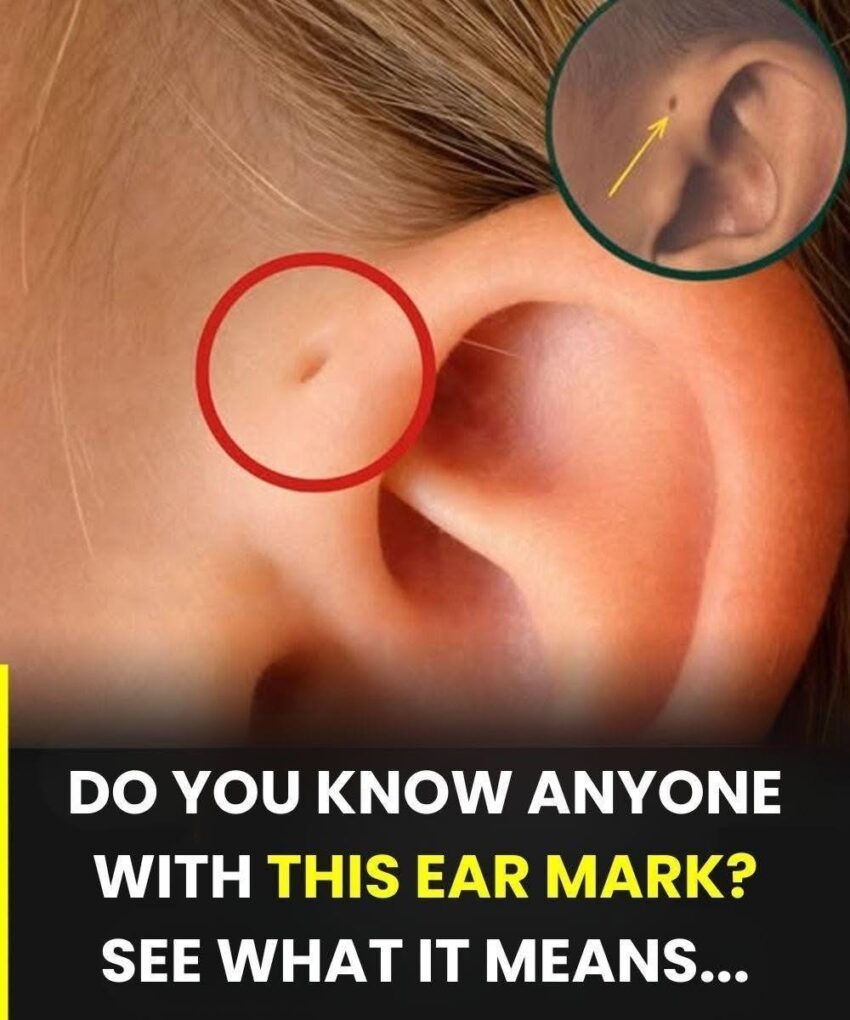
Ever noticed a tiny hole near the front of someone’s ear? Learn what a preauricular pit is, why some people are born with it, and when it may require medical attention.
People With This Ear Hole Have: The Truth Behind the Tiny Hole Near the Ear
Have you ever noticed a person with a tiny hole or dimple just in front of their ear and wondered what it means?
That small opening is often called a preauricular pit or preauricular sinus. It is a congenital feature, meaning a person is born with it. Although it may look unusual, it is usually harmless and often causes no problems whatsoever.
What Is the Small Hole Near the Ear?
A preauricular pit is a tiny opening in the skin near the front of the ear. Beneath it may be a narrow passage, or sinus tract, extending into the surrounding tissue.
Some people have one on only one side, while others have openings on both sides.
Most people discover it during childhood or simply notice it when looking closely at their ears.
Why Do People Have It?
The outer ear develops during early pregnancy from several small areas of tissue that gradually come together.
A preauricular pit can form when this developmental process leaves a small opening or tract near the ear.
In other words, it isn’t caused by poor hygiene, an injury, or something a person did later in life.
Is It Rare?
Preauricular pits are relatively uncommon overall, although their frequency varies considerably among different populations.
Many people who have one are otherwise completely healthy.
Having a pit does not automatically mean there is something wrong with a person’s ears or general health.
Does It Mean They Have Special Abilities?
Social media sometimes makes dramatic claims about people with this ear feature, suggesting that they have special intelligence, unusual personalities, extraordinary hearing, or other characteristics.
There is no reliable scientific evidence that a preauricular pit determines personality, intelligence, luck, or special abilities.
It is primarily an anatomical variation.
Can It Become Infected?
Sometimes.
Because the opening can connect to a small tract beneath the skin, bacteria can occasionally enter and cause infection.
Possible warning signs include:
- Redness
- Swelling
- Pain or tenderness
- Warmth around the opening
- Pus or drainage
- A lump near the ear
- Fever in more significant infections
If these symptoms appear, the area should be evaluated by a healthcare professional.
Should You Squeeze or Poke It?
No.
It may be tempting to squeeze the area if you notice material coming from the opening, but repeatedly pressing, probing, or inserting objects into the pit can irritate the tissue and potentially introduce bacteria.
Keep the surrounding skin clean and avoid putting cotton swabs, needles, pins, or other objects into the opening.
Does a Preauricular Pit Cause Hearing Loss?
An uncomplicated preauricular pit does not automatically mean that someone has hearing loss.
Most people with an isolated pit have normal hearing.
However, if a person also has hearing difficulties, other ear abnormalities, or additional unusual physical findings, a healthcare professional may recommend a hearing assessment or further evaluation.
When Is Treatment Needed?
If the pit causes no symptoms, treatment is usually unnecessary.
If it becomes infected, a doctor can determine the appropriate treatment. People who experience repeated infections or persistent drainage may sometimes be referred to an ear, nose and throat specialist.
In selected cases, surgery can remove the sinus tract to reduce the chance of recurrent problems.
The Interesting Truth
The most surprising thing about this little ear hole is that for many people, it means almost nothing medically.
It is simply a feature they were born with.
So if you or someone you know has a tiny opening near the ear, there is usually no reason to be frightened. The important thing is to pay attention to changes such as pain, swelling, redness, or discharge.
Final Takeaway
A tiny hole near the front of the ear is often a preauricular pit, a congenital anatomical variation.
It does not prove that someone has special powers, a particular personality, or poor health. Most people with one never experience complications.
The main reason to seek medical advice is if the area becomes painful, swollen, red, infected, or repeatedly drains.