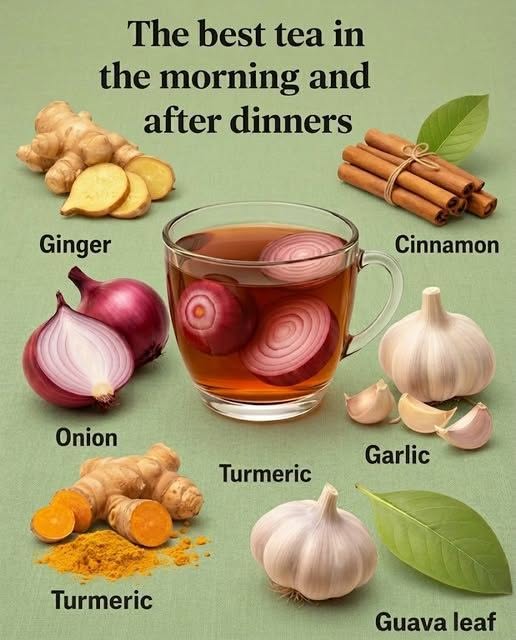
Garlic, Turmeric, Onion, Ginger, Cinnamon & Guava Leaf Tea: A Simple Morning and After-Dinner Drink
Looking for a warm, flavorful drink to enjoy in the morning or after dinner? This homemade herbal infusion combines garlic, turmeric, onion, ginger, cinnamon, and guava leaves—ingredients traditionally used in many cuisines and wellness practices.
While this tea can be a comforting addition to a balanced diet, it’s important to remember that no tea or combination of herbs is proven to treat diabetes or replace prescribed medication.
🌿 Full Recipe
Ingredients
- 1 small garlic clove, lightly crushed
- ½ teaspoon fresh turmeric, grated—or ¼ teaspoon turmeric powder
- 2–3 thin slices fresh ginger
- 2–3 thin slices red or regular onion
- 1 small piece cinnamon stick
- 3–5 young guava leaves, thoroughly washed
- 2 cups (about 500 ml) water
- Optional: a squeeze of lemon
- Optional: a small amount of honey for taste
👩🍳 How to Make It
- Pour 2 cups of water into a saucepan.
- Add the garlic, turmeric, ginger, onion, cinnamon, and washed guava leaves.
- Bring the water to a gentle boil.
- Reduce the heat and simmer for approximately 8–10 minutes.
- Turn off the heat and let the mixture steep for another 5 minutes.
- Strain into a cup.
- Add lemon if desired. If using honey, add it once the drink has cooled slightly.
For an after-dinner drink: Enjoy it warm after your meal rather than treating it as a replacement for dinner or medication.
✨ Potential Benefits
🧄 Garlic
Garlic contains sulfur compounds and antioxidants. Including garlic in the diet may support heart and overall health.
🟠 Turmeric
Turmeric contains curcumin, a compound studied for its antioxidant and anti-inflammatory properties. The amount extracted into a homemade tea, however, can vary considerably.
🌱 Ginger
Ginger is traditionally used to support digestion and may be soothing for occasional nausea or stomach discomfort.
🧅 Onion
Onions provide quercetin and other plant compounds, as well as small amounts of fiber and micronutrients.
🍂 Cinnamon
Cinnamon adds flavor and contains antioxidant compounds. Some research has investigated cinnamon’s effect on blood glucose, but it shouldn’t be considered a diabetes treatment.
🍃 Guava Leaves
Guava leaves have traditionally been used to make herbal teas. Early research has investigated their possible effects on glucose and digestion, but stronger human evidence is needed before making therapeutic claims.
☕ How Often Can You Drink It?
For most healthy adults, one cup occasionally or once daily is a reasonable way to enjoy this type of herbal infusion. There is no established medical requirement to drink it every morning and after every dinner.
Start with a small amount if you aren’t accustomed to the ingredients, since garlic, ginger, and turmeric can cause stomach irritation in some people.
⚠️ A Few Important Precautions
If you have diabetes or take blood-sugar-lowering medication, don’t use this tea to replace your treatment. Some herbal ingredients may potentially affect blood glucose.
Also use caution if you take blood thinners, have gallbladder problems, are pregnant, or have a medical condition requiring dietary restrictions. Ask your doctor or pharmacist before making concentrated herbal drinks a daily habit.
🌿 Bottom Line
This combination can be a warming, aromatic herbal drink that adds spices and plant ingredients to your routine. Its best role is as part of an overall healthy lifestyle—not as a “detox,” cure, or guaranteed way to control blood sugar.
Simple wellness starts with simple habits: nourishing food, movement, good sleep, and consistency.