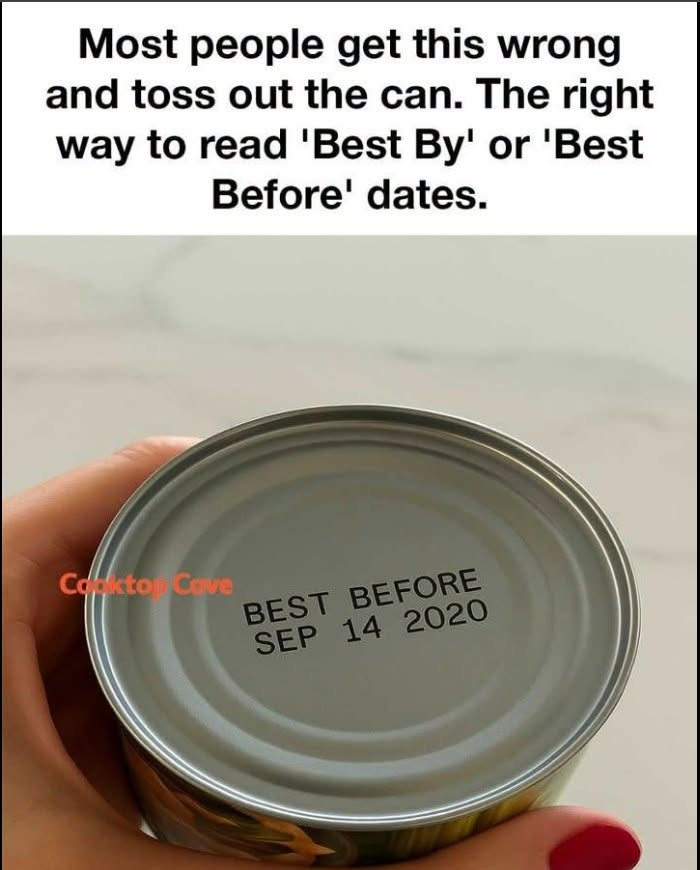
Confused by “Best By” and “Best Before” dates? Learn what these labels actually mean, when food quality may decline, and how to decide whether packaged food should be kept or discarded.
Have you ever looked at a food package, noticed that the “Best By” date has passed, and immediately thrown it into the trash?
You’re not alone.
Many people assume that a date printed on food packaging automatically tells them the exact day the food becomes unsafe. But that’s not always what a “Best By” or “Best Before” date means.
Understanding these labels can help you make better decisions about food quality and safety—and potentially prevent unnecessary food waste.
What Does “Best By” Actually Mean?
A “Best By” or “Best Before” date generally refers to the period when the manufacturer expects the product to have its best quality.
That can include characteristics such as:
- Flavor
- Texture
- Freshness
- Aroma
- Appearance
After that date, a product may gradually lose some of its quality, but the date itself does not necessarily mean the food suddenly becomes unsafe.
However, that does not mean every food is automatically safe to eat after its date.
How the food was stored, whether the package is damaged, and what type of food it is all matter.
“Best By” Is Different From “Use By”
One of the biggest mistakes people make is treating every date label as though it means the same thing.
A Best By/Best Before date is generally associated with quality.
A Use By date can be more closely connected with safety for certain foods, depending on the country’s labeling system and the specific product.
Because labeling regulations differ between countries, always check the instructions on the package and follow local food-safety guidance.
What About an Expired Can?
Canned foods can sometimes remain usable beyond their quality date when they have been properly processed and stored.
But the condition of the can is extremely important.
Never use a can that is:
- Bulging
- Leaking
- Severely rusted
- Punctured
- Deeply dented, particularly around seams
- Showing signs of damage or unusual pressure
If a can looks suspicious, don’t taste the food to see whether it is safe.
When in doubt, throw it away.
Don’t Rely Only on the Printed Date
The date is just one piece of information.
Before consuming a food product, consider:
Was it stored correctly?
Food that should have been refrigerated may become unsafe if it was left at room temperature for too long, regardless of the printed date.
Is the package intact?
A damaged package can allow contamination even when the printed date hasn’t passed.
Has it been opened?
Once opened, some foods have a much shorter safe storage period than the unopened product.
Does the product look or smell unusual?
Changes in appearance, texture, smell, or packaging can be warning signs—but remember that harmful bacteria don’t always produce an obvious smell or visible change.
Why Food Storage Matters
A product can have a date that is still several weeks away and nevertheless become unsafe if it has been stored improperly.
For example, foods requiring refrigeration need to remain at a safe temperature throughout storage.
Similarly, foods stored in hot, humid conditions may deteriorate faster than products kept under the conditions recommended by the manufacturer.
Always follow the storage instructions printed on the package.
What Does an Open-Date Label Tell You?
Some packages use dates that are easy for consumers to understand, while others may contain coded numbers or letters.
A printed date might indicate when the product was manufactured, packaged, or is expected to have its best quality.
If you aren’t sure what a particular code means, check the manufacturer’s website or contact the company rather than guessing.
What About Food With a Slightly Past “Best Before” Date?
For some shelf-stable foods, a product may still be acceptable after a quality-based date if it has been stored properly and the packaging remains intact.
However, this should never be interpreted as a blanket rule.
Highly perishable foods require much more caution than shelf-stable products.
Milk, meat, seafood, prepared foods, and other refrigerated products should be handled according to appropriate food-safety storage guidelines rather than relying solely on the printed date.
When Should You Throw Food Away?
It’s safest to discard food when:
- The packaging is swollen or leaking
- The product has been stored improperly
- There is visible mold where mold isn’t expected
- The food has an unusual appearance or texture
- There is a strong or unusual odor
- The package is damaged
- You aren’t sure whether a perishable food has been kept at a safe temperature
- You suspect contamination
And remember: never taste questionable food simply to determine whether it is safe.
Don’t Confuse Food Quality With Food Safety
This is the most important point.
A Best By date often tells you something about expected quality—not necessarily an exact safety deadline.
But food safety depends on many other factors, including:
- Type of food
- Storage temperature
- Packaging condition
- Whether the product has been opened
- How long it has been stored
- Manufacturer instructions
That’s why simply saying “the date hasn’t passed, so it’s safe” isn’t always correct either.
How to Reduce Food Waste Safely
Instead of automatically throwing everything away when a quality date passes, organize your food storage carefully.
Keep older products toward the front of your pantry and newer products behind them. This makes it easier to use older items first.
For refrigerated foods, pay attention to storage instructions and use appropriate food-safety guidance after opening.
Freezing suitable foods before they deteriorate can also help extend their usable life.
The Bottom Line
The next time you see “Best By” or “Best Before” on a package, don’t automatically assume that the food becomes unsafe the moment the date passes.
These labels often relate to quality, while food safety depends on the type of food, storage conditions, packaging, and other factors.
At the same time, don’t use the idea of “Best By means nothing” as an excuse to eat food that has been improperly stored or shows signs of spoilage.
Read the label, check the storage conditions, inspect the packaging, and when you’re dealing with questionable food, it’s better to be safe than sorry.