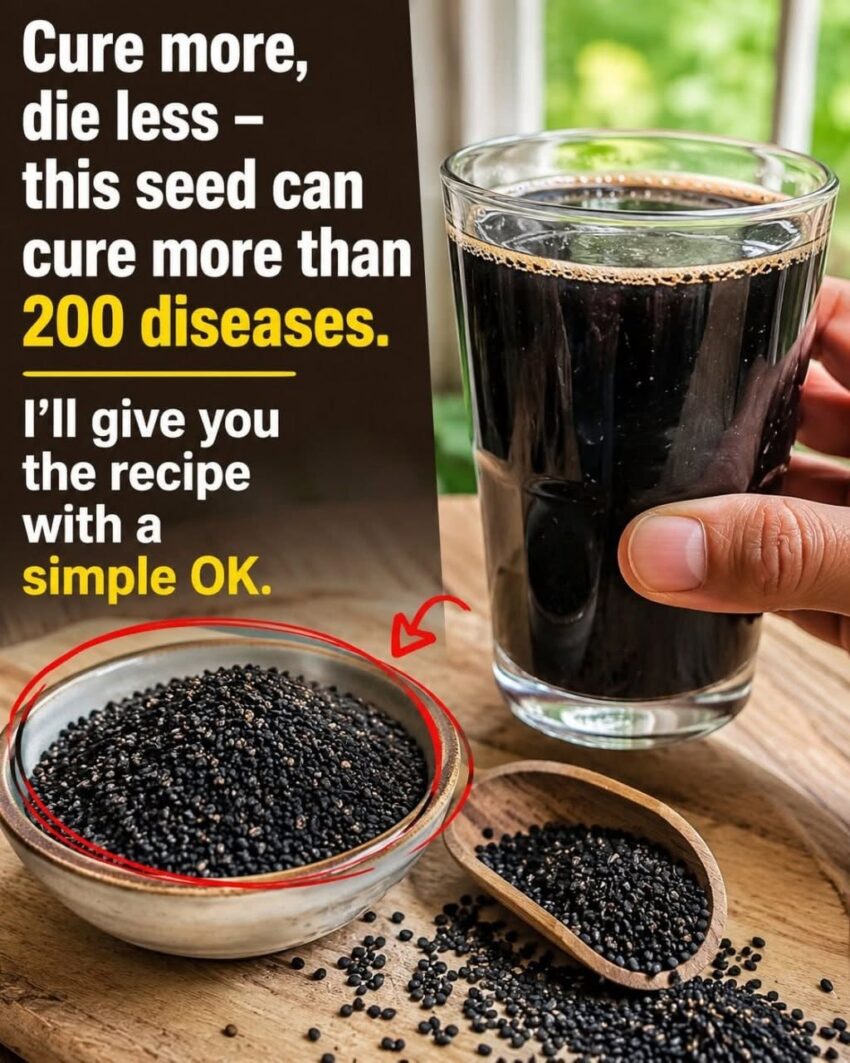
A remarkable seed is often promoted as a natural remedy for more than 200 diseases. Learn what this traditional claim means, what research actually shows, and how to use seeds safely.
There are countless traditional remedies that have been passed from one generation to another. Among them are certain seeds that have gained an almost legendary reputation for their supposed ability to treat a remarkable number of health problems.
You may have seen claims that one particular seed can “cure everything except death” or treat more than 200 diseases.
It is certainly an attention-grabbing claim—but it is important to separate traditional use from scientifically proven treatment.
No single seed has been scientifically established as a cure for more than 200 different diseases. However, many seeds do contain valuable nutrients and plant compounds that researchers continue to study.
Why Seeds Have Such a Powerful Reputation
Seeds are biologically designed to contain concentrated nutrients that help a new plant grow.
Depending on the type of seed, they can provide:
- Healthy fats
- Protein
- Fiber
- Minerals
- Vitamins
- Polyphenols
- Antioxidant compounds
- Other naturally occurring plant chemicals
Because of this nutritional density, seeds have been used in traditional food and herbal practices for centuries.
The problem begins when nutritional or traditional benefits are transformed into claims that a seed can cure dozens—or hundreds—of unrelated diseases.
Traditional Medicine vs. Modern Evidence
Traditional knowledge can be valuable and may provide clues for scientific research.
Researchers sometimes investigate plants and seeds that have been used historically to understand whether their compounds have measurable biological effects.
But laboratory research is only one stage of the process.
A compound showing antioxidant or anti-inflammatory activity in a laboratory does not automatically mean that eating the whole seed will treat a disease in humans.
Human clinical research is needed to determine whether a treatment actually works, what dose is appropriate, and whether it is safe.
What Does “Cures 200 Diseases” Really Mean?
This type of statement is usually a warning sign.
Different health conditions have completely different causes. Diabetes, high blood pressure, infections, arthritis, cancer, kidney disease, and neurological disorders cannot reasonably be expected to respond to one food in the same way.
A seed may contain compounds that influence certain biological processes, but that is very different from proving that it cures a disease.
In many cases, online lists of “200 diseases” combine traditional uses, anecdotal experiences, laboratory findings, and unsupported claims into one enormous list.
That can make the evidence appear much stronger than it actually is.
Seeds Can Still Be Part of a Healthy Diet
You don’t need a miracle claim to appreciate the nutritional value of seeds.
Many commonly eaten seeds can contribute useful nutrients to a balanced diet.
Depending on the seed, a small serving may provide protein, fiber, unsaturated fats, magnesium, zinc, iron, or other nutrients.
Adding an appropriate amount to meals can therefore be a simple way to increase nutritional variety.
More Is Not Always Better
One common mistake with natural remedies is assuming that because something comes from a plant, taking large quantities must be safe.
That isn’t necessarily true.
Some seeds contain concentrated compounds that can cause problems when consumed in excessive amounts. Others may interact with medications or be unsuitable for people with certain medical conditions.
Preparation also matters.
A seed intended to be eaten as food may not be equivalent to a concentrated extract, oil, powder, or supplement.
Who Should Be Especially Careful?
People who take prescription medication should be cautious about adding concentrated herbal products or supplements without professional advice.
Extra caution is also appropriate for:
- Pregnant or breastfeeding people
- Young children
- Older adults taking multiple medications
- People with kidney or liver problems
- People preparing for surgery
- Anyone with a known allergy to the plant or seed
Natural does not automatically mean risk-free.
The Best Way to Think About “Miracle” Seeds
Instead of asking whether a seed can cure hundreds of diseases, a better question is:
What nutrients does it contain, what benefits have actually been studied in humans, and how can it safely be included in the diet?
That approach allows you to appreciate traditional foods without turning them into unproven medical treatments.
The Bottom Line
The idea of one tiny seed curing more than 200 diseases is fascinating, but there is no reliable scientific basis for treating that statement as fact.
Some seeds are genuinely nutritious and contain interesting plant compounds. Some may have traditional medicinal uses, and certain compounds are being investigated for potential health effects.
But a seed should not replace medical treatment for a diagnosed condition.
The most useful lesson may be simpler: nature contains many nutritionally valuable foods, but extraordinary health claims still require extraordinary evidence.
Before using any seed as a concentrated remedy, check reliable medical information and, if you take medication or have a medical condition, discuss it with a qualified healthcare professional.