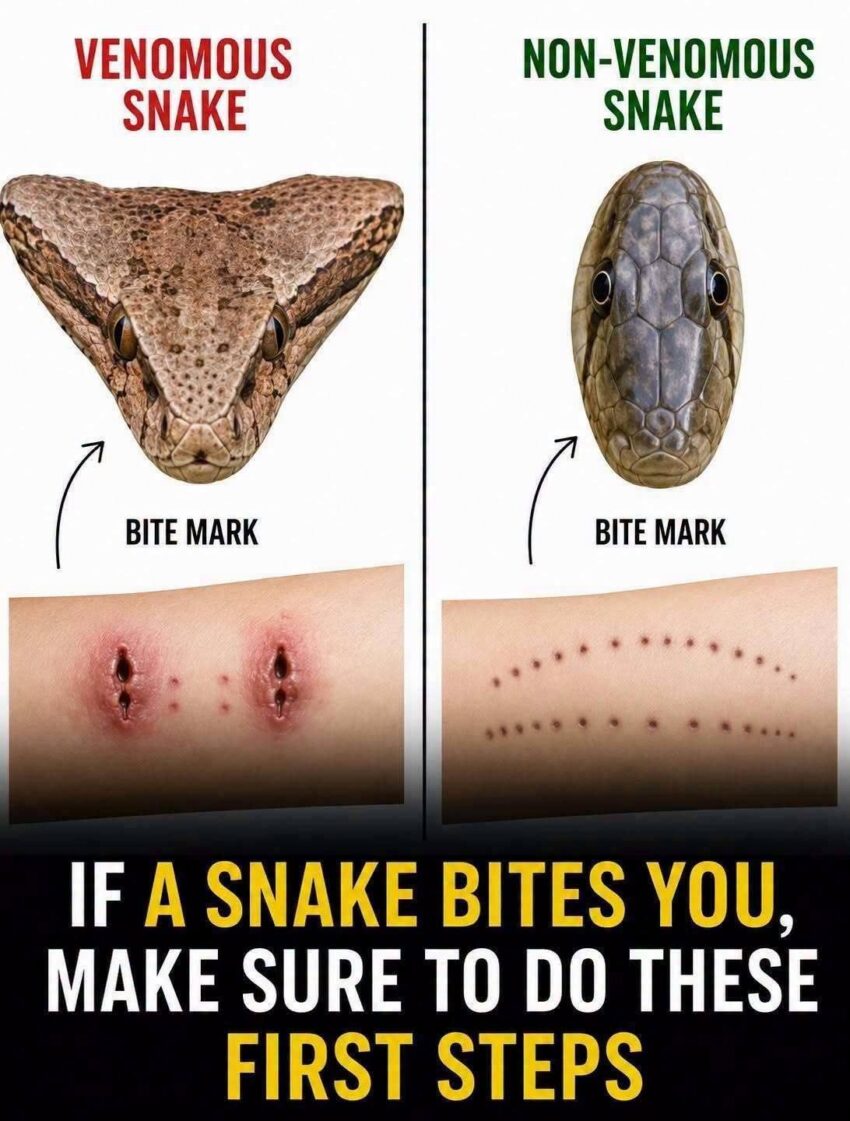
Learn what to do immediately after a snakebite, what dangerous first-aid mistakes to avoid, and why getting urgent medical treatment can save a life.
When Bitten by a Snake, You Should Do These Things First: New Details
A snakebite can be frightening, especially when you don’t immediately know whether the snake was venomous. In that situation, panic can lead people to try traditional remedies that may actually make the injury worse.
The most important thing to remember is simple: a suspected venomous snakebite should be treated as a medical emergency.
The safest approach is to keep the person calm and still, immobilize the affected limb, and arrange transportation to a medical facility as quickly as possible. WHO identifies high-quality antivenom as the most effective treatment for reversing or preventing many serious effects of venomous snakebite.
1. Move Away From the Snake First
The first priority is safety.
Move away from the snake and make sure there is no risk of another bite. Do not try to catch, corner, photograph up close, or kill the snake.
If it can be done safely from a distance, try to remember its color, general shape and markings. A photograph taken from a safe distance may help medical professionals, but nobody should put themselves at risk trying to identify the snake.
2. Keep the Person Calm and Still
After a bite, anxiety can cause a person to move around unnecessarily.
Help the person sit or lie down and remain as still as possible. Movement can increase circulation and lymphatic flow, potentially helping venom spread more quickly in some types of envenoming.
If possible, have other people arrange transportation rather than making the bitten person walk. WHO specifically recommends complete immobilization and prompt transportation to a healthcare facility.
3. Immobilize the Bitten Limb
If the bite is on an arm or leg, keep that limb as still as possible.
A simple splint or sling can help prevent unnecessary movement while the person is being transported. The goal is immobilization, not cutting off circulation.
Pressure-immobilization techniques can be appropriate for certain neurotoxic snakebites, but recommendations vary according to the snake species and local medical protocols. It should not be improvised as a tight tourniquet.
4. Remove Tight Items
Swelling can develop around a snakebite.
Remove rings, watches, bracelets, anklets, tight footwear, or other restrictive items from the affected limb before significant swelling develops.
This simple step can help prevent tight objects from becoming a further circulation problem as swelling increases.
5. Get Medical Help Immediately
Do not wait to see whether symptoms appear.
Some dangerous snakebites can initially appear relatively mild. Serious symptoms can develop later, including weakness, paralysis, bleeding problems, swelling, tissue destruction or breathing difficulties.
Take the person to the nearest appropriate medical facility as quickly as possible. Depending on the species and severity of envenoming, treatment may include antivenom and supportive medical care.
6. Keep Watching Their Breathing
Some snake venoms can affect the nervous system and cause progressive weakness or paralysis.
Watch the person’s breathing and level of consciousness while help is being arranged. If they become unconscious but are breathing normally, place them in an appropriate recovery position, particularly if vomiting is possible.
If breathing stops, someone trained in resuscitation should begin appropriate emergency measures while emergency medical help is obtained.
What You Should NEVER Do After a Snakebite
Some traditional snakebite remedies are still commonly recommended, but many can cause additional injury or waste precious time.
Don’t Cut the Bite
Never cut, slash or make an incision around the bite in an attempt to release venom.
This does not remove venom effectively and can cause additional bleeding, tissue injury and infection.
Don’t Suck Out the Venom
Trying to suck venom from the wound does not provide a reliable treatment and can cause additional harm.
WHO specifically advises against attempting to suck venom from a snakebite.
Don’t Apply a Tight Tourniquet
A rope, wire, belt or other tight tourniquet should not be used to completely stop blood flow.
This can cause serious damage to the limb and may worsen the consequences of the bite.
Don’t Apply Ice
Ice or extreme cold should not be used on the bite.
It can cause additional tissue injury and does not neutralize snake venom.
Don’t Use Herbs or Chemicals
Do not put herbs, chemicals, powders or other traditional substances onto the wound.
WHO advises avoiding traditional first-aid methods and herbal medicines because they can be ineffective, harmful, or delay proper treatment.
Don’t Apply Electric Shock
Electric shock is another dangerous traditional practice that should be avoided.
It does not provide an appropriate treatment for snake envenoming and can cause additional injury.
Should You Give Food or Drink?
If the person is becoming seriously unwell, vomiting, drowsy, weak, or having difficulty swallowing, do not give food or drink by mouth because of the risk of choking.
During transport, keeping the person safely positioned and getting professional medical help quickly is more important than trying to treat the venom at home.
What About Painkillers?
Pain can occur after a snakebite, but medication choices should be handled carefully.
WHO notes that paracetamol may be used for local pain. Other painkillers may not be appropriate in certain situations, particularly when there is a risk of bleeding. Follow advice from a healthcare professional rather than self-medicating with aspirin or anti-inflammatory medicines.
Why Antivenom Matters
There is no reliable homemade remedy that can neutralize dangerous snake venom.
When a person has clinically significant envenoming, appropriate antivenom is the specific treatment used to neutralize venom toxins, alongside supportive hospital care when needed. The correct antivenom depends on the snakes found in the region and the clinical effects of the bite.
This is why delaying hospital treatment while trying home remedies can be dangerous.
Children Need Especially Fast Attention
Snakebite can be particularly serious in children because a given amount of venom can have a greater effect in a smaller body.
A child who has potentially been bitten by a venomous snake should be taken for urgent medical assessment rather than being observed at home.
What Information Should You Tell the Doctor?
When you arrive at the hospital, tell the medical team:
- Approximately what time the bite happened
- Where on the body the person was bitten
- What the snake looked like, if safely observed
- Whether swelling has increased
- Whether there is bleeding
- Whether the person has developed weakness, dizziness, vomiting or breathing difficulty
- What first aid, if any, has already been performed
If you have a photograph of the snake taken safely from a distance, you can show it to medical professionals. Never delay treatment to obtain a photograph.
The Most Important Rule to Remember
If someone is bitten by a snake, don’t waste precious time trying to “pull out” the venom.
Keep the person calm. Keep them still. Immobilize the affected limb. Remove tight items. Avoid dangerous home remedies. Get professional medical care as quickly as possible.
Snakebite treatment can be lifesaving, and early access to appropriate care—including antivenom when medically indicated—can dramatically improve the outcome.
Important: This article is for general first-aid information and does not replace emergency medical care. A suspected venomous snakebite should always be assessed urgently by qualified medical professionals.