I Sent My Parents $550 Every Friday So They Could “Live Comfortably.” Then They Missed My Daughter’s Birthday
Meta Description: I sent my parents $550 every Friday so they could live comfortably. But when they skipped my daughter’s birthday and told me, “We don’t count your family the same,” I finally decided to stop funding people who refused to value my family.
For years, I believed helping my parents was simply what a good daughter was supposed to do.
Every Friday, like clockwork, I transferred $550 into their account.
I never made a big deal about it.
I didn’t ask what they spent it on. I didn’t demand anything in return. I just wanted to know that they were comfortable.
My parents had always told me they were struggling financially, and I had reached a point in my life where I was fortunate enough to help.
So I did.
Week after week.
Month after month.
Year after year.
That money paid for groceries, household expenses, bills, and whatever else they needed.
Sometimes I had my own financial pressures, but I still made the transfer.
Because they were my parents.
I thought that meant something.
Then Came My Daughter’s Birthday
My daughter had been looking forward to her birthday for weeks.
She had picked out her outfit.
She had helped choose the cake.
She kept asking when Grandma and Grandpa were coming.
I told her they would probably be there.
After all, they were her grandparents.
And I had spent years making sure they were taken care of.
The party was small.
Nothing extravagant.
Just family, cake, decorations, food, presents, and a little girl who couldn’t wait to celebrate with the people she loved.
But the time came.
Then another hour passed.
My parents never arrived.
My daughter kept looking toward the door.
Eventually, she stopped asking.
That hurt more than I expected.
Not because I needed my parents at the party.
Because my daughter needed her grandparents to show up.
Then My Father Called
Later that evening, my father called.
I was still cleaning up after the party.
I answered, expecting an explanation.
Maybe something had happened.
Maybe they were sick.
Maybe there had been an emergency.
Instead, my father sounded completely calm.
I asked him why they hadn’t come.
There was a pause.
Then he said something I will never forget:
“We don’t count your family the same.”
For a moment, I honestly didn’t understand what he meant.
“What’s that supposed to mean?” I asked.
He explained that, in his eyes, my daughter’s birthday wasn’t as important as certain other family events.
My daughter’s feelings weren’t apparently enough reason for them to make the effort.
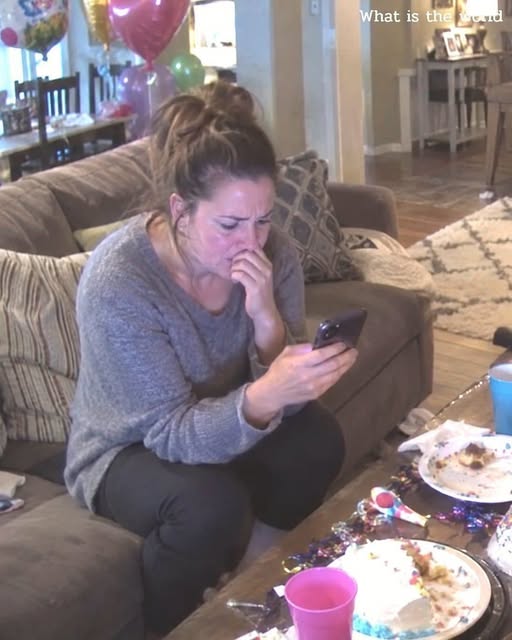
I stood there holding my phone, staring at the half-deflated birthday balloons scattered around the room.
My daughter was asleep down the hallway.
And suddenly, all those Friday transfers started running through my mind.
$550.
Every Friday.
$550 × 52 weeks.
That’s approximately $28,600 a year.
I had been giving them nearly thirty thousand dollars a year because I wanted my parents to live comfortably.
And apparently, my family wasn’t important enough for them to show up for a child’s birthday.
I Opened My Banking App
I didn’t yell.
I didn’t threaten them.
I didn’t insult them.
I simply opened my banking app.
The recurring transfer was sitting there.
Every Friday.
$550.
I stared at it for a long time.
Then I pressed Cancel.
For the first time in years, I wasn’t thinking about whether my parents would be comfortable.
I was thinking about whether my daughter felt loved.
There is a difference between helping someone and allowing yourself to be taken for granted.
I had convinced myself that financial support was an expression of love.
But love isn’t supposed to be completely one-sided.
Then I Wrote the Message
I knew I could send an angry message.
I could tell my father exactly what I thought.
I could list every dollar I’d ever given them.
But I decided not to.
Instead, I wrote something simple.
Something that wasn’t designed to hurt them.
It was designed to make them understand the consequences of their own words.
I wrote:
“Dad, I heard what you said. I have spent years helping you because you are my parents, not because I expected anything in return. But I won’t continue supporting people who openly tell me that my family doesn’t count the same. From now on, you are responsible for your own finances. I hope you understand that this isn’t about the $550. It’s about realizing that my daughter deserves to be valued too.”
Then I sent it.
And put my phone down.
The Phone Started Ringing
Within minutes, my father called.
Then my mother.
I didn’t answer immediately.
For years, I had been available whenever they needed something.
A bill.
Groceries.
Unexpected expenses.
A little extra money.
But that night, I needed some space.
Eventually, I answered.
My mother was crying.
She said they hadn’t meant it “that way.”
My father said I was being dramatic.
But I asked one simple question:
“If my family doesn’t count the same, why should my money count the same?”
There was silence.
And that silence told me everything.
I Didn’t Stop Loving Them
This is the part people often misunderstand.
Cutting off financial support didn’t mean I stopped loving my parents.
It meant I finally understood that love doesn’t require unlimited access to your wallet.
I can love someone and still have boundaries.
I can care about my parents and still protect my daughter.
I can forgive them without pretending their words didn’t hurt.
And I can refuse to financially support people who don’t respect the family I’ve built.
My Daughter Deserved Better
The next morning, my daughter came into the kitchen wearing the pajamas she had worn after her birthday party.
She climbed onto my lap and asked:
“Mommy, did Grandma and Grandpa forget my birthday?”
That question broke my heart.
I hugged her.
I told her that sometimes adults make choices that have nothing to do with how lovable a child is.
Then I kissed her forehead.
And I made myself a promise.
My daughter would never grow up believing that she had to earn someone’s love by making herself smaller.
She would know that family isn’t just about biology.
Family is about showing up.
It’s about caring.
It’s about celebrating each other’s happiness.
And most importantly, it’s about making people feel like they matter.
The Lesson I Learned
For years, I thought being a good daughter meant giving.
Giving money.
Giving time.
Giving emotional support.
Giving second chances.
But I finally realized something:
Giving should never require you to abandon yourself or allow someone else to devalue the people you love.
My parents may eventually understand what they lost.
Maybe they won’t.
But either way, I’ve learned to stop measuring my worth by how much I can provide for other people.
And I’ve learned something even more important:
Sometimes the strongest boundary isn’t an angry confrontation.
Sometimes it’s simply opening your banking app, canceling the payment, and deciding that your family’s dignity matters too.