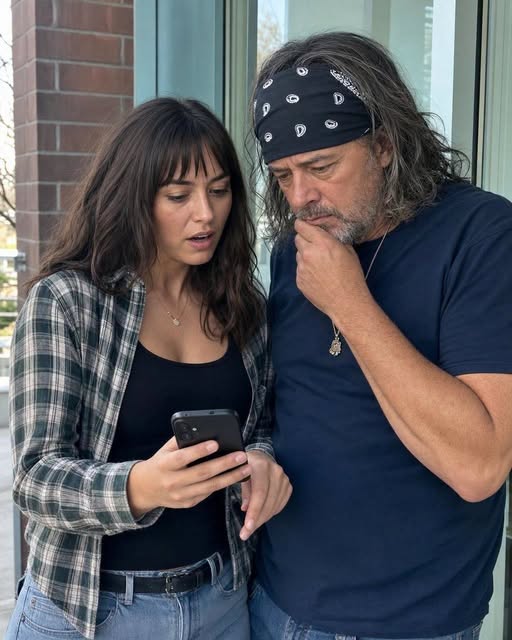
Every woman who dated my widowed father disappeared from his life without explanation. Worried that he was hiding something, I asked my closest friend to go on one date with him. But what she discovered that evening changed everything I thought I knew about my father.
The Mystery Behind My Father’s Relationships
After my mother died, my father became a different man.
He was never the kind of person who talked openly about his feelings. He had spent most of his life working hard, taking care of our family, and making sure we never went without anything important. Even when he was exhausted, he rarely complained.
But after losing my mother, something inside him seemed to close.
For nearly two years, he lived quietly in the same house where they had raised me. He cooked simple meals, watched television in the evenings, and spent weekends tending to the garden my mother had once loved.
Sometimes, I would find him standing in their bedroom, staring at one of her photographs.
Those moments broke my heart.
I wanted him to find happiness again. I wanted him to have someone to talk to when I wasn’t around, someone who could make him laugh and remind him that life hadn’t ended with my mother’s death.
So when he finally told me he had started dating again, I was genuinely happy for him.
That happiness didn’t last long.
His first girlfriend, Margaret, disappeared after three dates.
His second girlfriend, Susan, stopped answering his calls after meeting him for dinner.
The third woman, Linda, seemed different. She was cheerful, kind, and close to my father’s age. She even invited him to a family gathering.
Then, without warning, she ended the relationship.
Each woman left quietly. There were no arguments that I knew about, no public embarrassment, and no obvious explanation.
Whenever I asked my father what had happened, he gave me the same answer.
“It just wasn’t meant to be.”
At first, I accepted it.
People ended relationships for all kinds of reasons. My father was grieving, and perhaps dating simply wasn’t as easy as he had imagined.
But when the fourth woman vanished from his life after a single weekend, I began to wonder whether something else was happening.
There was a pattern.
And I couldn’t ignore it anymore.
The Question I Couldn’t Stop Asking
One Sunday afternoon, I visited my father with groceries and found him sitting alone at the kitchen table.
His phone was beside him. He kept glancing at it, as though he were waiting for someone to call.
“Dad,” I said, putting the bags down, “can I ask you something?”
He looked up.
“Of course.”
“Why do all your girlfriends leave?”
His expression changed.
For a moment, he seemed genuinely hurt by the question.
“They don’t all leave,” he replied.
“Dad, four women have ended things with you in less than a year. Every time, you say it simply wasn’t meant to be. Don’t you think that’s strange?”
He folded his hands on the table.
“Not everything needs an explanation.”
“That isn’t an answer.”
He looked away.
I immediately regretted my tone, but I couldn’t bring myself to take back the question.
“I’m worried about you,” I explained. “I don’t want you to spend the rest of your life alone. But I also don’t understand what’s happening.”
My father sighed.
“Sometimes, people discover that they’re not right for each other. That’s all.”
I wanted to believe him.
But something in his voice made me feel that he was protecting more than his privacy.
He was protecting a secret.
And I decided that I needed to find out what it was.
The Idea That Changed Everything
That evening, I called my closest friend, Emily.
Emily had known my family for years. She had visited our home countless times, celebrated birthdays with us, and sat beside me during the darkest days after my mother’s funeral.
She also had a gift for noticing things other people missed.
I explained the situation to her.
She listened without interrupting.
When I finished, she asked, “Do you think your father is doing something wrong?”
“I don’t know,” I admitted. “That’s what frightens me. Every woman seems happy at first, and then she disappears. What if he’s saying or doing something that scares them away?”
Emily considered this for a moment.
“Have you asked any of the women directly?”
“No. That would be awkward.”
“Less awkward than sending someone on a date with your father?”
I hesitated.
Then an idea came to me.
It was impulsive, questionable, and possibly the worst plan I had ever considered.
But I was desperate for answers.
“Emily,” I said carefully, “would you go on one date with him?”
Silence.
Then she burst out laughing.
“You want me to date your father?”
“Just one date. You know him already, and he likes you. If there’s something strange happening, maybe you’ll notice it.”
“Your father has always treated me like another daughter!”
“I know. And maybe nothing will happen. But if he agrees to the date, I need you to be honest with me afterward.”
Emily stopped laughing.
“You’re serious.”
“Yes.”
She was quiet for a long time.
Finally, she agreed to have coffee with him, provided I told my father the truth about the invitation. She wasn’t comfortable pretending to have romantic feelings she didn’t have, and I respected that.
I called my father the next morning and suggested that he invite Emily to a café.
To my surprise, he smiled.
“Emily? She’s a lovely girl.”
Then he paused.
“Are you sure she would want to spend time with an old man like me?”
My heart sank a little.
“Dad, you’re not old.”
He chuckled.
“Perhaps not. But I suppose I should stop hiding in this house.”
He agreed to ask her.
And for the first time in months, I felt that I might finally understand what was happening.
The Date That Began Normally
They met on a Friday afternoon at a small café near the park.
Emily later told me that my father arrived fifteen minutes early, wearing his best jacket and carrying a small bouquet of flowers.
She found that detail surprisingly touching.
He asked about her work, her family, and the plans she had mentioned during previous visits. He listened carefully, remembered details, and made her laugh with stories about his younger days.
For the first hour, nothing seemed unusual.
Then Emily asked him a question.
“Can I ask you something personal?”
My father put down his coffee.
“Of course.”
“Why do you think your previous relationships didn’t work out?”
According to Emily, his face became very still.
He didn’t look angry.
He looked sad.
“Because I wasn’t ready,” he said.
Emily waited for him to continue.
He looked out of the window toward the park.
“After your friend’s mother died, I thought being alone was the only way to remain faithful to her memory. I spent years believing that if I loved someone else, it would somehow mean that I had loved my wife less.”
Emily didn’t interrupt.
“I tried dating because my daughter wanted me to be happy. The women I met were kind. Some were wonderful. But every time things started becoming serious, I became frightened.”
“Frightened of what?” Emily asked.
My father looked down at his hands.
“Of forgetting my wife. Of letting someone into a part of my life that still belongs to her.”
Emily later told me that his voice trembled when he said those words.
Then he revealed something that none of us had expected.
He had been the one to end most of the relationships.
The women hadn’t simply vanished.
He had quietly withdrawn, stopped making plans, or told them that he wasn’t ready to continue.
He had been too embarrassed to admit it to me because he knew how badly I wanted him to move forward.
And there was one more thing he had never told anyone.
The Letter My Mother Left Behind
My father reached into his jacket and took out a small envelope.
Inside was a letter my mother had written shortly before she died.
Emily recognized my mother’s handwriting immediately.
My father explained that he had kept the letter in his bedside drawer for years. He had read it countless times but had never found the courage to share its contents.
In it, my mother had written about the future she hoped he would have.
She told him not to let grief become the only thing that remained of their marriage. She wanted him to remember their love with gratitude, not turn it into a reason to deny himself companionship for the rest of his life.
One sentence, my father explained, had stayed with him.
If I am no longer beside you, please don’t mistake an empty chair for a promise you must keep forever.
Emily was crying by the time he finished reading.
My father wiped his eyes and folded the letter carefully.
“I know what she meant,” he said. “At least, I think I do. But knowing something in your head and accepting it in your heart are two different things.”
Emily reached across the table and touched his hand.
“You don’t have to forget her to keep living.”
He nodded, but he didn’t answer immediately.
For the first time, he seemed to understand that his grief wasn’t proof of his love.
It was simply proof that he had lost someone who mattered.
The Conversation I Wasn’t Expecting
When Emily returned to my house that evening, I was waiting for her.
“Well?” I asked before she had even taken off her coat. “What happened? Did he say something strange? Was he rude? Did he make you uncomfortable?”
She stared at me.
“Your father isn’t the problem you think he is.”
I felt confused.
“What does that mean?”
She sat down beside me and told me everything.
As she described the date, I felt a mixture of relief and guilt. My father hadn’t been frightening women away with some terrible secret. He hadn’t been leading them on deliberately.
He had been struggling with grief in a way that he didn’t know how to explain.
I had been so focused on finding a pattern that I had overlooked the most obvious possibility: my father wasn’t ready to begin a new relationship, even though he wanted to believe he was.
“Why didn’t he tell me?” I whispered.
“Because he knows how much you want him to be happy,” Emily replied. “He didn’t want you to think he was giving up.”
I looked down at my hands.
All those conversations suddenly felt different.
Whenever he said a relationship hadn’t worked out, I had assumed he was hiding something.
Perhaps he had been hiding something, but it wasn’t what I imagined.
He had been hiding his loneliness.
And I had been so busy trying to fix it that I hadn’t given him room to admit it.
The Truth I Finally Heard From My Father
The next morning, I went to see him.
He was in the garden, trimming the rose bushes my mother had planted years earlier.
“Dad?”
He turned around.
“Good morning, sweetheart.”
I stood beside him for a moment before speaking.
“Emily told me about your date.”
He lowered the gardening shears.
“I’m sorry. I hope you aren’t upset.”
“Why would I be upset?”
He looked uncertain.
“Because I haven’t been honest with you about the women I’ve dated.”
I took a breath.
“Dad, I wasn’t trying to force you to replace Mom. I just didn’t want you to be lonely.”
He sat on the garden bench, and I joined him.
“I know,” he said. “But sometimes, when you look at me, I feel as though you’re waiting for me to become the person I was before she died.”
My eyes filled with tears.
“I never meant to make you feel that way.”
“I know you didn’t.”
He took my hand.
“I loved your mother for forty years. I will always love her. But I am beginning to understand that I don’t have to prove that love by refusing every new happiness that comes my way.”
We sat quietly for several minutes.
Then he smiled faintly.
“Emily is a good friend to you.”
“She is.”
“And she’s a good listener.”
I laughed through my tears.
“Dad, don’t even think about it.”
He laughed, too.
“Don’t worry. I know she’s your friend.”
For the first time in months, the tension between us disappeared.
I hadn’t discovered a scandal or uncovered a shocking betrayal.
I had discovered that my father was hurting more deeply than he had ever let me see.
And he had finally allowed me to understand.
A New Beginning, Without Pressure
In the months that followed, my father stopped treating dating as a task he needed to complete.
He began spending more time with friends. He joined a local gardening group and started attending a weekly community lunch.
He still missed my mother.
Some evenings, he sat quietly with her photograph. Other days, he told stories about their life together and laughed at memories that once would have made him cry.
Eventually, he met a woman named Helen at the gardening group.
She was a widow, too. She understood that grief didn’t disappear simply because someone new entered your life.
They became friends first.
There were no hurried promises, no pressure to turn companionship into romance, and no expectation that either of them would forget the people they had loved before.
When my father finally told me he was seeing her, he didn’t look frightened.
He looked peaceful.
I hugged him and told him I was happy for him.
This time, I didn’t ask questions or search for hidden explanations.
I trusted him to find his own way forward.
Looking back, I sometimes wonder what would have happened if I had never asked Emily to meet him.
Perhaps my father would eventually have opened up on his own. Perhaps it would have taken years.
But that afternoon taught me something I will never forget.
Sometimes, the people we love don’t need us to solve their problems. They need us to listen without demanding that they heal on our schedule.
My father didn’t need another woman to make him forget my mother.
He needed permission to grieve, to change, and eventually to live again.
And I needed to understand that helping someone find happiness doesn’t mean deciding what that happiness must look like.
The mystery of the disappearing women was never really about the women.
It was about a man who had mistaken loneliness for loyalty—and a daughter who finally learned that moving forward doesn’t mean leaving love behind.