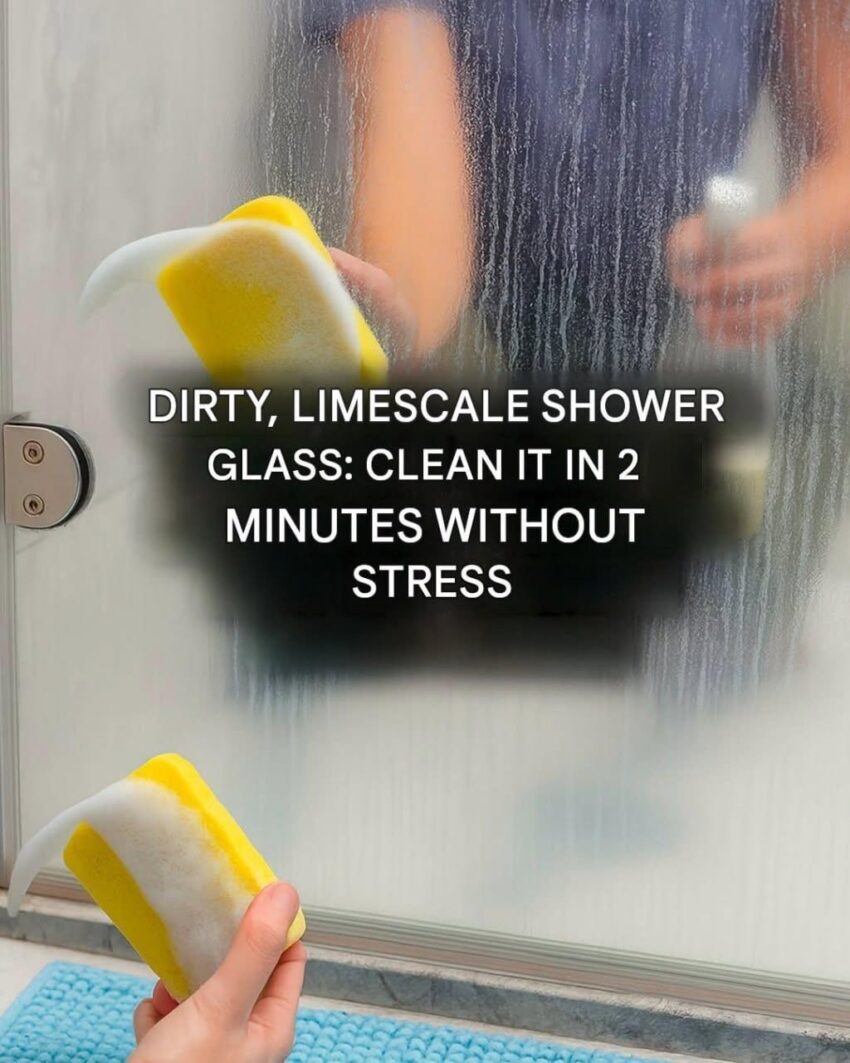
Have you ever looked at your shower glass and wondered why it still looks dirty even after cleaning it? White water spots, cloudy patches, soap scum, and stubborn limescale can make even a clean bathroom look dull and neglected.
The good news is that you don’t always need expensive cleaning products or hours of scrubbing to improve the appearance of your shower glass. With a few simple household supplies and the right technique, you can remove many everyday water marks and soap residues quickly and restore a clearer, shinier finish.
Here is an easy, low-stress method to try.
Why Does Shower Glass Become Cloudy?
Shower glass often develops a cloudy appearance because of a combination of mineral deposits from hard water, soap residue, and body-care products.
When water evaporates, it can leave calcium and magnesium deposits behind. Over time, these deposits accumulate and become more difficult to remove. Soap scum can also stick to the glass, making it look greasy or dull.
Regular maintenance helps prevent these deposits from building up into stubborn stains.
What You’ll Need
Gather these simple supplies before you begin:
- White vinegar
- Warm water
- A spray bottle
- A soft microfiber cloth
- A non-scratch sponge
- A rubber squeegee
- Clean water for rinsing
Important: Check the manufacturer’s instructions before using vinegar on your shower enclosure. Avoid acidic cleaners on natural stone, marble, limestone, and other acid-sensitive surfaces. Never mix vinegar with bleach or other cleaning products.
The Quick Shower Glass Cleaning Method
Step 1: Prepare a Cleaning Solution
For ordinary soap residue and light mineral marks, mix equal parts white vinegar and warm water in a spray bottle, provided vinegar is suitable for your glass and surrounding surfaces.
For particularly delicate finishes, use a manufacturer-approved glass cleaner instead.
Step 2: Spray the Glass
Spray the solution over the cloudy areas, concentrating on visible water spots and soap residue.
Allow it to sit briefly according to the cleaner’s instructions. Vinegar may help loosen mineral deposits, but heavy limescale usually needs more contact time than two minutes.
Step 3: Wipe Gently
Use a soft microfiber cloth or non-scratch sponge to wipe the glass in circular motions.
Pay extra attention to the bottom edges and areas around the shower handles, where residue often accumulates.
Avoid abrasive pads, steel wool, and harsh scouring powders, which can scratch glass or damage protective coatings.
Step 4: Rinse Thoroughly
Rinse the glass with clean water to remove the loosened residue and cleaning solution.
Do not leave vinegar sitting on metal fixtures, grout, seals, or other surfaces that may be damaged by acid.
Step 5: Dry for a Streak-Free Finish
Use a rubber squeegee to remove excess water, then finish with a clean microfiber cloth.
Drying is one of the simplest ways to prevent new water spots from forming.
Can it really be done in two minutes? Light water spots and fresh soap residue may take only a couple of minutes to wipe away. Thick, established limescale usually requires repeated treatment or a suitable specialist cleaner.
What If the Limescale Is Extremely Stubborn?
If the glass remains cloudy after a quick clean, the deposits may be too thick for a short wipe-down.
Try the following approach:
- Use a limescale remover specifically approved for shower glass and the surrounding materials.
- Follow the product’s label for application time and protective equipment.
- Rinse the surface thoroughly.
- Dry the glass with a squeegee and microfiber cloth.
If the cloudiness remains even after the mineral deposits are removed, the glass may have etching or damage to a protective coating. Unfortunately, cleaning products cannot always reverse that damage.
How to Keep Shower Glass Clean Longer
A few simple habits can reduce the need for intensive cleaning.
- Use a squeegee after every shower. Removing water before it evaporates helps prevent mineral deposits.
- Keep a microfiber cloth nearby. Wipe away splashes and moisture from the glass edges.
- Clean regularly. Frequent light cleaning is generally easier than removing months of accumulated limescale.
- Improve ventilation. Use an extractor fan or open a suitable window to reduce lingering moisture.
- Check the shower products you use. Some soaps and body washes leave more residue than others.
Common Mistakes to Avoid
Using abrasive scrubbers: These may scratch the glass or damage special coatings.
Leaving cleaning products on too long: Always follow the product label and rinse when instructed.
Mixing cleaning chemicals: Never combine vinegar with bleach, and do not mix different cleaners.
Ignoring the surrounding surfaces: Acidic solutions can damage natural stone, certain metals, grout, and seals.
Expecting severe limescale to disappear instantly: Thick mineral deposits often require a longer, repeated, or specialist treatment.
Final Thoughts
Cloudy shower glass does not always require expensive products or exhausting scrubbing. For light water spots and everyday soap residue, a suitable cleaner, a soft cloth, and a quick squeegee finish can make a noticeable difference.
For heavy limescale, allow enough treatment time and use a product that is safe for your shower enclosure. Once the glass is clean, a few seconds of drying after each shower can help keep it looking clearer for longer.
The secret to sparkling shower glass is simple: clean gently, rinse thoroughly, and prevent water from drying on the surface.