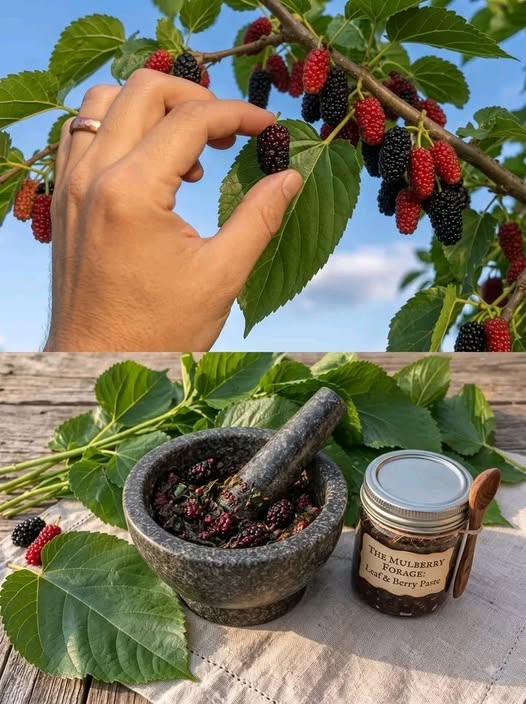
Mulberry leaves offer more than food for silkworms. Discover their traditional uses, potential health benefits, nutritional compounds, and simple ways to use them safely.
Introduction
When people think of mulberry trees, they usually picture the sweet, juicy berries that ripen during the warmer months. These delicious fruits are enjoyed fresh, dried, or added to smoothies, desserts, jams, and homemade drinks. But there is another part of the mulberry tree that deserves attention: its leaves.
Mulberry leaves have been used in traditional practices for centuries, particularly in parts of Asia. They are also essential in silk production because silkworms feed on them. Beyond these familiar uses, researchers have studied mulberry leaves for their natural plant compounds and their possible effects on blood sugar and other aspects of health.
Although mulberry leaves are not a miracle cure, they are an interesting example of how an often-overlooked part of a plant may have practical and nutritional value.
1. Mulberry Leaves Contain Beneficial Plant Compounds
Mulberry leaves contain several naturally occurring compounds, including polyphenols, flavonoids, and other antioxidants. These substances help plants protect themselves from environmental stress and are also being studied for their potential roles in human health.
Antioxidants help neutralize unstable molecules known as free radicals. A balanced diet rich in fruits, vegetables, and other plant foods can provide a variety of these compounds.
The exact nutritional composition of mulberry leaves depends on the species, growing conditions, maturity, and preparation method. Eating mulberry leaves should not be considered a replacement for a varied, balanced diet.
2. They May Help Support Healthy Blood Sugar Levels
One of the most researched aspects of mulberry leaves is their potential effect on blood sugar.
Mulberry leaves contain a compound called 1-deoxynojirimycin (DNJ). This compound can inhibit certain enzymes involved in breaking down carbohydrates into absorbable sugars. As a result, some mulberry leaf preparations may reduce the rise in blood glucose after a carbohydrate-containing meal.
However, the effects depend on the preparation, dose, and individual circumstances. Research findings do not mean that eating ordinary mulberry leaves will reliably control diabetes.
People with diabetes should continue following their prescribed treatment plan. Anyone considering mulberry leaf supplements should consult a healthcare professional, especially if they take medication that lowers blood sugar, because the combination could increase the risk of hypoglycemia.
3. Mulberry Leaves Have a Long History in Traditional Practices
In several Asian cultures, mulberry leaves have traditionally been prepared as teas or used in food. Their history is closely connected to traditional agriculture, herbal practices, and silk production.
Today, dried mulberry leaves are sometimes sold as herbal tea, while powdered leaves may be included in certain food products.
Traditional use can make a plant worth studying, but it does not automatically prove that every claimed health benefit is scientifically established. The quality and safety of a preparation matter just as much as its traditional reputation.
4. They May Contribute to Heart-Healthy Eating
Some laboratory and early human research has investigated whether compounds in mulberry leaves may influence cholesterol levels, inflammation, and other markers associated with cardiovascular health.
The evidence is still developing, and it is not strong enough to say that mulberry leaves prevent heart attacks, clear blocked arteries, or replace cholesterol-lowering medication.
For heart health, the more reliable approach remains a balanced eating pattern that includes vegetables, fruits, whole grains, legumes, nuts, and appropriate sources of protein, together with regular physical activity and medical care when needed.
Mulberry leaves may be an additional food ingredient, but they should not be treated as a stand-alone heart remedy.
5. They May Have Antioxidant and Anti-Inflammatory Potential
Researchers have studied compounds in mulberry leaves for antioxidant and anti-inflammatory activity. Some findings come from laboratory experiments or animal studies, which can help scientists understand how plant compounds work.
However, laboratory results do not necessarily translate into meaningful health benefits in humans. More high-quality human research is needed to determine which effects are reliable, how much would be needed, and who might benefit.
It is therefore more accurate to describe these properties as promising areas of research rather than proven treatments for inflammatory diseases.
6. Mulberry Leaves Are Important Beyond Human Nutrition
Mulberry leaves are especially important in sericulture, the farming of silkworms for silk production. Silkworms depend on mulberry leaves as their primary food source during much of their larval development.
The quality of the leaves can influence silkworm growth and silk production. This makes mulberry trees valuable not only for their fruit but also for agriculture and textile-related livelihoods.
The leaves can also contribute to the broader usefulness of the tree, which may be grown for shade, fruit, and other locally appropriate purposes.
7. Can You Make Mulberry Leaf Tea at Home?
Mulberry leaf tea is available commercially, but anyone using homegrown leaves should be careful about identification, cleanliness, and possible chemical contamination.
A cautious approach is to:
- Confirm that the tree has been correctly identified.
- Use leaves from a location that has not been treated with pesticides or other unsafe chemicals.
- Wash the leaves thoroughly.
- Prefer products from reputable suppliers when the leaves are intended for consumption.
- Start by checking with a healthcare professional if you have a medical condition or take regular medication.
Do not assume that a stronger brew or a larger quantity is more beneficial. There is no universally established home-tea dosage for treating a medical condition.
8. Who Should Be Careful With Mulberry Leaf Products?
Although mulberry leaves are used in some foods and herbal products, concentrated extracts and supplements may not be appropriate for everyone.
Extra caution is important for:
- People taking diabetes medication: Mulberry leaf products may affect blood glucose and could increase the risk of low blood sugar when combined with certain medicines.
- Pregnant or breastfeeding people: Safety information for medicinal amounts and concentrated supplements is limited. Avoid using them medicinally unless your healthcare professional approves.
- People taking several medications: Herbal products can have unwanted effects or interactions.
- People with allergies or digestive sensitivity: Stop using a product if it causes a reaction or persistent discomfort.
Seek medical advice rather than using mulberry leaves to treat symptoms or replacing prescribed treatment.
9. Do Mulberry Leaves Help With Weight Loss?
Mulberry leaves are sometimes promoted as a weight-loss ingredient because of their possible effects on carbohydrate digestion. However, there is not enough evidence to conclude that drinking mulberry leaf tea by itself causes meaningful or lasting weight loss.
Sustainable weight management depends on overall eating habits, activity, sleep, and individual health circumstances. No single leaf, tea, or supplement can reliably replace these foundations.
Conclusion
Mulberries may receive most of the attention because of their sweet flavor, but their leaves have their own story. They support silkworm farming, have a long history of traditional use, and contain plant compounds that researchers continue to investigate.
Their potential effects on blood sugar are particularly interesting, but the evidence is not a reason to treat mulberry leaves as a cure for diabetes, heart disease, or other conditions.
The best way to appreciate mulberry leaves is to recognize both their practical value and the limits of what science currently knows. Sometimes, the most overlooked part of a familiar plant turns out to be worth a closer look.