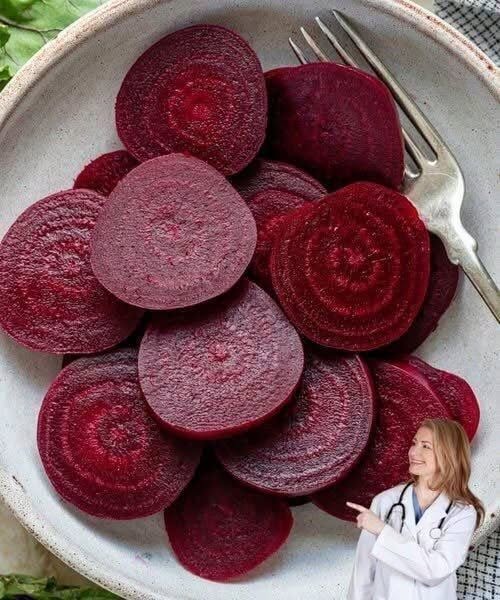
Beets are a nutrient-rich vegetable that can be part of a healthy diet. Their potential benefits are largely linked to dietary nitrates, fiber, folate, potassium, and antioxidant compounds called betalains.
Potential Benefits of Eating Beets
1. May support healthy blood pressure
Beets are naturally rich in nitrates. The body can convert dietary nitrates into nitric oxide, which helps relax and widen blood vessels. Research suggests that consuming nitrate-rich foods such as beets may help modestly lower blood pressure in some people.
2. May support heart health
The combination of nitrates, potassium, fiber, and antioxidants makes beets a heart-healthy food choice. Including vegetables such as beets in an overall balanced diet may contribute to cardiovascular health.
3. May improve exercise performance
Beetroot juice has been studied in athletes because dietary nitrates may improve the efficiency of oxygen use during exercise. Some research suggests this can benefit endurance and exercise performance, particularly during certain types of physical activity.
4. Supports digestion
Whole beets contain dietary fiber, which helps support regular bowel movements and a healthy digestive system. Fiber also contributes to a healthy gut microbiome.
5. Provides important nutrients
Beets contain several vitamins and minerals, including folate, potassium, manganese, and vitamin C in smaller amounts. Folate is particularly important for normal cell division and other bodily functions.
6. Contains antioxidant compounds
The deep red-purple color of many beets comes from betalain pigments. These compounds have antioxidant and anti-inflammatory properties in laboratory and human research, although the health effects of individual compounds should not be overstated.
How Much Should You Eat?
There is no universally established amount of beets that everyone needs to eat for health benefits. You can enjoy them as part of your regular vegetable intake—roasted, steamed, boiled, grated into salads, or incorporated into other dishes.
Whole beets generally provide more fiber than beet juice, while juice can provide a concentrated source of nitrates but may contain little or no fiber.
One Thing That May Surprise You
After eating beets, your urine or stool may temporarily become pink or red. This is called beeturia and is generally harmless. However, if you see unexplained blood in your urine or stool when you have not recently eaten beets, you should contact a healthcare professional.
Bottom Line
Beets can be a nutritious addition to a balanced diet. Their dietary nitrates may support blood-vessel function and exercise performance, while their fiber, folate, potassium, and betalain compounds provide additional nutritional value. They should be viewed as one healthy food—not a treatment or cure for disease.