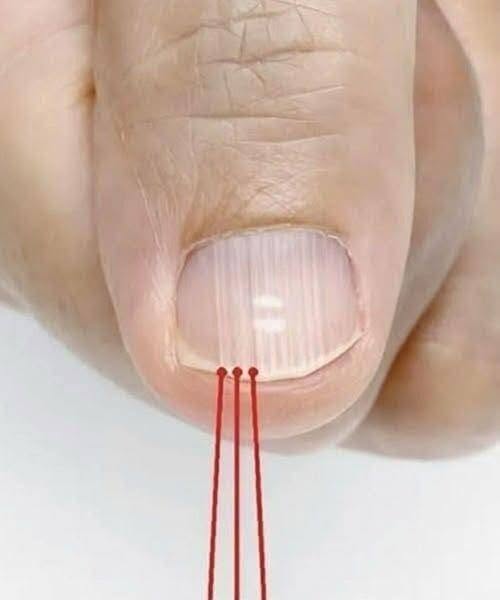
Red lines under your fingernails can have several causes, from minor nail injuries to splinter hemorrhages. Learn what these lines may mean, when they are harmless, and when you should see a doctor.
Red Lines Under Your Fingernails: What Could They Mean?
Have you ever noticed tiny red, brown, or reddish-black lines running lengthwise beneath a fingernail? They can look like small splinters trapped under the nail. These marks are commonly called splinter hemorrhages because they can occur when tiny blood vessels beneath the nail are damaged.
The image above appears to illustrate this type of nail change. However, a photograph alone cannot determine the cause, and not every dark or red line beneath a nail represents the same condition.
Common causes
1. Minor injury
A bump, pinch, manicure, nail biting, or pressure on the nail can damage tiny blood vessels and produce a narrow line of bleeding underneath the nail.
2. Repeated pressure
Activities that repeatedly put pressure on the fingertips can sometimes cause these small marks.
3. Nail or skin conditions
Certain inflammatory or dermatological conditions can affect the nail and produce unusual discoloration or lines.
4. Less common medical causes
Multiple splinter hemorrhages appearing without an obvious injury can occasionally be associated with underlying medical problems. One example is infective endocarditis, but splinter hemorrhages alone do not mean someone has a heart infection.
When should you pay attention?
It’s worth speaking with a healthcare professional if:
- The lines appear on many nails without an obvious injury
- New marks keep appearing
- The discoloration doesn’t gradually move toward the nail tip as the nail grows
- You also have unexplained fever or feel unusually unwell
- The nail becomes painful, swollen, or changes significantly
- You notice a persistent dark streak that is becoming wider or changing in appearance
Don’t panic over a single line
A single thin red line after an injury is often much less concerning than multiple unexplained changes. Nails grow slowly, so a small area of bleeding can remain visible for weeks while it gradually moves outward with nail growth.
Important: Don’t try to puncture, cut, or scrape underneath the nail to remove the mark. If you’re unsure about a persistent nail discoloration, having it examined is safer than trying a home remedy.
Bottom line: Red lines beneath a nail are often caused by tiny injuries, but their appearance and accompanying symptoms matter. Persistent, recurring, or unexplained nail changes deserve professional evaluation rather than assuming they indicate a serious disease.