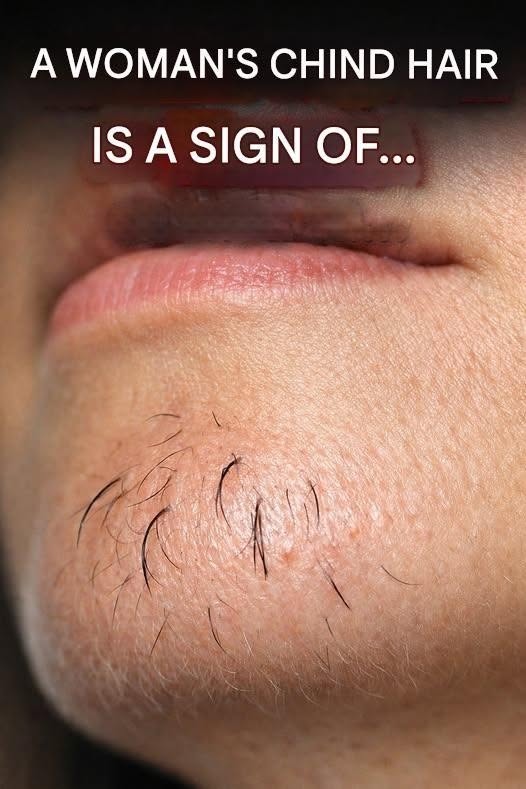
A few chin hairs are common in women, but sudden or excessive facial hair can sometimes be linked to hormones, aging, genetics, or conditions such as PCOS. Learn when chin hair is normal and when it deserves medical attention.
Finding a few dark or coarse hairs on your chin can be surprising, especially if they weren’t there before. But chin hair in women is not automatically a sign of illness. It can happen for completely normal reasons, including genetics, aging, and natural changes in hormone levels.
At the same time, new or excessive facial hair can sometimes be a sign of increased androgen activity. That’s why the pattern, amount, and speed of change matter.
Why Do Women Get Chin Hair?
Hair growth is influenced by hormones called androgens, including testosterone. Women naturally produce small amounts of these hormones.
Hair follicles can also become more sensitive to androgens over time. As a result, fine, light facial hair may gradually become thicker, darker, and more noticeable.
This can happen even when hormone levels themselves are not abnormally high.
1. Aging and Hormonal Changes
One of the most common reasons women notice chin hairs later in life is normal hormonal change.
As estrogen levels change with age, particularly around and after menopause, the balance between estrogen and androgen activity can shift. Some women consequently notice:
- A few coarse chin hairs
- Upper-lip hair
- More noticeable facial hair
- Thinner scalp hair
- Changes in skin texture
A couple of isolated chin hairs can therefore be completely normal.
2. Genetics
Some women are simply more genetically predisposed to facial hair growth.
If your mother, sisters, or other female relatives have noticeable facial hair, genetics may play a role in your own hair pattern.
In these cases, chin hair doesn’t necessarily indicate a hormonal problem.
3. PCOS and Increased Androgen Levels
When facial hair becomes more extensive, polycystic ovary syndrome (PCOS) is one possible explanation, particularly in younger women.
PCOS can be associated with increased androgen activity and may cause symptoms such as:
- Excess facial or body hair
- Irregular menstrual cycles
- Acne
- Scalp hair thinning
- Difficulty with ovulation
- Weight-related changes in some women
However, having chin hair alone does not mean you have PCOS.
A healthcare professional considers the complete pattern of symptoms rather than diagnosing a condition based on one sign.
4. Certain Medications
Some medications can affect hormone activity or hair growth.
If you noticed increased facial hair after starting a new medication or changing the dose of an existing medicine, don’t stop the medication on your own. Instead, discuss the change with your healthcare professional.
5. Less Common Hormonal Conditions
Rapidly developing and extensive facial hair can occasionally be associated with other endocrine conditions that increase androgen production.
These are much less common than normal aging, genetics, or common hormonal variations.
The speed of change is particularly important.
A few hairs developing gradually over several years are very different from suddenly developing significant facial hair over a few months.
When Is Chin Hair Worth Checking?
You don’t necessarily need medical testing simply because you discover one or two chin hairs.
However, it’s sensible to seek medical advice if facial hair is:
- Suddenly becoming much thicker or more widespread
- Appearing rapidly
- Accompanied by irregular or absent periods
- Associated with severe or new acne
- Occurring alongside scalp hair loss
- Accompanied by unexplained changes in your weight
- Associated with a deeper voice or other significant hormonal changes
A doctor may ask about your menstrual cycle, medications, family history, and other symptoms. Depending on the situation, they may recommend hormone testing or other investigations.
What About One Random Chin Hair?
One or two coarse hairs are usually not something to panic about.
Hair follicles don’t all behave identically. One follicle can produce a thick, dark hair while neighboring follicles produce barely visible hairs.
You can safely remove an unwanted hair by trimming, tweezing, threading, or another suitable cosmetic method.
And no—plucking a chin hair does not make several hairs grow back from the same follicle. It may feel thicker when it grows back because the newly emerging hair has a blunt tip.
Does Chin Hair Mean High Testosterone?
Not necessarily.
This is one of the most common misconceptions.
Some women naturally have coarse facial hair despite having normal hormone levels. Hair follicles can differ in their sensitivity to hormones, and genetics and age also influence hair growth.
Therefore, facial hair by itself cannot tell you whether your testosterone level is high.
What If the Hair Keeps Increasing?
If you notice a gradual increase in facial hair, pay attention to other changes happening at the same time.
For example, chin hair + irregular periods + acne + scalp hair thinning may be more suggestive of increased androgen activity than chin hair alone.
Keeping track of when the change began and whether other symptoms appeared can make a medical consultation more useful.
The Bottom Line
A woman’s chin hair can be completely normal. Aging, genetics, and natural hormonal changes are common reasons for a few coarse hairs.
But sudden or excessive facial hair—especially when accompanied by menstrual changes, acne, scalp hair loss, or other hormonal symptoms—deserves medical evaluation.
So don’t assume that every chin hair is a warning sign. Instead, look at the overall pattern and whether anything has changed suddenly.