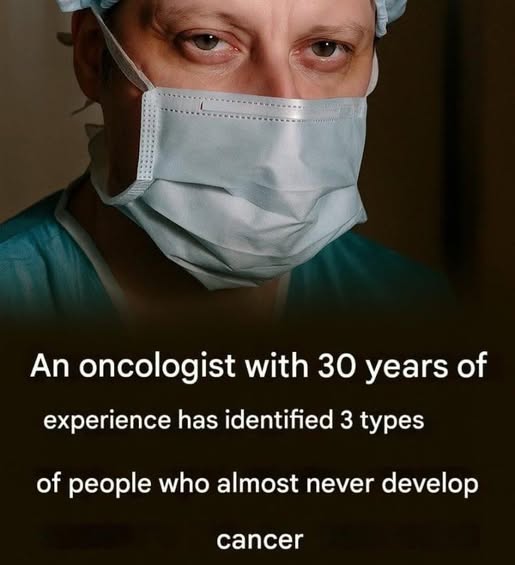
This claim is misleading as written. There are no three types of people who are guaranteed—or even reliably expected—to “almost never develop cancer.” Cancer risk depends on age, genetics, environmental exposures, infections, lifestyle, and chance.
A safer, evidence-based version would be:
3 Types of People Who May Have a Lower Risk of Certain Cancers
Meta Description: Can certain characteristics lower cancer risk? Learn about three groups of people who may have a lower risk of developing some cancers—and why no one is completely protected.
Cancer can affect anyone, but some people have lower risks for particular cancers because of protective factors. However, having these characteristics does not mean someone is immune to cancer.
1. People Who Avoid Tobacco
Tobacco use is one of the most important preventable causes of cancer. Avoiding cigarettes and other tobacco products substantially reduces the risk of lung cancer and several other cancers.
2. People Who Maintain a Healthy Lifestyle
Regular physical activity, maintaining a healthy weight, eating a balanced diet, and limiting alcohol can help reduce the risk of several cancers. These habits don’t eliminate cancer risk, but they can contribute to better long-term health.
3. People Who Follow Recommended Screening and Prevention Measures
People who participate in appropriate cancer screening may be more likely to detect certain cancers—or precancerous changes—early. Depending on age, sex, family history, and personal risk, screening may include tests for colorectal, cervical, breast, or lung cancer.
The Important Truth
There is no group of people who “almost never develop cancer.” Even people who don’t smoke, eat well, exercise, and attend screenings can develop cancer.
The goal isn’t to find a way to become “cancer-proof.” Instead, focus on reducing preventable risks, knowing your personal risk factors, following appropriate screening recommendations, and discussing unusual or persistent symptoms with a healthcare professional.