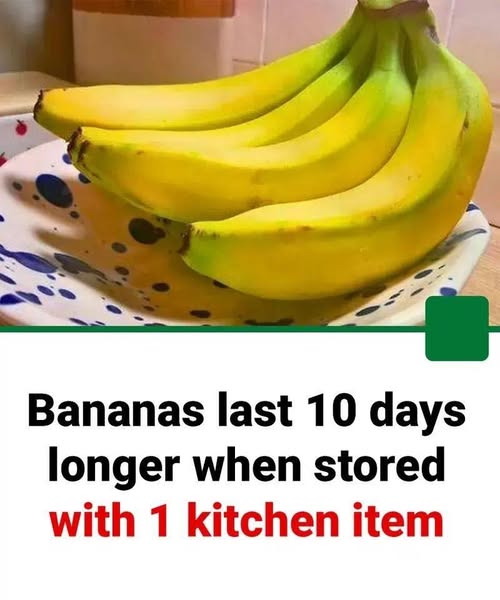
Want bananas to stay fresh longer? Learn a simple kitchen storage trick that can help slow ripening, reduce bruising, and keep bananas usable for longer than storing them in a crowded fruit bowl.
Bananas Can Last Longer When Stored With One Kitchen Item Instead of in a Fruit Bowl
Have you ever bought a bunch of bananas only to find them covered in brown spots a few days later?
Bananas naturally continue to ripen after they’re picked. Warm temperatures, bruising, and exposure to ethylene gas can speed up that process. While you can’t stop ripening completely, the way you store bananas can make a noticeable difference.
One simple trick is to use a piece of plastic wrap around the banana stems.
Why Wrap the Banana Stems?
Bananas naturally produce ethylene, a plant hormone involved in ripening. The stem area is an important source of ethylene release.
Wrapping the stems individually with a small piece of plastic wrap may help reduce the movement of ethylene around the fruit and can slow ripening somewhat.
It isn’t a guarantee that bananas will last exactly 10 additional days, because storage time depends on temperature, ripeness, variety, and handling. But it is an easy trick worth trying.
How to Do It
You don’t need much.
You’ll need:
- A bunch of bananas
- A small piece of plastic wrap
Step 1: Separate the Bananas
If you want to try the method individually, gently separate the bananas from the bunch.
Be careful not to pull or damage the stems.
Step 2: Wrap the Stems
Wrap a small piece of plastic wrap tightly around the exposed stem at the top of each banana.
You don’t need to cover the entire fruit.
Step 3: Store Them Properly
Keep the bananas somewhere cool and dry, away from direct sunlight and heat-producing appliances.
Avoid placing them next to fruits that release large amounts of ethylene as they ripen, such as apples or ripe avocados, if your goal is to slow ripening.
Why the Fruit Bowl May Not Be Ideal
A fruit bowl isn’t necessarily bad for bananas, but it can expose them to several things that speed up deterioration.
Bananas can become bruised when they are piled together, and warm kitchen temperatures can accelerate ripening.
A crowded fruit bowl can also place bananas close to other ripe fruits, increasing their exposure to ethylene.
What About the Refrigerator?
Once bananas have reached the ripeness you like, refrigeration can slow further ripening.
The peel may turn dark or brown in the refrigerator, but the fruit inside can remain perfectly edible.
For green or underripe bananas, however, refrigeration isn’t usually the best choice because cold temperatures can interfere with normal ripening.
Don’t Throw Away Brown Bananas
Even when the peel becomes heavily spotted, the inside may still be good.
Very ripe bananas are excellent for:
- Banana bread
- Smoothies
- Pancakes
- Oatmeal
- Muffins
- Homemade frozen banana desserts
If the fruit develops an unpleasant smell, visible mold, leaking liquid, or other signs of spoilage, discard it.
Another Easy Trick: Buy at Different Ripeness Levels
If your household doesn’t eat bananas quickly, consider buying some that are slightly green and others that are already ripe.
This spreads out the ripening process so you don’t have an entire bunch becoming overripe at the same time.
The Bottom Line
Wrapping banana stems with a little plastic wrap is a simple storage trick that may slow ripening, but claims that it will always make bananas last exactly 10 days longer are exaggerated.
For the best results, keep bananas away from heat and direct sunlight, minimize bruising, and refrigerate them once they’ve reached your preferred level of ripeness.
A small change in how you store them can help you waste less fruit—and get more days out of every bunch.