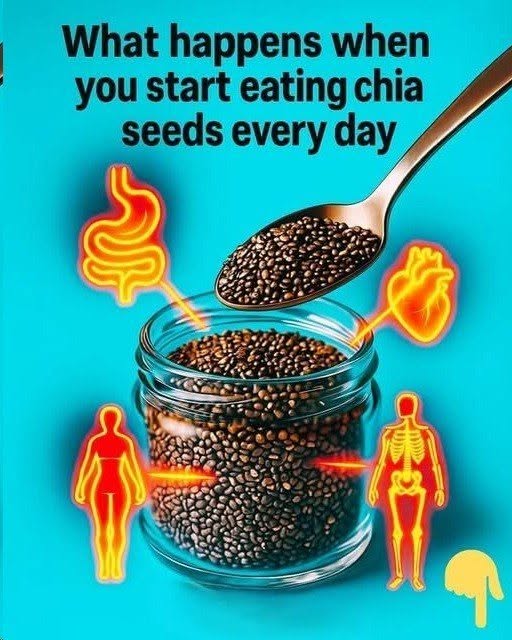
Chia seeds may be tiny, but they’re packed with fiber, healthy fats, protein, and several important minerals. Adding them to your daily diet can be an easy way to improve the nutritional value of breakfast, smoothies, yogurt, or snacks.
But what actually happens when you eat chia seeds every day? The answer depends on how much you eat, how you prepare them, and the rest of your diet.
Here’s what you should know.
1. Your Fiber Intake May Increase
One of the biggest benefits of chia seeds is their high fiber content.
A typical 2-tablespoon (about 28-gram) serving provides roughly 10 grams of fiber. This can make a meaningful contribution toward your daily fiber needs.
Adequate fiber can support:
- Regular bowel movements
- Digestive health
- Feeling full after meals
- Healthy blood sugar levels
- Healthy cholesterol levels
If you don’t currently eat much fiber, start with a smaller amount and increase gradually. A sudden large increase can cause gas, bloating, or abdominal discomfort.
2. You May Feel Fuller Between Meals
Chia seeds absorb liquid and form a gel-like consistency because they contain soluble fiber.
That fiber can slow digestion and contribute to feelings of fullness. Adding chia seeds to oatmeal, yogurt, or a smoothie may therefore make a meal more satisfying.
However, chia seeds aren’t a magic weight-loss food. Weight management depends on your overall diet, activity level, sleep, and energy intake.
3. Your Digestive System May Become More Regular
For people who don’t consume enough fiber, adding chia seeds may help promote regular bowel movements.
The combination of soluble and insoluble fiber adds bulk to stool and supports normal intestinal movement.
But there’s an important catch: fiber works best when you also consume enough fluid.
Increasing chia seeds dramatically while drinking very little water can make constipation or digestive discomfort worse.
4. You Get Plant-Based Omega-3 Fatty Acids
Chia seeds are particularly rich in alpha-linolenic acid (ALA), a plant-based omega-3 fatty acid.
Omega-3 fats are important for overall health, including cardiovascular function.
The body can convert ALA into EPA and DHA, the omega-3 fats found in fish, but this conversion is limited. Therefore, chia seeds can be a useful source of ALA, but they aren’t nutritionally identical to oily fish.
5. You Add More Protein to Your Diet
Chia seeds contain plant protein and can contribute to your daily protein intake.
They’re especially useful when combined with other protein-rich foods such as:
- Greek yogurt
- Milk or fortified plant milk
- Eggs
- Beans
- Nuts
- Seeds
Because a normal serving of chia provides only a modest amount of protein, it shouldn’t be considered a complete replacement for a major protein source.
6. You Get Important Minerals
Daily chia seeds can contribute minerals such as:
- Calcium
- Magnesium
- Phosphorus
- Manganese
- Copper
These nutrients support functions ranging from bone health and muscle function to normal energy metabolism.
A varied diet is still important because no single food provides everything your body needs.
7. Your Blood Sugar Response May Be More Favorable
Because chia seeds contain substantial fiber, adding them to a carbohydrate-containing meal may slow digestion and help moderate the rise in blood glucose after eating.
This doesn’t mean chia seeds can treat or cure diabetes.
People taking diabetes medication should continue following their prescribed treatment and dietary plan.
8. Your Heart-Healthy Diet Gets a Nutritional Boost
Replacing foods high in saturated fat or refined carbohydrates with nutrient-dense foods such as chia seeds can be part of a heart-healthy eating pattern.
Their fiber and ALA content are particularly useful additions to a balanced diet.
But the overall eating pattern matters much more than one ingredient. Vegetables, fruits, whole grains, legumes, nuts, seeds, and healthy sources of protein all have a role to play.
What Is the Best Way to Eat Chia Seeds?
There are plenty of easy options.
Chia Pudding
Mix chia seeds with milk or a fortified plant-based alternative and refrigerate until thickened. Add fruit, cinnamon, or nuts for extra flavour.
Add Them to Oatmeal
Stir a spoonful into cooked oatmeal. Add additional liquid if the mixture becomes too thick.
Sprinkle Them on Yogurt
Combine chia seeds with yogurt and fruit for a simple breakfast or snack.
Blend Them Into Smoothies
A small amount can add fiber, healthy fats, and texture without dramatically changing the flavour.
Add Them to Overnight Oats
Combine oats, milk, chia seeds, and fruit and refrigerate overnight.
Do You Need to Soak Chia Seeds?
You don’t necessarily have to soak chia seeds before eating them, but soaking them is an easy way to incorporate them into meals while allowing them to absorb liquid.
If you’re eating dry chia seeds, avoid swallowing large quantities by themselves. Because they absorb liquid, consuming a substantial amount dry may cause problems, particularly if you have difficulty swallowing.
If you have a swallowing disorder or certain digestive conditions, ask your healthcare professional how best to include them.
Can You Eat Chia Seeds Every Day?
For most healthy adults, a moderate daily serving can fit comfortably into a balanced diet.
A common serving is around 1–2 tablespoons, but there’s no requirement to eat that much every day.
If you’re new to chia seeds, begin with a smaller quantity and increase gradually while drinking adequate fluids.
More isn’t necessarily better.
Possible Side Effects of Eating Too Many Chia Seeds
Chia seeds are nutritious, but excessive amounts can cause problems.
You may experience:
- Bloating
- Gas
- Abdominal discomfort
- Constipation, particularly without enough fluid
- Diarrhea in some people
People with swallowing difficulties or certain gastrointestinal conditions should be particularly cautious.
It’s also worth remembering that chia seeds are calorie-dense despite their small size, so large quantities can add substantial calories to your diet.
What About Chia Seeds and Weight Loss?
Chia seeds are sometimes promoted as a “fat-burning” food. That’s misleading.
They don’t directly burn body fat.
Their high fiber content may help you feel satisfied, which can make it easier for some people to manage overall food intake. But weight loss requires an overall calorie deficit, and no individual food can guarantee it.
Think of chia seeds as a nutritious ingredient—not a miracle weight-loss treatment.
Who Should Be Careful With Chia Seeds?
Most people can eat chia seeds safely, but certain individuals should discuss their use with a healthcare professional.
This includes people who:
- Have difficulty swallowing
- Have significant digestive problems
- Take medications that affect blood clotting
- Have known food allergies
- Have been advised to follow a medically restricted diet
If you’re taking medication for a chronic condition, don’t use chia seeds as a replacement for prescribed treatment.
Frequently Asked Questions
Is one tablespoon of chia seeds a day enough?
Yes. You don’t need a large amount to benefit from adding chia seeds to a nutritious diet.
Should I eat chia seeds in the morning or at night?
There’s no special time that makes chia seeds dramatically more effective. Choose the time that fits comfortably into your routine.
Do chia seeds help with constipation?
Their fiber may help support regular bowel movements, especially when combined with adequate fluid. Introduce them gradually if your current diet is low in fiber.
Are black and white chia seeds different?
Nutritionally, black and white chia seeds are very similar. The difference is mainly their appearance.
Can chia seeds replace fish?
Not completely. Chia provides plant-based ALA omega-3, whereas oily fish provides EPA and DHA. They can both be part of a healthy diet.
Final Thoughts
Eating chia seeds every day can be a simple way to add more fiber, plant-based omega-3 fats, protein, and minerals to your diet. They may help you feel fuller, support digestive regularity, and contribute to an overall heart-healthy eating pattern.
The key is moderation. Start with a small serving, drink enough fluids, and incorporate chia seeds into a varied diet rather than treating them as a cure-all.
A tablespoon stirred into yogurt, oatmeal, a smoothie, or overnight oats may be all you need to make these tiny seeds a useful part of your everyday nutrition.