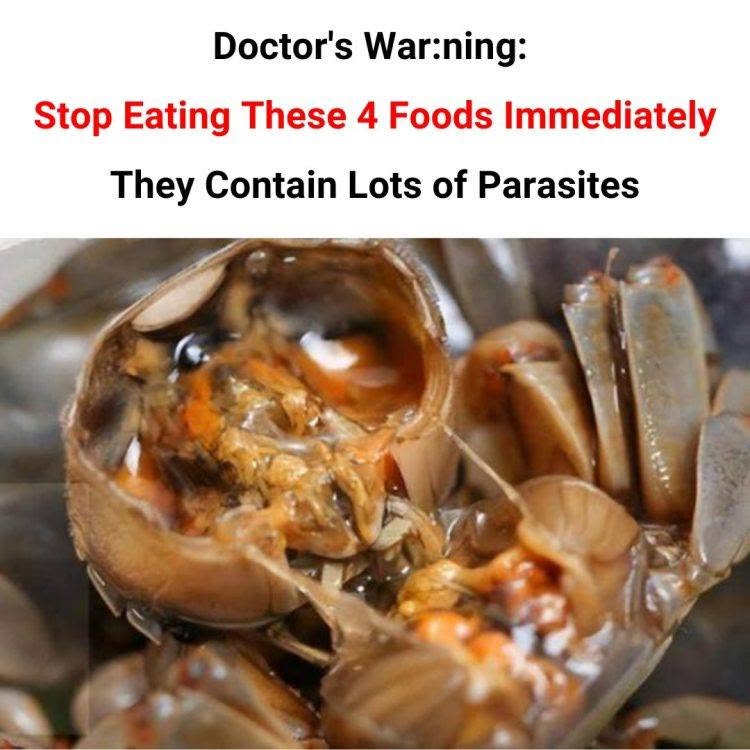
Viral claims say doctors are warning people about four foods containing parasites. Here’s what food-safety experts actually say about raw fish, undercooked meat, produce and parasite risks.
There is a real issue behind the viral claim: some foods can carry parasites when they are raw, undercooked, contaminated, or improperly handled. But that is very different from saying that ordinary servings of these foods are “full of parasites” or that everyone should immediately stop eating them.
Here is what the evidence actually shows.
The viral claim: fact or exaggeration?
The statement that four foods “contain a lot of parasites” is too broad to be considered accurate medical advice.
Foodborne parasites are a genuine public-health concern. However, the risk varies according to the particular food, how it was produced, where it came from, whether it was contaminated, and—most importantly—how it was prepared.
For example, the U.S. Food and Drug Administration (FDA) notes that some species of fish can contain parasites and that raw fish is more likely to pose parasite and bacterial risks than properly cooked fish.
So the important question isn’t simply “Does this food contain parasites?” It is:
Was the food contaminated, and was it prepared in a way that eliminates the hazard?
1. Raw or undercooked fish
Raw fish is probably the strongest example behind these viral warnings.
Foods such as sushi, sashimi and ceviche can involve fish that isn’t fully cooked. Certain fish may carry parasitic worms, including species capable of causing human infection.
The FDA specifically says that some fish can contain parasites and recommends thorough cooking as the safest approach. For finfish, its general recommendation is an internal temperature of 145°F (63°C). That doesn’t mean you have to eliminate fish from your diet.
In fact, the FDA describes fish and shellfish as nutritious foods that can form part of a healthy diet. The concern is primarily raw or inadequately cooked seafood and unsafe handling.
What about frozen fish?
Freezing can destroy certain parasites, which is why parasite-control freezing procedures are used for some fish intended to be eaten raw. FDA guidance specifies particular time-and-temperature combinations for parasite destruction.
However, freezing isn’t a universal substitute for cooking because it doesn’t eliminate every harmful microorganism. The FDA therefore considers thorough cooking the safest option.
2. Raw or undercooked freshwater fish
Freshwater fish can also be associated with particular parasitic infections, especially in regions where those parasites naturally occur.
The risk isn’t necessarily the fish itself—it is often connected to eating the fish raw or insufficiently cooked.
This is why traditional dishes involving raw, lightly cooked, pickled or marinated fish require particular attention to food-safety practices.
Cooking is one of the most effective ways to eliminate many foodborne hazards.
3. Undercooked meat
Another category that sometimes appears in parasite-related warnings is raw or undercooked meat.
Certain parasitic infections can occur when meat containing parasite larvae or other infectious stages is consumed without adequate cooking.
But once again, the viral phrase “meat contains lots of parasites” is an oversimplification.
The actual risk depends on contamination and preparation. Proper cooking substantially reduces foodborne hazards.
The FDA’s general safe-handling guidance recommends, for example, 145°F (63°C) with a three-minute rest for beef, pork, veal and lamb steaks, chops and roasts, while ground meat should reach 160°F (71°C).
4. Raw or poorly washed produce
Fruits and vegetables can also become contaminated with parasites, particularly when they come into contact with contaminated soil or water.
This doesn’t mean fresh produce is inherently dangerous.
The bigger issue is contamination and hygiene. Washing produce, keeping it separate from raw meat and seafood, and preventing cross-contamination can reduce foodborne illness risks.
It’s also important to remember that simply washing food cannot always eliminate every parasite or pathogen. Proper food handling remains important throughout the preparation process.
Why are parasites found in food?
Parasites are organisms that depend on another organism for survival. Some have life cycles involving animals, fish, contaminated water, soil or food.
Humans can become infected when they consume food containing an infectious stage of a parasite.
The risk is influenced by factors such as:
- Eating food raw or undercooked
- Contaminated water
- Poor sanitation
- Cross-contamination
- Unsafe food handling
- Certain regional food-production practices
- Eating fish or meat from areas where particular parasites occur
This is why saying that a food “has parasites” without discussing preparation and contamination can create unnecessary fear.
Does cooking kill parasites?
Proper cooking is one of the most important protections against foodborne parasites.
For seafood, the FDA recommends cooking finfish to 145°F (63°C). Fish should generally become opaque and separate easily with a fork.
The same principle applies to other potentially risky foods: use appropriate cooking temperatures rather than relying only on appearance.
For raw fish intended for consumption without cooking, specific commercial freezing procedures may be used to control parasites. FDA guidance provides precise time-and-temperature requirements for this purpose.
Who should be especially careful?
Foodborne infections can be more serious for certain groups.
The FDA identifies pregnant women, young children, older adults and people with weakened immune systems as groups that can be more vulnerable to severe foodborne illness.
For these groups, avoiding raw or undercooked seafood is particularly important.
Should you stop eating these four foods?
No—not based on the viral headline alone.
There is an important distinction between:
“This food can carry parasites under certain circumstances.”
and
“This food is full of parasites and you should stop eating it.”
The first statement can be scientifically accurate. The second is an exaggerated generalization.
Fish, meat, fruits and vegetables can all be part of a healthy diet when purchased, stored and prepared safely.
The practical lesson is not to panic about ordinary foods. Instead, focus on proper cooking, refrigeration, hygiene and avoiding high-risk raw foods when appropriate.
Simple ways to reduce your risk
You don’t need an extreme diet to reduce the risk of foodborne parasites.
Follow these basic precautions:
Cook seafood thoroughly.
The FDA recommends 145°F (63°C) for finfish.
Be cautious with raw seafood.
Raw fish and shellfish have greater parasite and bacterial risks than properly cooked seafood.
Prevent cross-contamination.
Keep raw meat and seafood away from ready-to-eat foods, and wash hands, utensils and preparation surfaces after handling raw products.
Refrigerate perishable foods promptly.
FDA guidance recommends refrigerating or freezing perishable foods within two hours, or within one hour when temperatures exceed 90°F (32°C).
Wash produce properly.
Clean fruits and vegetables before eating, particularly when consuming them raw.
Be extra cautious if you’re in a higher-risk group.
Pregnant people, young children, older adults and immunocompromised individuals should follow stricter food-safety recommendations.
The bottom line
The viral headline has a grain of truth wrapped in sensational wording.
Some foods—particularly raw or undercooked fish, certain freshwater fish, undercooked meat and contaminated produce—can transmit parasites. But that does not mean these foods are inherently “full of parasites,” nor does it mean doctors are telling everyone to immediately remove four foods from their diet.
The safer takeaway is simple: cook food properly, prevent cross-contamination, refrigerate perishables promptly, wash produce and be particularly cautious with raw seafood.
Food safety is about how food is sourced, handled and prepared, not about labeling an entire food category as dangerous.