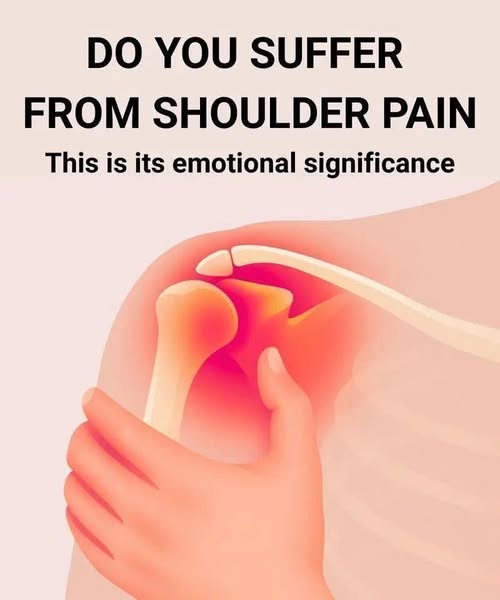
Explore the emotional interpretations sometimes associated with shoulder pain, including stress, emotional burdens, responsibility, and tension—and learn why physical causes should never be overlooked.
Shoulder pain is often described as more than a physical sensation. In some mind-body and holistic approaches, the shoulders are symbolically associated with responsibility, emotional burdens, pressure, and the feeling of “carrying too much.” While these interpretations can be meaningful for self-reflection, they are not scientifically proven explanations for the cause of shoulder pain.
1. Feeling Like You’re Carrying Too Much
Have you been taking care of everyone else while neglecting yourself?
People sometimes connect shoulder tension with the emotional experience of carrying too many responsibilities—family concerns, work, financial pressure, or constant expectations.
You might ask yourself:
- What responsibilities feel especially heavy right now?
- Am I taking on problems that aren’t actually mine?
- Do I have difficulty asking others for help?
2. Stress and Constant Tension
Stress can affect the body physically. When you’re anxious or under pressure, you may unconsciously tighten the muscles around your neck, shoulders, and upper back.
Over time, repeatedly holding these muscles tense can contribute to discomfort and stiffness.
Simple relaxation techniques, stretching, adequate sleep, and regular movement may help when muscle tension is contributing to the discomfort.
3. Difficulty Letting Go
Some holistic traditions interpret shoulder discomfort as a reminder that you’re holding onto something emotionally—such as resentment, disappointment, guilt, or an old conflict.
Rather than assuming that an emotion is causing your pain, consider using the idea as a reflection exercise:
“Is there something emotionally difficult that I need to process or release?”
Journaling, talking with someone you trust, or working through unresolved feelings can sometimes help your overall well-being.
4. Feeling Unsupported
Another common symbolic interpretation involves feeling that you have to handle everything alone.
If you’ve recently experienced a major change, relationship difficulty, family responsibility, or demanding period of life, you may notice yourself thinking:
“Why do I have to do everything myself?”
That emotional experience can increase stress—and stress can influence muscle tension and how strongly you perceive pain.
5. The Side of the Shoulder May Feel Significant—But Be Careful
You may encounter claims online suggesting that right shoulder pain represents one emotion while left shoulder pain represents another.
There isn’t reliable scientific evidence establishing a specific emotional meaning for the right versus left shoulder.
The location can, however, be useful when discussing symptoms with a healthcare professional because different physical problems can affect different structures.
Don’t Assume Shoulder Pain Is “Just Emotional”
This is important.
Shoulder pain can have many physical causes, including muscle strain, tendon problems, bursitis, arthritis, nerve irritation, or an injury. Sometimes pain felt in the shoulder can even originate elsewhere.
Seek urgent medical attention if shoulder pain is sudden or severe, especially if it occurs with chest pressure or pain, shortness of breath, sweating, dizziness, nausea, or pain spreading into the arm, jaw, or back.
For persistent, worsening, or unexplained shoulder pain, it’s best to have it medically evaluated.
A Healthier Way to Look at the Emotional Connection
Instead of saying “my shoulder hurts because I’m emotionally stressed,” a more accurate approach is:
“My shoulder pain has a physical cause that needs attention, and stress or emotional strain may also be affecting how my body feels.”
Your emotions and physical health can influence each other, but one shouldn’t automatically be blamed for the other.
Sometimes shoulder pain may simply be your body’s signal that you need rest, movement, proper treatment, or medical evaluation. And sometimes it can also become an opportunity to ask whether you’re carrying more emotional pressure than you realize.