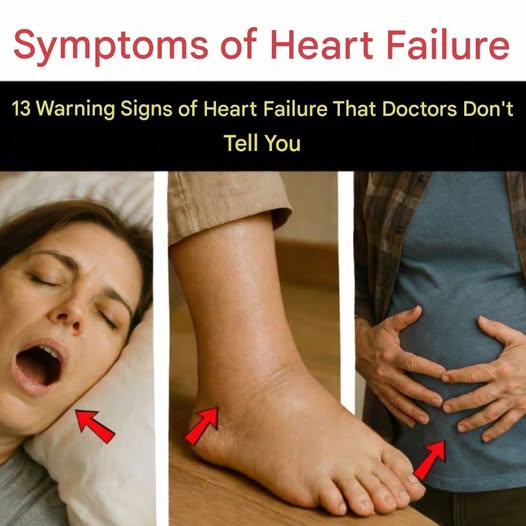
Learn about early symptoms that may be associated with heart failure, including breathlessness, fatigue, swelling, rapid weight gain, and persistent coughing, and when to seek medical care.
Heart failure doesn’t always begin with dramatic symptoms. In many people, the earliest signs can be subtle and may initially look like ordinary tiredness, aging, or being out of shape. Recognizing changes early can help people seek medical evaluation before symptoms become more severe.
Heart failure does not mean the heart has stopped working. It means the heart isn’t pumping or filling well enough to meet the body’s needs.
Early Signs to Watch For
1. Shortness of Breath
Breathlessness during activities that previously felt easy can be an early warning sign. Some people may eventually notice difficulty breathing when lying flat or wake up at night feeling short of breath.
2. Unusual Fatigue
Feeling persistently exhausted or having much less energy than usual can occur when the heart isn’t pumping enough blood to meet the body’s demands.
3. Swelling in the Legs or Ankles
Fluid can accumulate when the heart isn’t functioning effectively. This may cause swelling around the ankles, feet, or lower legs, particularly later in the day.
4. Sudden Weight Gain
A rapid increase in weight over a few days may sometimes reflect fluid retention rather than increased body fat. For people at risk of heart failure, unexplained rapid weight changes are worth reporting to a healthcare professional.
5. Persistent Cough or Wheezing
Fluid buildup in or around the lungs can cause coughing, wheezing, or a feeling of chest congestion. A persistent cough should not automatically be assumed to be heart-related, however.
6. Difficulty Sleeping Flat
Some people with heart failure find that breathing becomes more difficult when lying down and feel more comfortable sleeping with their upper body elevated.
7. Faster Heartbeat or Palpitations
A racing, pounding, or irregular heartbeat can occur with various conditions, including some that are associated with heart failure. Palpitations alone do not mean someone has heart failure.
8. Reduced Ability to Exercise
You may notice that activities such as walking, climbing stairs, or doing household chores make you unusually tired or breathless compared with before.
Why Early Detection Matters
These symptoms can have many causes, including anemia, lung disease, kidney problems, medication effects, infections, or simply deconditioning. Symptoms alone cannot diagnose heart failure.
A healthcare professional may evaluate your medical history and perform an examination, along with tests such as blood tests, an ECG, chest imaging, or an echocardiogram when appropriate.
Early diagnosis can help identify the underlying cause and allow treatment and lifestyle measures to begin sooner.
When to Seek Urgent Help
Severe or sudden breathing difficulty, fainting, severe chest pain, new confusion, or symptoms that rapidly worsen can indicate a medical emergency.
If someone is struggling to breathe or has severe chest pain, seek emergency medical care immediately rather than waiting for a routine appointment.
The Bottom Line
Don’t ignore a persistent combination of breathlessness, unusual fatigue, swelling, rapid unexplained weight gain, or reduced exercise tolerance. These symptoms don’t necessarily mean heart failure, but they deserve medical attention—especially if they represent a noticeable change from your usual health.