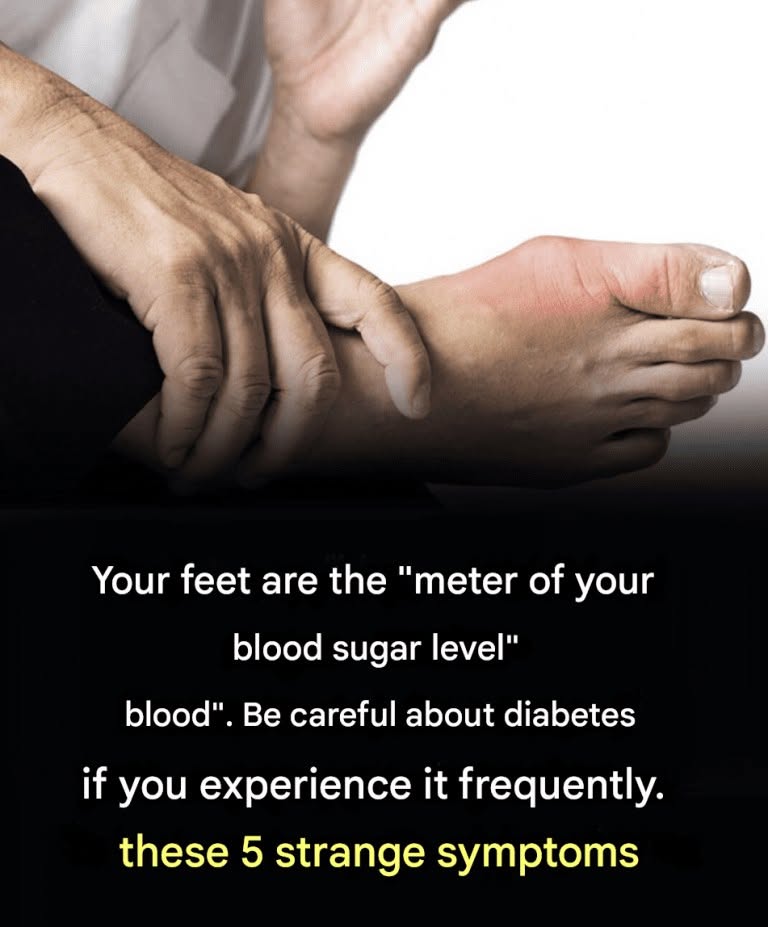
Your feet can reveal more about your overall health than you might expect. Changes in the skin, nails, temperature, sensation, or appearance of your feet are sometimes harmless, but certain unusual symptoms can also be early signs of an underlying health problem.
Here are five unusual foot symptoms worth paying attention to.
1. Burning or Tingling Feet
A persistent burning, pins-and-needles sensation, or numbness in the feet may be related to irritated or damaged nerves. This is sometimes associated with conditions such as diabetes, vitamin deficiencies, alcohol-related nerve damage, or certain medications.
If the sensation keeps returning, becomes stronger, or is accompanied by weakness or loss of balance, it is worth discussing with a healthcare professional.
2. Feet That Suddenly Become Very Cold
Cold feet are common, particularly in cooler weather. However, feet that remain unusually cold or become noticeably colder than usual—especially when accompanied by pale or bluish skin, pain, numbness, or slow-healing wounds—may indicate reduced circulation.
People who smoke or have diabetes, high cholesterol, or cardiovascular risk factors should take persistent circulation-related changes seriously.
3. Swelling Around the Feet or Ankles
Swollen feet can happen after standing or sitting for a long time, during hot weather, or during pregnancy. But unexplained or persistent swelling deserves attention.
Swelling in one foot or leg, particularly if it develops suddenly and is accompanied by pain, warmth, or redness, requires prompt medical assessment because a blood clot is one possible cause.
Sudden swelling accompanied by chest pain or difficulty breathing is an emergency.
4. Changes in Toenails
Toenails that become thick, brittle, yellow, unusually shaped, or separated from the nail bed can occur with fungal infections or repeated trauma from footwear.
However, not every nail change is a fungal infection. Persistent changes can sometimes be associated with skin conditions or other health problems, so unusual or unexplained changes should be evaluated rather than treated blindly.
A dark streak or new dark discoloration under a toenail—particularly when it does not seem to be caused by an injury—should be checked by a healthcare professional.
5. A Wound That Won’t Heal
A small cut, blister, or sore on the foot should normally begin healing over time. If a wound remains open, repeatedly becomes infected, or heals extremely slowly, it can be a warning sign of problems with circulation, nerve function, or blood-glucose control.
This is particularly important for people with diabetes, because reduced sensation may allow a minor foot injury to become more serious before it is noticed.
When Should You Get Medical Help?
Don’t panic over every change in your feet. Many common symptoms have simple explanations. But persistent, unexplained, worsening, or sudden symptoms should not be ignored.
Seek urgent medical attention for a foot or leg that suddenly becomes very swollen, painful, cold, pale or blue, or for swelling associated with chest pain or breathing difficulty.
Your feet may not always be the first place you think to look when considering your health, but unusual changes can sometimes provide useful clues. Paying attention to persistent symptoms—and getting them checked when necessary—can help identify problems early.
Meta Description: Discover five unusual foot symptoms you shouldn’t ignore, including burning feet, swelling, cold feet, toenail changes, and wounds that heal slowly.