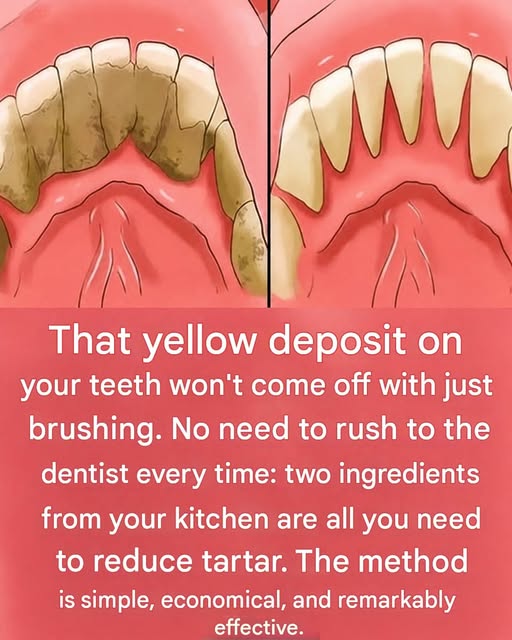
Learn what you can safely do at home to reduce plaque, prevent tartar buildup, and improve your oral hygiene. Find out why hardened tartar cannot usually be safely removed with household remedies.
How to Remove Tartar at Home Without Going to the Dentist
If you notice a hard yellow, brown, or whitish buildup around your teeth, you may be wondering how to remove tartar at home.
The first thing to know is that plaque and tartar are not the same thing. Plaque is a soft bacterial film that can be removed with regular brushing and cleaning between the teeth. When plaque hardens into tartar (calculus), it becomes firmly attached to the tooth and generally cannot be safely removed completely with a toothbrush or home remedy.
Trying to scrape it off yourself with needles, metal tools or sharp objects can damage your enamel and gums.
What You Can Safely Do at Home
1. Brush Twice a Day
Use a soft-bristled toothbrush and fluoride toothpaste for about two minutes, twice daily.
Pay particular attention to the gumline, where plaque commonly accumulates.
Don’t scrub aggressively. Hard brushing doesn’t remove hardened tartar and can irritate your gums.
2. Clean Between Your Teeth
Floss or use interdental brushes once a day.
This helps remove plaque and food particles from places your toothbrush cannot reach.
3. Use an Antiseptic Mouthwash if Appropriate
A therapeutic mouthwash may help reduce plaque and gingivitis, but it doesn’t dissolve established tartar.
Follow the product instructions and avoid replacing brushing and interdental cleaning with mouthwash.
4. Don’t Rely on Lemon or Vinegar
You may find recipes online recommending lemon juice, vinegar or other acidic ingredients to “dissolve” tartar.
This isn’t a safe shortcut. Acids can erode tooth enamel, potentially making teeth more sensitive and vulnerable to damage.
5. Be Careful With Baking Soda
Baking soda can be found in some toothpaste formulations and can help with surface stain removal when used appropriately.
However, repeatedly scrubbing your teeth with baking soda or abrasive mixtures will not safely remove hardened tartar and may irritate your mouth if overused.
What About Dental Scrapers Sold Online?
DIY dental-scraping tools may look convenient, but using them without professional training can cause problems.
You could accidentally:
- Cut your gums
- Damage the enamel
- Scratch dental restorations
- Push bacteria underneath the gumline
- Cause bleeding or infection
The fact that tartar feels hard does not mean it should be chipped away at home.
So, Can Tartar Actually Be Removed at Home?
Established tartar: usually no—not safely or completely.
You can remove plaque and slow new tartar formation at home, but hardened calculus generally needs professional scaling.
If you cannot visit a dentist immediately, focus on preventing the buildup from getting worse with consistent brushing and interdental cleaning.
When You Shouldn’t Wait
Arrange a dental evaluation if you have:
- Persistent bleeding or swollen gums
- Severe toothache
- Pus around the gums
- Loose teeth
- Facial or jaw swelling
- Persistent bad breath despite good oral hygiene
- Significant tartar buildup
These can indicate gum disease or another dental problem that needs professional care.
The Bottom Line
There is no reliable two-minute home remedy that safely melts away hardened tartar.
The safest home strategy is to remove plaque before it hardens: fluoride toothpaste twice daily, daily cleaning between the teeth, and regular dental care when possible.
If tartar has already hardened, professional cleaning is the safest way to remove it without damaging your teeth or gums.