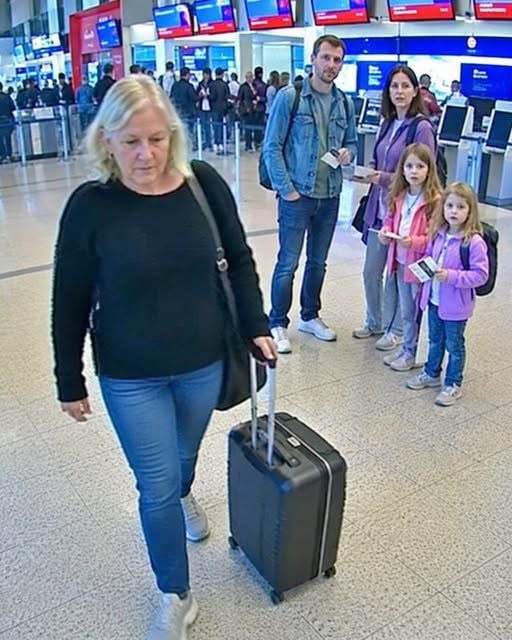
I paid $47,000 for a family vacation to Hawaii, only to discover my daughter-in-law had quietly given my seat to her mother. I smiled, walked away, and made one phone call that changed everything.
I had imagined our Hawaii vacation for months.
Not just the beaches or the sunsets or the five-star hotel.
I imagined my grandchildren running toward me when we arrived.
I imagined sitting beside them on the plane, watching movies together, sharing snacks, and listening to them argue over who got the window seat.
Most of all, I imagined feeling like part of my own family.
So when I spent nearly $47,000 arranging the entire trip, I didn’t think twice.
Flights.
Hotel suites.
Private transportation.
Excursions.
Dinner reservations.
Everything was already paid for.
I wanted my son, my daughter-in-law, my grandchildren, and me to have one unforgettable family vacation.
I didn’t know that before we even boarded the plane, they had already decided I didn’t belong in the seat I had paid for.
And what happened next changed much more than our vacation.
It changed the way I looked at my family.
The Airport Surprise
We arrived at the airport early.
My son was busy with the luggage.
My grandchildren were excited, talking about Hawaii nonstop.
My daughter-in-law, Melissa, stood beside me with a strange expression on her face.
“Mom,” she said softly.
I looked at her.
“Yes?”
She hesitated.
Then she smiled.
It was the kind of smile people use when they are about to say something unpleasant but want to make it sound reasonable.
“There’s been a little change with the seating.”
I laughed.
“That’s fine. As long as we can all sit together.”
She looked down at her phone.
“Well… actually, your seat has been given to my mother.”
I thought I had misunderstood her.
“Excuse me?”
She touched my arm gently.
“The kids are just closer to her. You know how they are.”
I stared at her.
Behind her, I could see her mother standing near the check-in counter.
She was holding a new boarding pass.
My boarding pass was still in my hand.
For a few seconds, I couldn’t say anything.
Then I looked at my son.
He knew.
He had known.
“Is this true?” I asked.
He looked uncomfortable.
“Mom…”
“Did you agree to this?”
He sighed.
“It’s not a big deal.”
Those six words hurt more than anything Melissa had said.
It’s not a big deal.
To them, perhaps it wasn’t.
To me, it was.
Because they weren’t just moving my seat.
They were moving me.
Out of the picture.
Out of the family moment.
Out of the place I thought I had earned after years of helping them.
I Didn’t Argue
I could have caused a scene.
I could have demanded an explanation.
I could have reminded them who paid for the trip.
I could have asked why my grandchildren supposedly needed their other grandmother beside them more than they needed me.
I could have said everything I was thinking.
But I didn’t.
I simply smiled.
“Okay,” I said.
Melissa looked relieved.
“Thank you for understanding.”
I nodded.
Then I picked up my handbag.
“Enjoy your flight.”
My son looked surprised.
“Mom, where are you going?”
“Home.”
“What?”
I looked at him calmly.
“I need a little time.”
He stepped toward me.
“But Hawaii—”
“I know.”
Then I walked away.
No screaming.
No tears.
No accusations.
Just silence.
One Phone Call
I sat alone in the airport lounge.
For several minutes, I simply stared at the floor.
I was angry.
Embarrassed.
Heartbroken.
But eventually, the anger settled.
And when it did, something else became clear.
I had been spending money to buy togetherness.
And I had confused generosity with belonging.
That was my mistake.
I pulled out my phone.
There was one person I needed to call.
The travel manager who had arranged the entire Hawaii itinerary.
“Hello, this is Margaret.”
“Mrs. Carter, everything is confirmed for your group. Is there a problem?”
“Yes.”
I paused.
Then I spoke calmly.
“I need to make a change.”
The $47,000 Vacation Changed Completely
I didn’t cancel the entire trip.
That would have been childish.
Instead, I changed my portion.
I asked the travel manager to cancel my flight and transfer my hotel arrangements.
Then I used the money that had been allocated for my part of the trip to arrange something completely different.
A private Hawaiian getaway.
For me.
A luxury oceanfront suite.
A spa package.
A private sunset cruise.
And a few days of doing absolutely nothing for anyone except myself.
The travel manager was surprised.
“Are you sure?”
“Completely.”
“And the rest of the family?”
“They can enjoy the vacation.”
I smiled.
“I hope they do.”
Then I ended the call.
For the first time that morning, I felt peaceful.
But Hawaii Wasn’t the Real Change
The vacation was only the beginning.
There was something much larger that had been bothering me for years.
My estate.
I had spent decades building it.
My late husband and I had worked hard, saved carefully, invested wisely, and purchased property when everyone told us we were being overly cautious.
Over the years, the value of everything had grown.
By the time I reviewed my financial statements, my total estate was worth approximately $5.8 million.
And for years, I had assumed my son would eventually inherit most of it.
I had also planned to help my grandchildren.
College funds.
A house someday.
Perhaps even a trust.
I had told myself that this was what loving parents did.
But sitting alone in that airport lounge, I finally asked myself a difficult question:
Was I leaving money to people who valued me—or simply to people who expected my money?
The answer frightened me.
I Called My Estate Attorney
The following Monday, I scheduled a meeting with my estate attorney.
I didn’t tell my son.
I didn’t tell Melissa.
I didn’t tell anyone.
At the meeting, I explained exactly what had happened.
My attorney listened carefully.
Then she asked me something I will never forget.
“Do you want to change your estate because you’re angry?”
I thought about it.
“No.”
“Then why?”
I looked out the window.
“Because I’m finally paying attention.”
That was the truth.
I wasn’t interested in punishing my family.
I wanted to make sure my money reflected my values.
My attorney reminded me that estate rules depend on where a person lives and the applicable succession law, and that a will cannot simply override mandatory inheritance rules. In places such as Pakistan, for example, Muslim inheritance can involve fixed shares and limits on testamentary gifts.
So we didn’t make impulsive promises.
We reviewed the plan carefully.
Every account.
Every property.
Every beneficiary designation.
Every charitable intention.
Every document.
Nothing was done out of anger.
Everything was done deliberately.
The New Plan
I didn’t cut my son out simply to hurt him.
Instead, I changed the structure of my estate.
A portion would go toward causes I cared about.
Another portion would be protected for my grandchildren.
And the remaining assets would be distributed according to a properly prepared estate plan and the law governing my estate.
My grandchildren would never be punished for their parents’ decisions.
That mattered to me.
I also decided that I would stop using money to create family closeness.
If someone wanted to spend time with me, they were welcome.
But I wasn’t going to purchase their attention anymore.
My Son Finally Called
Three days later, my phone rang.
It was my son.
“Mom, what happened?”
“What do you mean?”
“The hotel says you’re not coming.”
“That’s correct.”
There was silence.
“Why?”
“I decided not to go.”
“You can’t just cancel your part.”
“I already did.”
“But we planned this together.”
I almost laughed.
“No, you changed the plan.”
He became defensive.
“Mom, you’re making this bigger than it is.”
I closed my eyes.
Those words again.
You’re making this bigger than it is.
“No,” I said quietly.
“I’m finally making it the right size.”
He didn’t understand.
Not yet.
Then Melissa Called
That evening, Melissa called.
Her tone was different.
“Can we talk?”
“Of course.”
She hesitated.
“We didn’t mean to hurt you.”
“I believe you.”
“Then why are you doing all this?”
I answered honestly.
“Because you taught me something.”
“What?”
“That being generous doesn’t guarantee being valued.”
She didn’t respond.
I continued.
“I bought those tickets because I wanted memories with my family. But when you gave my seat away, you didn’t just change a seat assignment.”
“I understand that now.”
“I don’t think you do.”
There was silence.
Then she said something I wasn’t expecting.
“The kids really do love my mom.”
“I know.”
“And they wanted her there.”
“I know.”
“Then why are you upset?”
I smiled sadly.
“Because there was room for her without taking mine.”
Silence.
That sentence finally seemed to reach her.
The Children Were Never the Problem
That night, I looked at photographs of my grandchildren.
Their birthdays.
Christmas mornings.
School plays.
First soccer games.
Beach trips.
I remembered every moment.
And I realized something important.
Children rarely understand adult conflicts.
My grandchildren hadn’t asked anyone to remove me.
They hadn’t created the seating arrangement.
They simply loved their grandmother.
There was nothing wrong with that.
The adults had made the decision.
So I refused to punish the children for it.
Instead, I established protected savings for them.
Money they could access for education and certain important milestones.
Not because I wanted to buy their love.
But because I wanted my legacy to help them become independent adults.
A Different Kind of Inheritance
People often think inheritance is only about money.
It isn’t.
An inheritance can be a lesson.
A value.
A memory.
A principle.
A warning.
I wanted my grandchildren to inherit something more important than a bank account.
I wanted them to learn that kindness should never require humiliation.
That generosity should be freely given, not demanded.
That family relationships should be built on love—not financial expectations.
And that having money doesn’t mean you owe everyone unlimited access to you.
Six Months Later
My son and I eventually spoke again.
Our relationship wasn’t magically repaired.
There was no dramatic movie-style apology.
No tears in the rain.
No perfect ending.
Real families aren’t usually like that.
Instead, things became slower.
More honest.
He began visiting me without asking for anything.
Sometimes he brought the children.
Sometimes he came alone.
And one afternoon, while we were drinking coffee, he finally said:
“Mom, I was wrong.”
I didn’t immediately answer.
He continued.
“I thought because you were the grandmother, you would always understand.”
“I do understand.”
“Then why did you leave?”
I looked at him.
“Because understanding something doesn’t mean accepting it.”
He nodded.
Then he said:
“I should have protected your place.”
That sentence meant more to me than any apology could have.
And Then Came the Question About My Estate
Months later, my son asked:
“Did you really change your will?”
I looked at him.
“Yes.”
He swallowed.
“Am I still in it?”
I smiled.
“That’s not the question you should be asking.”
He looked embarrassed.
“I know.”
I continued:
“The important question is whether we can have a relationship that has nothing to do with what happens to my money.”
He nodded.
“You’re right.”
And for the first time, I believed him.
What I Learned at That Airport
The Hawaii trip cost me nearly $47,000.
But the lesson it gave me was worth far more.
I learned that sometimes the moment someone takes your place is the moment you discover you were standing in the wrong place all along.
I learned that silence isn’t always weakness.
Sometimes walking away is the strongest response available.
And I learned that changing an estate plan should never be a weapon.
It should be a reflection of your values, your wishes, and your carefully considered plans.
Money can buy plane tickets.
It can buy hotel rooms.
It can buy beautiful dinners and unforgettable vacations.
But it cannot buy genuine love.
And I would never again confuse the two.
The Final Lesson
When I think back to that airport, I don’t remember the embarrassment anymore.
I remember the moment I picked up my handbag and walked away.
I remember realizing that I didn’t need to fight for a seat.
I could simply choose another destination.
And sometimes, that’s what life asks us to do.
Not scream.
Not beg.
Not retaliate.
Just quietly recognize when you’ve been taken for granted—and make a different choice.
My $5.8 million estate may eventually pass to the people and causes I choose, subject to the laws that govern my estate.
But my greatest inheritance won’t be money.
It will be the lesson I leave behind:
Never make someone feel unwanted and then expect their generosity to remain unlimited.
Because sometimes the person you push out of the picture is the very person who made the picture possible.