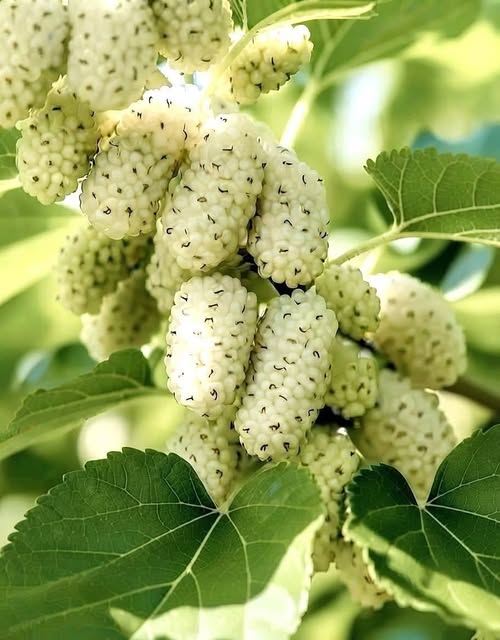
If you’ve never seen a white mulberry fruit before, you might be surprised by its unusual appearance. Unlike the familiar dark purple or red mulberries, white mulberries can range from creamy white and pale green to pinkish or light yellow when ripe. They grow on the white mulberry tree (Morus alba), a fruit-bearing tree that has been cultivated in many parts of the world for centuries.
Although they may look delicate and unfamiliar, white mulberries are edible and can be enjoyed fresh, dried, or incorporated into a variety of foods.
What Is a White Mulberry?
White mulberry is the fruit of the Morus alba tree. The tree originated in Asia and is now grown in many regions with suitable climates.
The fruit is technically a collection of many tiny fruit segments clustered together. Depending on the variety and stage of ripeness, white mulberries may appear white, cream, yellowish, pink, or even reddish.
When fully ripe, they are usually soft and sweet.
What Does White Mulberry Taste Like?
The flavor of white mulberries can vary considerably depending on the variety and ripeness.
Fully ripe fruits are generally:
- Sweet and mild
- Soft and juicy
- Slightly honey-like
- Less tart than many dark-colored berries
Some varieties have a stronger sweetness, while others can taste relatively mild. The fruit becomes softer as it ripens, so ripe berries should be handled carefully.
White Mulberry Nutrition
White mulberries can be a nutritious addition to a balanced diet. Like other fruits, they provide water, natural carbohydrates, fiber, vitamins, minerals, and plant compounds.
They contain nutrients such as:
- Vitamin C, which supports normal immune function
- Vitamin K, which plays a role in normal blood clotting and bone health
- Potassium, an important mineral involved in fluid balance and normal muscle and nerve function
- Dietary fiber, which supports healthy digestion
- Various polyphenols and other plant compounds
The exact nutritional content varies depending on whether the fruit is fresh or dried.
Fresh vs. Dried White Mulberries
Dried white mulberries are much more concentrated than fresh fruit because much of their water has been removed. As a result, a small serving of dried mulberries contains considerably more sugar and calories than the same weight of fresh fruit.
For everyday snacking, fresh fruit can be a particularly satisfying choice because of its water and fiber content.
Potential Health Benefits of White Mulberries
White mulberries can be part of a healthy diet, although they should not be considered a treatment or cure for any disease.
1. Provides Antioxidant Plant Compounds
White mulberries contain naturally occurring plant compounds with antioxidant activity. Antioxidants help protect cells from oxidative stress caused by reactive molecules.
Eating a variety of colorful fruits and vegetables is one practical way to increase dietary intake of these beneficial compounds.
2. Supports Digestive Health
Fresh mulberries contain dietary fiber. Fiber helps add bulk to the diet and supports normal bowel function.
Increasing fiber gradually while drinking enough fluids can be helpful for maintaining regular digestion.
3. Provides Vitamin C
White mulberries contain vitamin C, a nutrient needed for normal immune function and collagen production.
Vitamin C also contributes to normal wound healing and helps the body absorb iron from plant-based foods.
4. Contributes Potassium
Potassium is an essential mineral involved in normal muscle function, nerve signaling, and maintaining normal fluid balance.
Including fruits and vegetables in your diet is one way to obtain potassium naturally.
5. A Naturally Sweet Alternative
Ripe white mulberries have a naturally sweet flavor, which makes them useful in foods where you might otherwise add extra sugar.
Fresh berries can be added to yogurt, oatmeal, smoothies, or fruit bowls for sweetness and texture.
How to Eat White Mulberries
If you have fresh white mulberries, eating them is simple.
First, remove any leaves, stems, or damaged fruit. Wash the berries gently under clean running water and allow them to drain.
You can then eat them:
- Fresh as a snack
- With yogurt
- Over oatmeal or cereal
- In fruit salads
- Blended into smoothies
- Mixed into homemade desserts
- Cooked into sauces or jams
Because ripe mulberries can be delicate, avoid squeezing or washing them too aggressively.
Can White Mulberries Be Dried?
Yes. White mulberries are commonly dried and can resemble small raisins when dehydrated.
Dried white mulberries can be eaten as a snack or added to:
- Granola
- Trail mix
- Oatmeal
- Breakfast cereals
- Yogurt
- Baked goods
Remember that dried fruit is concentrated, so portion size matters.
White Mulberry Leaves and the Silkworm Connection
One fascinating fact about the white mulberry tree is its connection to silk production.
White mulberry leaves are the primary food source for domesticated silkworms. For centuries, Morus alba has therefore been an important plant in sericulture, the farming of silkworms for silk production.
This is one reason white mulberry trees have been cultivated extensively in parts of Asia and other regions.
Are White Mulberries Safe to Eat?
Ripe white mulberries are generally considered edible. However, identification matters if you have found an unfamiliar berry growing outdoors.
Don’t eat an unknown fruit simply because it resembles a mulberry. Make sure the plant has been positively identified, particularly if it was found growing wild.
Also wash fresh fruit before eating it.
Unripe mulberries may cause stomach discomfort in some people, so it is preferable to eat fruit that is properly ripe.
How to Tell When White Mulberries Are Ripe
Color alone isn’t always enough to determine ripeness because white mulberry varieties can remain pale even when ripe.
Look for fruit that is:
- Soft rather than hard
- Plump
- Easily separated from the stem
- Sweet-smelling
- Sweet-tasting when safely identified
Overripe berries may become very soft and fall from the tree.
White Mulberry vs. Black Mulberry
White and black mulberries are related but aren’t identical.
White mulberries:
- Usually pale white, cream, pink, or light yellow
- Generally mild and sweet
- Often associated with Morus alba
Black mulberries:
- Usually dark purple to almost black when ripe
- Often have a stronger, richer flavor
- Commonly associated with Morus nigra
Both can be eaten fresh when properly identified and ripe.
Final Thoughts
White mulberries may look unusual if you’re seeing them for the first time, but they are a naturally sweet and edible fruit when properly identified and ripe. They can provide fiber, vitamin C, potassium, vitamin K, and beneficial plant compounds.
Whether eaten fresh from the tree, mixed into yogurt, added to breakfast foods, or dried like raisins, white mulberries are a versatile fruit worth trying.
If you found an unfamiliar white berry outdoors, however, confirm the plant’s identity before eating it. A clear photograph of the fruit, leaves, stem, and tree can make identification much more reliable.