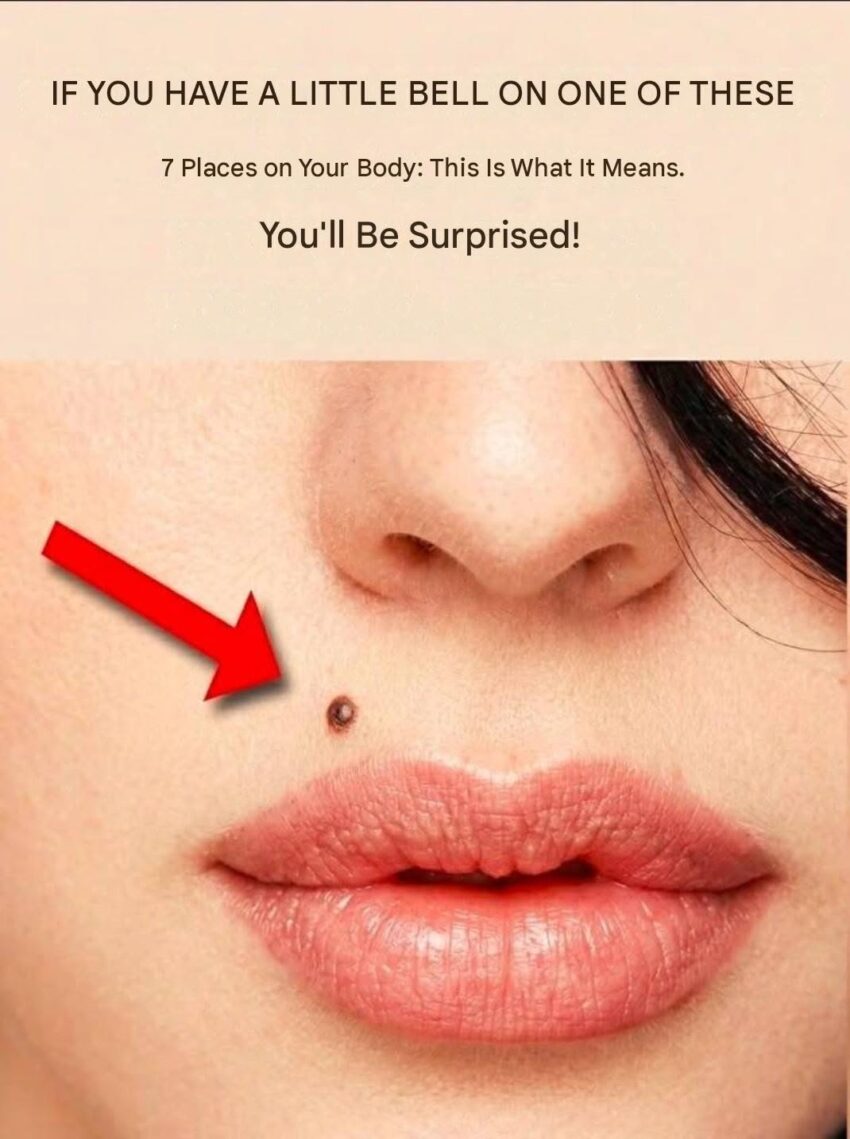
Moles are incredibly common. Some people have just a few, while others have dozens scattered across their skin. They can appear almost anywhere on the body, and throughout history, different cultures have attached symbolic meanings to their locations.
A mole on the face, neck, hand, or foot has been interpreted in many different ways—from signs of confidence and ambition to symbols of good fortune or emotional sensitivity.
But there’s an important distinction to make: these traditional interpretations are based on folklore and cultural beliefs, not scientific evidence. A mole’s location does not determine your personality, future, wealth, relationships, or destiny.
Still, the symbolism surrounding moles can be fascinating.
Here are seven locations that have traditionally been given interesting meanings.
1. A Mole on the Forehead
In traditional mole-reading practices, a mole on the forehead is sometimes associated with ambition, intelligence, leadership, and independence.
People with a forehead mole have sometimes been described in folklore as individuals who prefer to make their own decisions and pursue their goals with determination.
Depending on the exact location, different traditions have assigned different meanings. A mole near the center of the forehead may be interpreted differently from one closer to the hairline or eyebrow.
The reality
There is no scientific evidence that a mole on your forehead determines your intelligence, personality, or future success.
The meaning is symbolic rather than medical or psychological.
2. A Mole Near the Eyebrow
A mole near the eyebrow has traditionally been associated with confidence, social ability, and good fortune in some forms of face reading.
Some traditional interpretations suggest that people with this placement may be naturally persuasive or capable of building strong relationships.
A mole near the eyebrow can also simply become one of the features that makes someone’s face distinctive.
What science says
The location of a mole doesn’t provide reliable information about someone’s character.
However, if a mole near your eyebrow changes in appearance, it should be examined just like any other changing mole.
3. A Mole on the Cheek
Moles on the cheeks have been given particularly interesting interpretations throughout different cultures.
In traditional symbolism, a cheek mole may represent emotional depth, determination, attractiveness, or a strong personality.
Some traditions distinguish between the left and right cheek and assign completely different meanings to each side.
These interpretations can make mole-reading entertaining, but they shouldn’t be treated as predictions about your future.
A medical reminder
A mole on the cheek is usually harmless, but any mole that changes in size, shape, color, or texture deserves attention.
Because the face receives significant sun exposure, protecting facial skin from ultraviolet radiation is also important.
4. A Mole on the Neck
A mole on the neck is sometimes interpreted in traditional folklore as a sign of strong emotions, determination, or hidden potential.
Some traditions associate it with someone who may experience challenges early in life but eventually develop greater confidence and independence.
Other interpretations connect neck moles with sensitivity and a strong desire for meaningful relationships.
Again, these are cultural beliefs rather than established psychological facts.
Don’t ignore changes
Because the neck can receive considerable sun exposure, keep an eye on any mole in this area.
Pay particular attention if you notice a new or changing mole.
5. A Mole on the Hand
Hands have long been associated with work, ability, communication, and creativity, so moles on the hands have acquired many symbolic meanings.
Traditional interpretations sometimes describe a mole on the hand as representing skill, ambition, creativity, or financial potential.
A mole on the palm can have particularly elaborate interpretations in some forms of traditional fortune-telling.
But here’s the surprising part
There is no reliable scientific evidence that a mole on your palm predicts wealth, career success, or financial difficulties.
A person’s financial future depends on countless real-world factors—not the location of a mole.
So enjoy the symbolism, but don’t make important financial decisions based on it.
6. A Mole on the Leg or Foot
A mole on the leg or foot has traditionally been associated with travel, independence, movement, and adventure.
Some folklore interpretations suggest that people with moles in these locations may enjoy exploring new places or may experience significant changes throughout their lives.
A mole on the foot is sometimes symbolically connected with a person who doesn’t like feeling restricted.
The medical side
Moles can develop on the legs and feet just like other areas of the body.
It’s particularly important to check the soles of the feet and other less-visible areas periodically because changes there can be easy to overlook.
7. A Mole on the Back
A mole on the back has been assigned several meanings in traditional folklore.
Some interpretations associate it with responsibility, perseverance, hidden strength, or carrying burdens.
In certain traditions, a back mole is viewed symbolically as representing someone who may take on responsibilities for others.
But there’s no scientific basis for connecting the position of a mole with someone’s emotional characteristics or life circumstances.
The symbolism can be interesting—but it remains symbolism.
What Does Your Mole Really Tell You?
This is where folklore and modern medicine are very different.
Traditional mole-reading asks:
“What does the location mean?”
Dermatology asks:
“What does the mole look like, and has it changed?”
From a medical perspective, the appearance and evolution of a mole are much more important than whether it is on your cheek, neck, hand, or foot.
A useful reminder is the ABCDE approach:
A — Asymmetry
One half of the mole looks different from the other half.
B — Border
The edges appear irregular, uneven, blurred, or poorly defined.
C — Color
The mole contains multiple colors or develops an unusual change in pigmentation.
D — Diameter
A mole larger than about 6 millimeters can deserve closer evaluation, although skin cancers can also be smaller.
E — Evolving
The mole changes in size, shape, color, elevation, or sensation.
An evolving mole is particularly important to have checked.
What About a Brand-New Mole?
A new mole isn’t automatically dangerous.
New moles can occur for many reasons, and many are completely benign.
However, a new or changing pigmented spot, particularly in adulthood, should be discussed with a dermatologist or other qualified healthcare professional if it looks unusual or continues changing.
Don’t rely on internet photographs or mole-reading charts to determine whether a lesion is safe.
Can a Mole Predict Your Personality?
There is no established scientific method showing that the location of a mole can predict personality traits.
You may read that a mole on one side of the face means you’re romantic, while another location supposedly means you’re wealthy or destined for leadership.
These claims are part of cultural traditions and fortune-telling practices.
They can be fun to read, but they shouldn’t be confused with medical or psychological science.
Why Do People Find Mole Meanings So Fascinating?
Perhaps because moles are unique.
A small mark can become one of the features that makes someone’s appearance recognizable. For centuries, people have looked for meaning in distinctive physical characteristics.
Different cultures developed their own systems for interpreting facial features, birthmarks, lines on the hands, and moles.
These traditions tell us more about history and culture than they do about a person’s biological destiny.
When Should You See a Dermatologist?
Don’t wait for a mole to become painful before paying attention to it.
Make an appointment with a healthcare professional if a mole:
- Changes noticeably
- Starts bleeding
- Develops persistent crusting
- Becomes very itchy or painful
- Changes color
- Develops an irregular border
- Grows noticeably
- Looks significantly different from your other moles
A useful concept is the “ugly duckling” sign: a spot that looks noticeably different from the other moles on your skin may deserve professional evaluation.
Final Thoughts
A mole on your forehead, cheek, neck, hand, foot, leg, or back may have an interesting symbolic meaning according to traditional folklore.
But your mole does not determine your personality, wealth, relationships, luck, or destiny.
The real thing worth watching is whether the mole itself changes.
So if you have one of these distinctive marks, you can certainly enjoy the fascinating stories and traditions surrounding it—but when it comes to your health, pay attention to changes in the mole and seek professional advice when something looks unusual.
Your mole may have a story in folklore, but its appearance and changes tell you much more from a medical perspective.
Meta Description
Discover the traditional meanings associated with moles on 7 different body locations. Learn what folklore says—and the important medical signs that mean a mole should be checked.