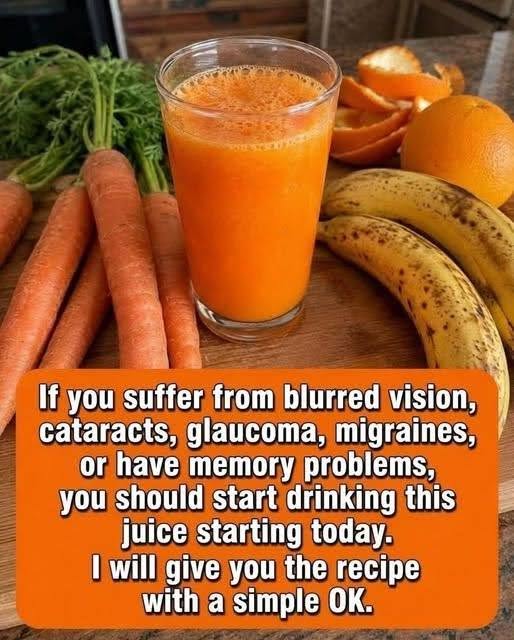
Discover how nutrient-rich juices may support eye health, brain function, and overall wellness. Learn which fruits and vegetables provide essential nutrients and why blurred vision, cataracts, glaucoma, migraines, and memory problems require proper medical care.
Blurred vision, frequent headaches, migraines, and memory difficulties can affect everyday life and make even simple activities more challenging. It is understandable that many people look for natural ways to support their eyesight and brain health, especially through foods and drinks that are easy to prepare at home.
Fruit and vegetable juices can provide vitamins, minerals, and antioxidants that contribute to normal body function. Ingredients such as carrots, oranges, berries, and leafy green vegetables contain nutrients that support different aspects of health.
However, an important distinction must be made: no juice has been proven to cure cataracts, reverse glaucoma, eliminate migraines, or restore lost memory. These conditions can have different causes, and some require prompt medical treatment.
Understanding what nutritious juices can realistically offer is the first step toward making informed choices.
1. Carrot Juice for Nutrients That Support Normal Vision
Carrots are well known for their beta-carotene content. The body can convert beta-carotene into vitamin A, which is essential for normal vision, particularly in dim light.
Vitamin A also supports the health of the surface of the eyes and other tissues. A deficiency can cause serious eye problems, including night blindness.
Drinking carrot juice can contribute to vitamin A intake, but more is not necessarily better. If someone already receives enough vitamin A from their diet, drinking additional carrot juice will not automatically sharpen their eyesight.
Carrot juice also does not remove cataracts or lower eye pressure in glaucoma.
How to enjoy it: Blend a small carrot with water or combine it with an orange for flavor. Whole carrots are also an excellent choice because they provide fiber that is reduced when juice is extracted.
2. Orange Juice for Vitamin C
Oranges contain vitamin C, an antioxidant that supports normal immune function, collagen formation, and the health of blood vessels.
Vitamin C is also present in the eye’s natural antioxidant defenses. Researchers have investigated the relationship between dietary nutrients and age-related eye conditions, but drinking orange juice should not be presented as a treatment for an existing eye disease.
Choose fresh oranges or a modest serving of unsweetened juice. Whole fruit generally provides more fiber and may be more filling.
People managing diabetes should remember that fruit juice can raise blood sugar more quickly than eating the whole fruit.
3. Leafy Green Vegetables for Eye Health
Spinach and kale contain lutein and zeaxanthin, two plant pigments that accumulate in the retina. These compounds are being studied for their roles in protecting eye tissues from oxidative stress.
Including leafy greens in a balanced diet may help provide nutrients associated with long-term eye health.
You can add a small handful of spinach to a homemade smoothie with fruit and water. If you prefer juice, remember that juicing removes much of the vegetable’s fiber.
People taking warfarin or other medicines that require consistent vitamin K intake should discuss major dietary changes with their healthcare professional rather than suddenly increasing or eliminating leafy greens.
4. Berries for Brain Health
Blueberries, strawberries, and other berries contain vitamin C, fiber, and plant compounds called polyphenols.
Some studies have explored whether berry consumption may be associated with aspects of cognitive health, including memory and thinking skills. Although this research is promising, it does not establish that berry juice can prevent dementia or reverse memory loss.
A smoothie made with berries and plain yogurt can be a nutritious snack. Whenever possible, use whole berries to retain their fiber.
If memory problems are new, worsening, or interfering with daily activities, arrange a medical assessment. Memory difficulties can be associated with sleep problems, medication effects, vitamin deficiencies, depression, and neurological conditions, among other causes.
5. Can Any Juice Cure Cataracts?
Cataracts occur when the normally clear lens inside the eye becomes cloudy. They can cause blurry vision, glare, faded colors, and difficulty seeing at night.
A nutritious diet supports general health, but there is no reliable evidence that carrot juice, citrus juice, or a homemade mixture can dissolve an established cataract.
When cataracts significantly interfere with daily activities, an eye specialist may recommend surgery to remove the cloudy lens and replace it with an artificial one.
Do not delay an eye examination because a natural remedy appears to improve comfort or temporarily change how your vision feels.
6. What About Glaucoma?
Glaucoma is a group of eye diseases that can damage the optic nerve and lead to permanent vision loss. Elevated pressure inside the eye is an important risk factor, although glaucoma can also develop at pressures within the usual range.
Glaucoma often causes no noticeable symptoms in its early stages. That is why appropriate eye examinations are important, especially for people at increased risk.
No juice has been shown to reverse glaucoma or replace prescribed pressure-lowering eye drops, laser treatment, or surgery.
If you have glaucoma, continue your prescribed treatment and attend follow-up appointments. Sudden severe eye pain, a red eye, blurred vision, halos around lights, nausea, or vomiting may indicate an eye emergency and require immediate medical care.
7. Can Juice Help With Migraines?
Migraines are neurological episodes that can cause severe headaches, nausea, sensitivity to light, and sensitivity to sound.
Staying hydrated and eating regular meals may help some people manage their triggers. A drink containing water and nutrients can contribute to hydration, but no specific juice is a proven cure for migraines.
Some people find that particular foods or drinks trigger their symptoms, so keeping a headache diary can help identify personal patterns.
If headaches become more frequent, change significantly, or interfere with everyday life, consult a healthcare professional about diagnosis and treatment.
A sudden, extremely severe headache or a headache accompanied by new weakness, confusion, difficulty speaking, or sudden vision loss requires emergency assessment.
8. A Simple Nutrient-Rich Carrot, Orange, and Berry Smoothie
If you want a refreshing drink that supplies several useful nutrients, try this simple smoothie. It is a food option, not a treatment for eye disease, migraines, or memory problems.
Ingredients
- 1 small carrot, washed and chopped
- ½ orange, peeled
- ¼ cup blueberries or strawberries
- ½ cup water
- A few ice cubes, optional
Preparation
- Wash the fruit and vegetables thoroughly.
- Chop the carrot into small pieces.
- Add the carrot, orange, berries, and water to a blender.
- Blend until smooth.
- Add extra water if needed to reach your preferred consistency.
- Drink freshly prepared, or refrigerate promptly in a clean, covered container.
There is no need to add sugar or honey. If you have difficulty chewing, swallowing, or controlling blood sugar, ask a healthcare professional or dietitian whether this drink suits your needs.
9. Everyday Habits That Support Eye and Brain Health
A single drink cannot provide everything the eyes and brain need. A more reliable approach is to combine a balanced diet with healthy daily habits.
- Eat a variety of colorful fruits and vegetables.
- Include sources of healthy fats, such as fish, nuts, and seeds.
- Stay adequately hydrated.
- Maintain regular physical activity appropriate for your health.
- Manage blood pressure, cholesterol, and blood sugar with professional guidance.
- Avoid smoking.
- Protect your eyes from excessive ultraviolet exposure with suitable sunglasses.
- Arrange recommended eye examinations.
- Seek medical advice for new or persistent vision changes or memory difficulties.
Supplements should not be taken in high doses simply because they are advertised for eyesight or memory. Some nutrients can be harmful in excess, and supplements are not interchangeable with medical treatment.
Final Thoughts
Carrots, oranges, berries, and leafy greens can contribute valuable nutrients to a balanced diet. Vitamin A supports normal vision, vitamin C contributes to antioxidant protection, and leafy greens provide lutein and zeaxanthin. Berries also provide fiber and plant compounds being investigated for their potential relationship with cognitive health.
Nevertheless, there is no miracle juice that cures blurred vision, cataracts, glaucoma, migraines, or memory loss. These symptoms can have different causes, and the appropriate treatment depends on the underlying condition.
Enjoy nutritious juices or smoothies as part of a varied diet, but do not use them instead of prescribed medicines or necessary medical examinations.
If blurred vision or memory problems are new or worsening, seek medical advice. Sudden vision loss or sudden neurological symptoms require emergency care.