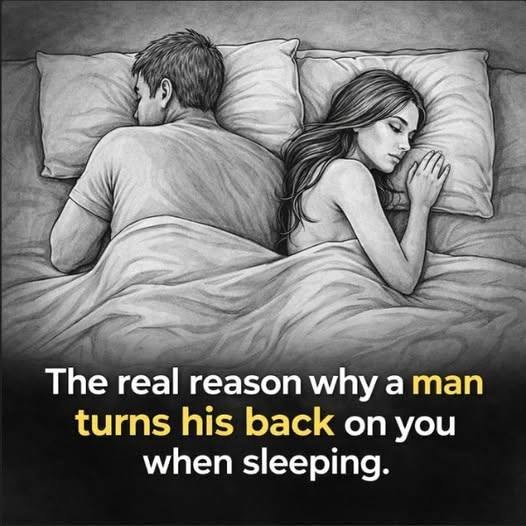
Does your partner turning their back on you while sleeping mean they are upset or losing interest? Discover what different sleeping positions may—and may not—say about a relationship. Have you ever gone to bed next to your partner only to notice that they have turned their back toward you?
It can be easy to overthink the situation. You might wonder whether they’re angry, emotionally distant, unhappy in the relationship, or simply trying to avoid you.
The truth is much simpler: a sleeping position by itself cannot tell you how someone feels about a relationship.
People change positions throughout the night for many reasons, and most of them have nothing to do with their partner.
1. They May Simply Be More Comfortable
Comfort is one of the biggest reasons people choose a particular sleeping position.
Your partner may find sleeping on their side more comfortable, and turning away from you may simply give their neck, back, shoulders, or hips a more natural position.
They may not even be consciously aware of which direction they’re facing.
2. They May Need More Personal Space
Being in a loving relationship doesn’t mean two people have to sleep physically close all night.
Some people sleep better with a little space between them. Turning away can provide room to stretch, move, or maintain a comfortable temperature.
In fact, couples who sleep comfortably in different positions can still have a strong emotional connection.
3. They May Be Too Hot
Body heat matters when you’re trying to sleep.
If your partner gets warm easily, facing away from you—or creating a little distance—may help them stay cooler.
Room temperature, blankets, pajamas, and mattress conditions can all influence sleeping positions.
4. They May Feel Safe and Relaxed
Interestingly, turning away from a partner isn’t necessarily a sign of rejection.
For some couples, sleeping back-to-back can reflect a sense of comfort and security. They know their partner is nearby, so they don’t need to remain face-to-face to feel connected.
Some people even find back-to-back sleeping more relaxing than cuddling throughout the night.
5. Their Sleeping Position May Have Nothing to Do With You
People change positions repeatedly while sleeping.
Someone who falls asleep facing you may turn away later. They may roll over because of a dream, muscle discomfort, temperature changes, or simply because their body naturally shifted.
Therefore, it’s risky to assign a specific emotional meaning to one sleeping position.
What If They Always Turn Away?
If your partner consistently avoids physical closeness while awake as well as during sleep, that’s different.
For example, you may want to have a conversation if you also notice:
- Less communication
- Reduced affection
- Frequent arguments
- Avoidance of quality time
- Emotional withdrawal
- A noticeable change in how they treat you
Even then, don’t assume the cause. Work stress, anxiety, depression, health problems, sleep difficulties, or other personal issues can also affect someone’s behavior.
The best way to understand what’s happening is through an honest conversation.
What Different Sleeping Positions May Mean
People often attach romantic meanings to sleeping positions, but there is no scientifically reliable dictionary that translates a sleeping position into a specific relationship feeling.
For example:
Facing each other: May reflect comfort or affection, but could simply be the position that feels natural.
Back-to-back: May indicate a preference for space while still enjoying physical closeness.
One person holding the other: Can feel affectionate and reassuring, although comfort and temperature may eventually cause people to separate.
Sleeping far apart: May simply reflect different sleep preferences, mattress needs, temperature preferences, or movement during sleep.
The context matters far more than the position itself.
Don’t Diagnose Your Relationship While Your Partner Is Asleep
One of the easiest relationship mistakes is trying to interpret unconscious behavior as a deliberate message.
Your partner isn’t necessarily choosing a sleeping position to communicate something.
Instead of thinking, “They’re turning away because they don’t love me,” consider asking yourself whether there are actual changes in your relationship when you’re both awake.
That’s where meaningful communication happens.
What Should You Do?
If their sleeping position makes you feel rejected or worried, talk about it calmly.
You could say:
“I’ve noticed we haven’t been sleeping as close lately. Is everything okay between us?”
This opens the door to conversation without accusing your partner of anything.
You may discover that they’re simply uncomfortable, too warm, having back pain, sleeping poorly, or completely unaware that you’ve been interpreting their position emotionally.
Final Thoughts
If your partner turns their back on you while sleeping, it doesn’t automatically mean they’re angry, unhappy, losing interest, or falling out of love.
Sleeping positions are influenced by comfort, temperature, habits, physical health, and individual sleep preferences.
If there are broader signs of emotional distance, talk openly rather than trying to decode your partner’s sleeping position.
Sometimes, the person who turns their back while sleeping is simply… trying to get comfortable.