Discover 9 common foot symptoms that may sometimes signal underlying health problems. Learn what changes to watch for, what they could mean, and when it may be time to speak with a healthcare professional.
If You Have These 9 Symptoms in Your Feet, Don’t Ignore Them
Your feet do much more than carry you around all day. Changes in the skin, nails, temperature, sensation, or movement of your feet can sometimes provide clues about your overall health.
Many foot problems are harmless and may be caused by everyday issues such as uncomfortable shoes, overuse, dry skin, or minor injuries. However, persistent or unusual changes deserve attention, particularly when they appear suddenly or occur alongside other symptoms.
Here are nine foot symptoms worth paying attention to.
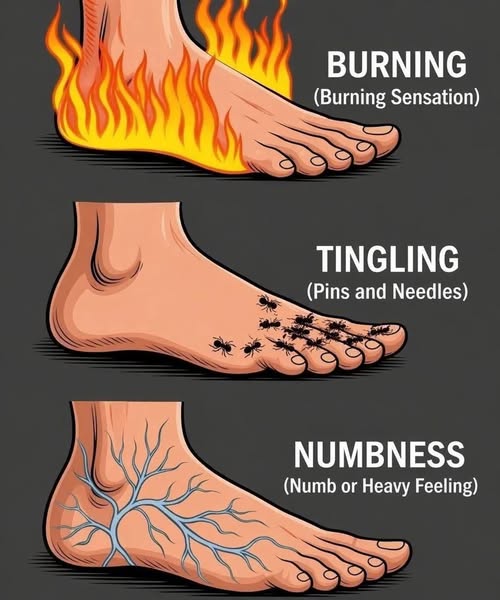
1. Persistent Numbness or Tingling
A feeling of pins and needles, burning, or numbness in the feet can have many causes. Sitting in one position for too long or putting pressure on a nerve can cause temporary tingling.
However, persistent or recurring numbness may be associated with nerve problems, certain vitamin deficiencies, medication effects, or conditions that affect blood sugar and circulation.
If numbness continues or gradually spreads, it is worth discussing with a healthcare professional.
2. Burning Feet
Feet that frequently feel hot or burning, even when they aren’t actually warm, can be uncomfortable.
Burning sensations may sometimes be related to nerve irritation or peripheral neuropathy. Other possible causes include prolonged standing, certain medications, nutritional deficiencies, or skin conditions.
If the burning sensation is persistent, especially at night, don’t simply assume it is caused by tired feet.
3. Swelling in the Feet or Ankles
Mild swelling can occur after standing or sitting for long periods, traveling, eating a particularly salty meal, or experiencing an injury.
But unexplained or persistent swelling deserves attention. Swelling can have several possible causes, including problems involving circulation, medications, or certain heart, kidney, or liver conditions.
Sudden swelling—particularly when it affects only one leg and is accompanied by pain, warmth, or redness—requires prompt medical assessment.
4. Cold Feet
Occasionally having cold feet is usually nothing unusual, especially in cold weather.
If your feet remain unusually cold despite being in a warm environment, however, it may be worth investigating. Circulation problems, nerve issues, and some other health conditions can affect how the feet feel.
Pay attention to other changes such as unusual skin color, numbness, pain, or slow-healing wounds.
5. Changes in Skin Color
A noticeable change in the color of your feet can have several explanations.
Pale, bluish, unusually red, or darkened skin may sometimes be related to circulation, inflammation, infection, injury, or other conditions.
A sudden or significant color change—especially if the foot is painful, cold, numb, or swollen—should not be ignored.
6. Slow-Healing Cuts or Sores
A small blister, cut, or scrape normally begins healing with time.
If a wound on your foot seems unusually slow to heal, repeatedly becomes irritated, or develops signs of infection such as increasing redness, warmth, swelling, drainage, or worsening pain, seek medical advice.
People with diabetes should be especially careful with foot wounds because reduced sensation and circulation problems can make foot injuries harder to notice and heal.
7. Changes in the Toenails
Your toenails can change for many reasons.
Thickened, brittle, discolored, crumbly, or separated nails can occur with fungal infections, repeated trauma from footwear, or other nail conditions.
A dark streak or new pigmentation under a toenail should also be evaluated rather than automatically assuming it is a bruise, particularly when you don’t remember injuring the toe.
8. Persistent Foot Pain Without an Obvious Injury
Foot pain after a long walk, exercise session, or minor injury may have an obvious explanation.
Pain that continues without a clear cause, keeps returning, or interferes with walking deserves further evaluation. Possible causes range from footwear problems and plantar conditions to nerve, joint, tendon, or bone problems.
Don’t rely on painkillers indefinitely without finding out why the pain is occurring.
9. Changes in Foot Shape or Balance
A noticeable change in the shape of your foot, difficulty maintaining balance, weakness, or problems lifting the front of your foot can sometimes indicate an underlying nerve, muscle, joint, or neurological problem.
These symptoms are particularly important if they develop suddenly or are accompanied by weakness elsewhere in the body, difficulty speaking, facial drooping, severe dizziness, or other sudden neurological symptoms.
In those circumstances, seek emergency medical care.
When Should You See a Doctor?
Not every unusual foot symptom indicates a serious illness. Many common problems are caused by everyday factors and can be treated easily.
However, make an appointment with a healthcare professional if a symptom is persistent, worsening, unexplained, or repeatedly returning.
Seek urgent medical attention for sudden severe foot pain, rapidly developing swelling, a very cold or discolored foot, serious infection, or sudden weakness or numbness.
Takeaway
Your feet can sometimes provide useful clues about your health, but a single symptom usually isn’t enough to diagnose a medical condition. Numbness, burning, swelling, color changes, slow-healing wounds, nail changes, persistent pain, and balance problems can have many different causes.
Instead of trying to diagnose yourself from a symptom alone, pay attention to new, persistent, or worsening changes and speak with a qualified healthcare professional when appropriate.