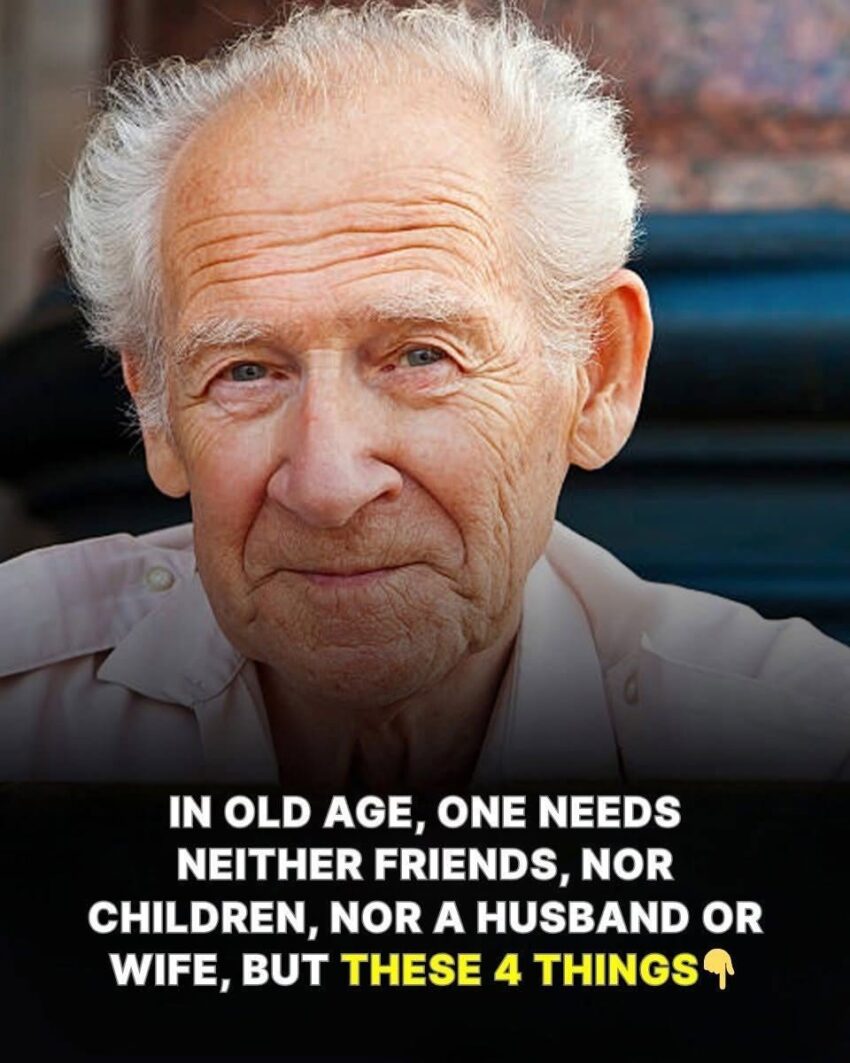
Aging is not simply about having more people around you. Discover four things that can make later life more secure, peaceful, independent, and meaningful.
Growing older changes what truly matters. In our younger years, we may focus on friendships, marriage, raising children, careers, and building a social circle. But as the years pass, priorities often become clearer.
Having loving friends, children, or a spouse can certainly be a beautiful part of life. Yet none of these relationships can guarantee happiness, security, good health, or peace of mind in old age.
What matters most is having a strong foundation that allows you to live with dignity and independence.
Here are four things that can become especially valuable in later life.
1. Good Health and the Ability to Care for Yourself
Health is one of the greatest forms of independence.
As people age, everyday activities that once seemed effortless—walking, climbing stairs, cooking, bathing, shopping, or managing medications—can become more difficult.
That is why protecting physical function is so important.
Simple habits can make a meaningful difference:
- Stay physically active according to your abilities.
- Include strength and balance exercises when appropriate.
- Eat a varied, nutritious diet.
- Get enough sleep.
- Keep regular medical and dental appointments.
- Take prescribed medications correctly.
- Pay attention to new or persistent symptoms.
The goal is not necessarily to remain completely independent forever. Rather, it is to preserve as much strength, mobility, and function as possible.
2. Financial Security
Money cannot buy everything, but financial stability can provide something extremely valuable in old age: choice.
Having savings or reliable income can help pay for housing, food, healthcare, transportation, medications, and unexpected expenses.
Financial independence can also reduce the pressure to depend entirely on relatives.
Even modest planning can help:
- Keep track of monthly expenses.
- Avoid unnecessary debt.
- Build emergency savings when possible.
- Understand your pension or retirement benefits.
- Organize important financial documents.
- Be cautious about scams and suspicious investment offers.
- Make sure trusted people know where important documents are kept.
The amount of money required for a comfortable retirement varies enormously from person to person. The important principle is to prepare before a crisis occurs.
3. Emotional Stability and Peace of Mind
A crowded phonebook does not necessarily mean a person feels loved.
Some people reach old age surrounded by others and still experience loneliness. Others have a small social circle but feel deeply content.
Emotional independence does not mean becoming cold or refusing help. It means developing the ability to find meaning and stability within yourself instead of making your entire sense of worth dependent on another person.
Peace of mind can come from many places:
- Accepting what cannot be changed.
- Letting go of unnecessary resentment.
- Maintaining hobbies and interests.
- Spending time in nature.
- Practicing gratitude.
- Staying mentally engaged.
- Setting healthy boundaries.
- Asking for professional help when emotional difficulties become overwhelming.
Relationships remain important, but your emotional well-being should not depend entirely on whether someone calls, visits, or agrees with you.
4. A Sense of Purpose
Perhaps the most overlooked need in later life is purpose.
When careers end and children become independent, some people suddenly wonder, “What do I do now?”
Purpose gives structure to everyday life.
It does not have to involve a job or something grand. Purpose might mean caring for a garden, learning something new, helping a neighbor, volunteering, creating art, reading, exercising, caring for a pet, spending time with grandchildren, or simply pursuing a personal interest.
A meaningful routine can make ordinary days feel worthwhile.
Relationships Still Matter
The idea that older people “do not need friends, children, a husband, or a wife” should not be taken literally.
Healthy relationships can provide companionship, affection, practical assistance, and emotional support. Research consistently recognizes social connection as an important part of healthy aging.
But relationships should be viewed as one part of a healthy life—not the entire foundation of it.
A person can love their children while still preparing financially for their own future.
A married person can love their spouse while maintaining their own interests and independence.
Someone who lives alone can still build meaningful connections through friends, neighbors, community groups, volunteering, or other activities.
The healthiest approach is not choosing between independence and relationships. It is building both.
What Really Makes Old Age Easier?
The strongest foundation is often a combination of:
Health + financial preparation + emotional resilience + purpose.
When these four areas are strengthened, a person may feel more capable of handling life’s changes—even when relationships change over time.
Children may move away. Friendships may change. A spouse may become ill or pass away. Circumstances can never be guaranteed.
But the skills, habits, resources, and sense of purpose you develop within yourself can continue to support you.
Final Thought
Old age is not supposed to be a period of simply waiting for life to end.
It can be a stage of life in which you become more selective about your time, protect your peace, care for your health, and finally make room for the things that genuinely matter.
Friends, children, and partners can enrich that journey enormously. But building a life that does not completely depend on any one person may be one of the greatest gifts you can give yourself.
The goal of aging well isn’t to need nobody. It’s to be secure enough that love becomes a choice rather than a necessity.