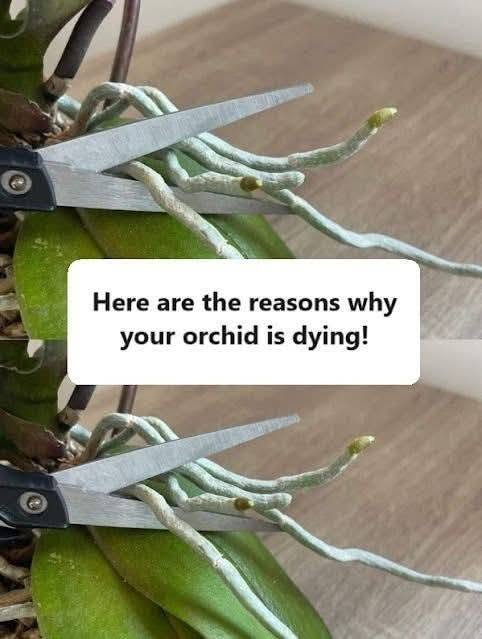
Orchids can look incredibly delicate, but they are often much tougher than they appear. When an orchid starts losing flowers, developing yellow leaves, or showing soft roots, it is easy to assume the plant is simply dying.
But in many cases, your orchid is actually telling you that something about its growing conditions needs to change.
From overwatering to poor lighting, here are some of the most common reasons orchids struggle—and what you can do to help them recover.
🌸 1. You Are Watering Too Often
One of the biggest mistakes orchid owners make is watering too frequently.
Orchids, especially popular Phalaenopsis orchids, don’t like sitting in constantly wet growing media. Their roots need access to air as well as moisture.
If the roots remain wet for too long, they can begin to rot.
Signs of Overwatering
Look for:
- Yellowing leaves
- Soft or mushy roots
- A consistently soggy potting mix
- A musty smell
- Leaves becoming weak or limp
Instead of watering according to a strict calendar, check the plant and its growing medium.
☀️ 2. Your Orchid Isn’t Getting Enough Light
Orchids need light to produce energy, but many don’t thrive in intense direct sunlight.
A bright location with indirect light is often ideal.
If the leaves are very dark green and the plant rarely produces flowers, insufficient light may be part of the problem.
On the other hand, strong direct sunlight through a hot window can scorch the leaves.
A Simple Test
Healthy Phalaenopsis leaves are commonly medium green.
If the plant receives extremely low light, its leaves may become unusually dark green. If it’s receiving excessive direct sunlight, you may notice pale patches, yellowing, or brown scorch marks.
🪴 3. The Pot Doesn’t Drain Properly
An orchid needs a container that allows excess water to escape.
A decorative pot with no drainage can trap water around the roots.
Whenever possible, use an orchid pot or container with adequate drainage and a suitable orchid-growing medium.
Clear orchid pots can also make it easier to observe the condition of the roots.
🌱 4. The Potting Mix Has Broken Down
Orchids aren’t usually planted in ordinary garden soil.
Many epiphytic orchids naturally grow attached to trees rather than buried in dense soil. Their roots are adapted to an airy environment.
Over time, bark-based orchid media can break down and become compacted.
When that happens, air circulation around the roots decreases and water may remain trapped for too long.
Repotting may be necessary when the growing medium has significantly decomposed or the roots are overcrowded or unhealthy.
💧 5. You Are Watering the Leaves Incorrectly
Getting a little water on an orchid isn’t automatically disastrous, but water left sitting in the crown—the central point where the leaves meet—can create problems.
After watering, avoid leaving standing water trapped in the crown.
If water collects there, gently remove it with a clean, absorbent material.
🌡️ 6. The Temperature Is Stressing the Plant
Orchids generally prefer stable indoor conditions rather than sudden temperature extremes.
Keep your orchid away from:
- Cold drafts
- Heating vents
- Air-conditioning blasts
- Very hot windows
- Sudden temperature changes
A plant that is constantly exposed to temperature stress may struggle to maintain healthy growth.
🌬️ 7. There Isn’t Enough Air Movement
Good air circulation can help the growing environment stay healthier.
You don’t need a strong fan blowing directly at the orchid.
Even gentle air movement around the plant can be beneficial, particularly in humid conditions.
Avoid placing the plant somewhere completely stagnant and poorly ventilated.
🌿 8. The Roots Are Damaged
Sometimes the leaves are only showing symptoms of a problem that began underground.
Healthy orchid roots are generally firm. Depending on the species and whether they’ve recently been watered, they may appear green, silvery, or whitish.
Damaged roots may become:
- Brown
- Black
- Soft
- Hollow
- Mushy
If severe root rot is present, simply adding more water won’t help.
The plant may need to be removed from its pot, unhealthy roots carefully removed with clean tools, and the orchid replanted into fresh, appropriate growing media.
🐛 9. Pests Are Attacking Your Orchid
Check your orchid carefully for pests.
Common indoor plant pests can include:
- Mealybugs
- Scale insects
- Aphids
- Spider mites
Look underneath leaves, around leaf joints, and along flower stems.
Early detection makes pest problems much easier to manage.
🌺 10. Losing Flowers Doesn’t Mean Your Orchid Is Dying
This is one of the most important things to understand.
Orchid flowers naturally fade.
After blooming, flowers may wilt and fall off as part of the plant’s normal life cycle.
That doesn’t necessarily mean your orchid is sick.
If the leaves and roots remain healthy, the plant may simply be entering a period between flowering cycles.
Give it appropriate light, water, nutrition, and growing conditions, and it may bloom again.
✂️ Should You Cut the Flower Spike?
Don’t automatically cut every flower spike immediately after flowering.
For some Phalaenopsis orchids, a healthy green spike may produce additional flowers or side branches.
A completely brown or dried spike can generally be removed.
If you’re uncertain, wait until you can determine whether the spike is still alive and healthy.
🌱 What About Fertilizer?
Orchids need nutrients for healthy growth, but more fertilizer isn’t necessarily better.
Use a fertilizer formulated for orchids and follow the product’s instructions.
Overfertilizing can cause salt buildup and potentially damage roots.
Regular but appropriate feeding during active growth is generally preferable to using a very concentrated mixture.
🚨 Quick Orchid Rescue Checklist
If your orchid looks unhealthy, check these things first:
✔ Roots: Are they firm or mushy?
✔ Water: Is the growing medium staying wet for too long?
✔ Light: Is the plant receiving bright, indirect light?
✔ Pot: Does excess water drain freely?
✔ Growing medium: Has the bark become old and compacted?
✔ Leaves: Are there signs of pests or sun damage?
✔ Temperature: Is the plant exposed to drafts or extreme heat?
✔ Flowers: Are only the flowers fading, or are the leaves and roots also declining?
The Bottom Line
An orchid that is losing flowers or developing a few yellow leaves isn’t necessarily beyond saving.
The most common problems are often related to watering, drainage, lighting, roots, temperature, or unsuitable growing media.
Instead of giving your struggling orchid more water or homemade remedies, first look at what the plant is actually showing you.
Sometimes the best rescue isn’t adding something new.
It’s simply correcting the conditions that are causing the problem.