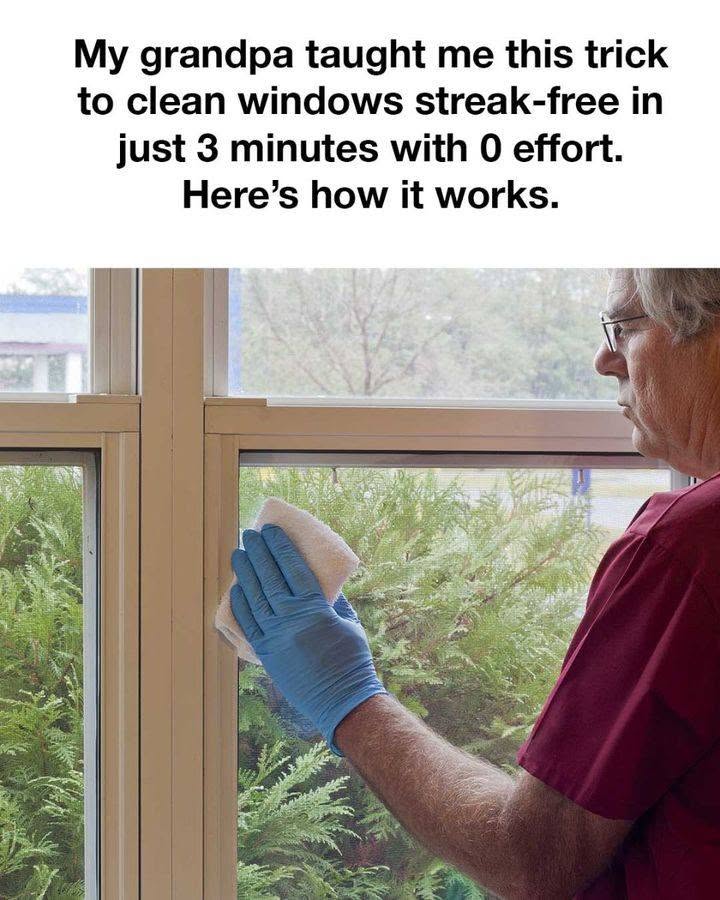
My Grandpa Taught Me This Simple Trick to Clean Windows Streak-Free
Meta Description: Want cleaner windows without annoying streaks? Learn a simple old-fashioned window-cleaning method using the right cloth, a small amount of cleaning solution, and the proper wiping technique.
There is something surprisingly satisfying about looking through a freshly cleaned window and seeing the glass look almost invisible.
Yet getting truly streak-free windows can be harder than it sounds. You spray the glass, wipe it down, and somehow you’re left with cloudy patches, fingerprints or long streaks that become even more obvious when sunlight hits the window.
My grandpa always believed that the secret wasn’t using more cleaning products. It was using less product, the right cloth and the right technique.
His simple approach is especially useful for people who want clean windows without spending a lot of money on specialized products.
The Secret Isn’t More Glass Cleaner
One of the biggest mistakes people make when cleaning windows is using too much cleaning solution.
A heavily sprayed window may look easier to clean, but excess liquid can leave behind residue. If the cloth is already damp and dirty, you may simply be moving that residue around the glass.
Instead, the goal is to loosen the dirt with a small amount of cleaning solution and then remove the moisture with a clean, absorbent microfiber cloth.
What You Need
You don’t need an expensive collection of cleaning supplies.
Gather:
- A clean microfiber cloth
- A spray bottle
- Warm water
- A small amount of mild dish soap
- A second dry microfiber cloth
- A soft cloth for the window frame
For particularly dirty windows, you can first remove loose dust and dirt with a dry cloth.
Step 1: Remove Dust First
Before putting any liquid on the glass, wipe away loose dust.
This small step can make a big difference.
If you immediately spray a dusty window, the dirt can mix with the moisture and turn into a thin film that is harder to remove.
Use a dry microfiber cloth and gently wipe the glass, corners and edges.
You don’t need to scrub aggressively.
Step 2: Make a Simple Cleaning Solution
Fill a spray bottle with warm water and add only a small amount of mild dish soap.
You don’t need a bottle full of bubbles.
The purpose of the soap is simply to help loosen fingerprints, grease and everyday grime.
Too much soap can actually make streaking worse because it can leave a residue behind.
Step 3: Don’t Soak the Window
Lightly mist the glass rather than completely soaking it.
If the window is very dirty, work on a small section at a time.
This gives you more control and prevents the cleaning solution from drying on the glass before you have a chance to wipe it away.
Step 4: Use a Microfiber Cloth
This is where the old-fashioned trick becomes especially useful.
Use a clean microfiber cloth to wipe the glass gently.
Microfiber is useful because its fine fibers can pick up dust, fingerprints and moisture without requiring aggressive scrubbing.
The cloth should be damp—not dripping wet.
If you are cleaning a large window, fold the cloth into sections. As one section becomes dirty or wet, turn it over and use a clean section.
Step 5: Finish With a Dry Cloth
This is one of the most important parts of getting a streak-free finish.
After removing the dirt, take a fresh, dry microfiber cloth and gently buff the glass.
Don’t keep using the same wet cloth for the final wipe.
A dry microfiber cloth helps remove the remaining moisture and reduces the chance of water marks.
Why Do Windows Sometimes Look Streaky?
There are several reasons.
Too Much Cleaning Product
More cleaner doesn’t necessarily mean cleaner glass.
Excess product can leave a film that catches light and makes the window look cloudy.
A Dirty Cloth
A cloth that has already collected grease and dust may simply redistribute it across the glass.
Cleaning in Direct Sunlight
If the glass is hot, water and cleaning solution can evaporate quickly.
That can leave behind marks before you finish wiping.
Whenever possible, clean windows when the glass is relatively cool and out of direct sunlight.
Using the Wrong Cloth
Old towels, paper products or rough fabrics can sometimes leave lint or fibers behind.
A clean microfiber cloth is generally a better choice.
The Three-Minute Routine
For a lightly dirty window, the process can be surprisingly quick:
1 minute: Remove dust and loose dirt.
1 minute: Lightly clean the glass with your diluted solution and microfiber cloth.
1 minute: Buff the glass with a clean, dry microfiber cloth.
Of course, heavily soiled windows, large windows and multiple panes can take considerably longer. The “three-minute” idea works best as a quick maintenance routine rather than a guarantee for every window.
Don’t Forget the Window Frames
Sometimes the glass looks dirty even after you’ve cleaned it because grime around the frame is being transferred back onto the glass.
Wipe the frame and edges separately.
Pay particular attention to:
- Window tracks
- Corners
- Rubber seals
- Handles
- Lower edges of the frame
A quick wipe around these areas can make the entire window look much cleaner.
An Easy Trick for Fingerprints
Windows near doors, kitchens and children’s play areas often collect fingerprints.
Instead of repeatedly spraying the entire pane, lightly dampen a microfiber cloth and wipe the affected area.
Then immediately buff it with a dry section of the cloth.
This is faster and uses much less cleaning solution.
What About Vinegar?
White vinegar is a popular household cleaning ingredient and can be useful for cutting through some mineral deposits and residue.
However, it isn’t necessary for every window-cleaning job.
If you use vinegar, never mix it with bleach or products containing bleach. Dangerous fumes can result.
For ordinary fingerprints and everyday dust, simple diluted soap and water may be enough.
One Small Detail That Makes a Big Difference
Always use a clean cloth for the final wipe.
This sounds obvious, but it is one of the easiest things to overlook.
A cloth can appear clean while still holding grease, detergent residue or fine dust. When that cloth is used on freshly cleaned glass, it can leave behind the very streaks you’re trying to remove.
If your windows continue to look cloudy, washing your microfiber cloths thoroughly and avoiding fabric softener can also help maintain their absorbency.
How Often Should You Clean Your Windows?
There is no universal schedule.
Windows exposed to dust, rain, pollen, traffic pollution or children’s fingerprints may need more frequent cleaning.
For many homes, a more thorough cleaning a few times a year combined with quick spot-cleaning in between is enough.
The important thing is not to wait until the glass becomes heavily coated with dirt.
The Bottom Line
A streak-free window doesn’t necessarily require an expensive cleaner or complicated equipment.
The real difference often comes from using a small amount of cleaning solution, avoiding excessive moisture, choosing a clean microfiber cloth and finishing with a dry cloth.
The old-fashioned approach is simple: don’t fight the glass with more and more product. Clean gently, work in manageable sections and give the final moisture a quick buff.
Sometimes the simplest household tricks really are the ones worth keeping.