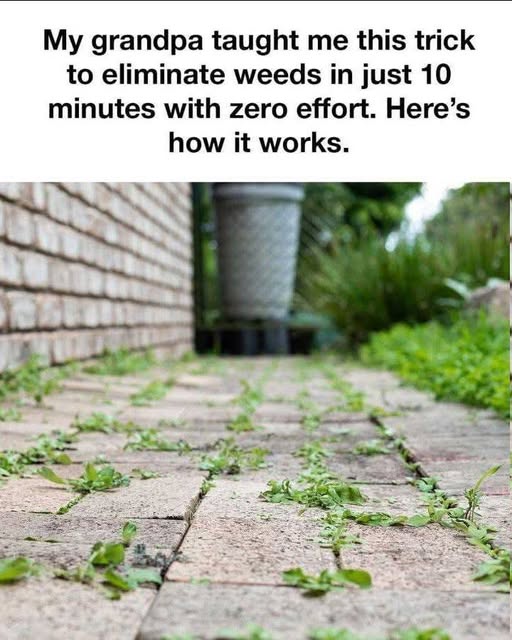
Learn an easy, low-effort way to deal with weeds growing through driveway cracks, plus safer alternatives for preventing weeds from returning and protecting nearby plants.
My Grandpa Taught Me This Trick to Kill Driveway Weeds With Almost 0 Effort — Here’s How It Works
Driveway weeds are frustrating. They seem to appear overnight, pushing through tiny cracks and making an otherwise clean driveway look neglected.
The good news is that you don’t always need expensive weed killers or hours of pulling weeds by hand.
A simple approach is to remove the visible growth and then prevent new weeds from getting established.
The Simple Trick: Boiling Water
One of the easiest low-cost methods for weeds growing through cracks in concrete or paving is carefully applied boiling water.
How it works
Boiling water can damage the plant’s above-ground tissue and roots by exposing them to intense heat.
It works best on small, young weeds growing through isolated driveway cracks.
How to use it
- Boil a kettle or pot of water.
- Carefully carry it outdoors.
- Slowly pour the hot water directly onto the weed.
- Try to avoid nearby grass, flowers, shrubs, and other plants.
- Allow the area to cool.
- Remove the dead plant material once it has dried.
You may need to repeat the treatment for persistent weeds, especially when they have deep roots.
Why This Method Is Convenient
You don’t have to mix chemicals or buy a specialized product.
It can be particularly useful for small areas of weeds growing through pavement or driveway cracks where you aren’t trying to preserve vegetation.
However, boiling water isn’t selective. Anything green that receives enough heat can be damaged.
Another Simple Option: Pull and Prevent
For larger weeds, physically remove the plant first.
Try to pull out as much of the root as possible, particularly when the soil is slightly damp.
Then focus on the reason the weed appeared in the first place.
Driveway cracks collect:
- Dust
- Soil
- Leaves
- Seeds
- Organic debris
Once enough material accumulates, weeds have somewhere to grow.
Regularly sweeping the driveway can therefore help reduce future growth.
What About Vinegar?
You may have heard about using household vinegar as a weed killer.
Acetic acid can damage plant tissue, but ordinary kitchen vinegar is relatively weak and may not reliably kill established weeds.
Stronger horticultural vinegar products can be hazardous and may cause skin and eye irritation or burns.
If you use any commercial weed-control product, follow its label carefully and keep it away from children, pets, drains, and desirable plants.
Avoid the “Natural” Mistake
Natural doesn’t automatically mean harmless.
Some popular homemade weed-killer recipes combine ingredients that can damage surrounding plants, soil, or surfaces.
For example, using large amounts of salt may kill weeds, but it can also make the soil unsuitable for plants and may contribute to runoff problems.
That’s why a targeted physical method or carefully applied hot water is often preferable for a few weeds in driveway cracks.
How to Keep Driveway Weeds From Coming Back
Killing existing weeds is only half the battle.
To reduce regrowth:
Sweep regularly
Remove soil and organic debris before seeds can establish.
Repair cracks
Large cracks provide more space for roots and soil to accumulate.
Remove young weeds early
Small weeds are much easier to control than established plants.
Keep edges maintained
Weeds often spread from lawns and garden beds onto driveways.
Improve drainage where appropriate
Persistent moisture can encourage vegetation in cracks.
Important Safety Warning
Boiling water can cause serious burns.
Carry it carefully, wear appropriate footwear, keep children and pets away, and never pour boiling water where someone could accidentally walk through it.
Also remember that hot water can damage or discolor some surfaces, particularly certain sealants or delicate paving materials.
Final Takeaway
If you’re dealing with a handful of stubborn weeds growing through driveway cracks, you don’t necessarily need an elaborate solution.
Carefully applied boiling water can be a simple option for small, isolated weeds, while regular sweeping, crack repair, and early removal can help prevent them from returning.
Sometimes the best weed-control trick isn’t a complicated chemical mixture—it’s simply making it harder for weeds to get established in the first place.