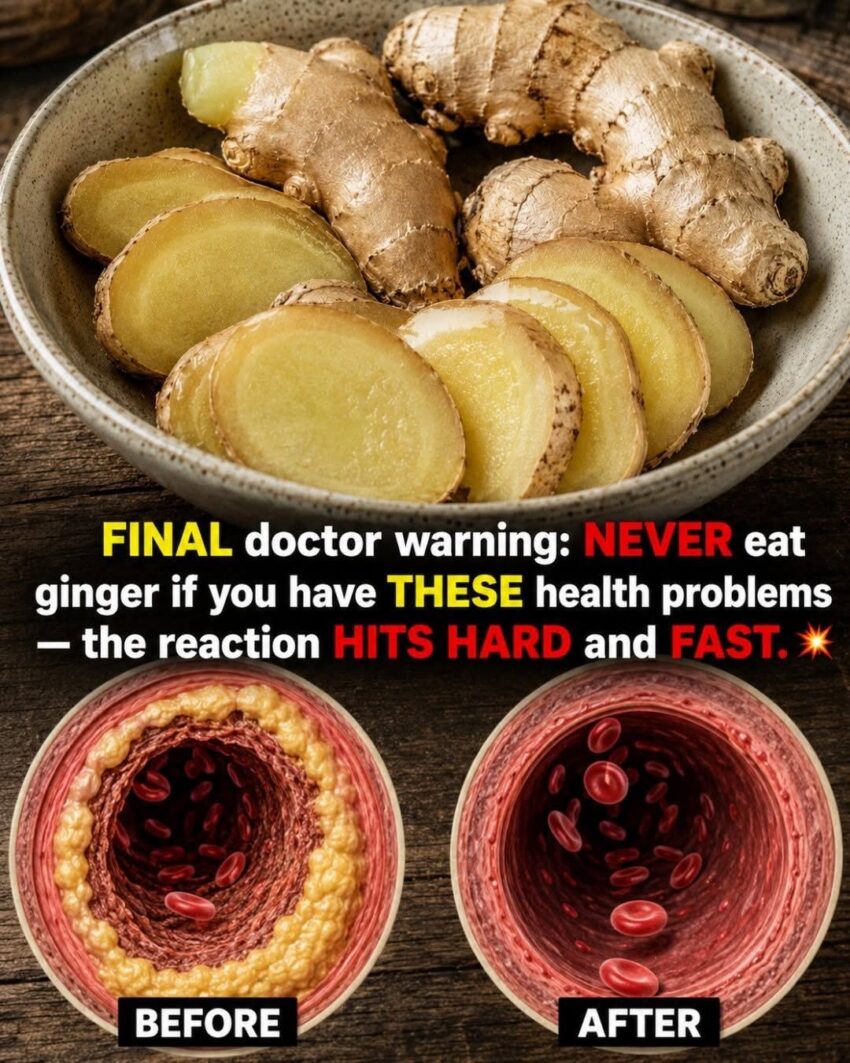
Ginger is one of the most popular natural ingredients in kitchens around the world. Fresh ginger, ginger tea, powdered ginger, and ginger supplements are often used for nausea, digestion, colds, and general wellness.
But despite its natural reputation, ginger is not automatically safe for everyone in every amount. Certain people may need to limit it or speak with a healthcare professional before using concentrated ginger products.
The concern is usually not that ginger is inherently dangerous. Instead, ginger can interact with certain medications or potentially worsen particular conditions, especially when consumed in large amounts or taken as a concentrated supplement.
1. If You Take Blood-Thinning Medication
Ginger may have mild effects on platelet aggregation, which is one reason people taking anticoagulant or antiplatelet medicines should be cautious with large amounts of ginger.
Examples of medicines that may require particular attention include:
- Warfarin
- Apixaban
- Rivaroxaban
- Clopidogrel
- Aspirin
This does not mean you must completely avoid the small amount of ginger commonly used in cooking. However, regularly taking high-dose ginger supplements without medical advice may increase concern about bleeding.
If you take a blood thinner, ask your doctor or pharmacist before starting concentrated ginger supplements.
2. If You Have Gallstones
Ginger can stimulate digestive activity and may increase bile flow. For people with gallstones or certain gallbladder problems, concentrated ginger products may not be appropriate.
If you have been diagnosed with gallstones, don’t assume that a large amount of ginger tea or ginger supplements will necessarily help your digestion.
Discuss regular medicinal use of ginger with your healthcare professional.
3. If You Have a Bleeding Disorder
People who already have problems with abnormal bleeding should be especially careful with concentrated herbal supplements.
Because ginger may have mild effects on blood clotting, taking large supplemental doses could potentially be inappropriate for someone with a bleeding disorder.
Food-level amounts are very different from high-dose supplements, so the amount and form of ginger matter.
4. If You Have Low Blood Sugar
Ginger has been studied for possible effects on blood-glucose regulation. For most people, eating ginger as part of a normal diet isn’t expected to cause a major problem.
However, people taking medication for diabetes should be cautious about suddenly consuming large quantities of ginger supplements.
Combining multiple glucose-lowering approaches could potentially contribute to blood sugar becoming lower than intended.
If you use diabetes medication, monitor your glucose as recommended and discuss concentrated ginger products with your healthcare provider.
5. If You Have Low Blood Pressure
Some research suggests ginger may have modest effects on blood pressure.
Again, eating ginger in ordinary culinary quantities isn’t necessarily a problem. The greater concern is concentrated supplementation, particularly for someone already taking medication to lower blood pressure.
If you frequently experience dizziness, faintness, or unusually low blood pressure, don’t use large doses of ginger as a self-treatment without professional advice.
6. If Ginger Gives You Severe Heartburn
Ginger is sometimes used to support digestion and nausea, but it doesn’t work the same way for everyone.
Large amounts may cause digestive symptoms such as:
- Heartburn
- Stomach discomfort
- Abdominal irritation
- Diarrhea
- Mouth or throat irritation
If ginger tea consistently makes your reflux or heartburn worse, there’s no reason to force yourself to drink it simply because it is considered a “healthy” ingredient.
7. Before Surgery
People scheduled for surgery should tell their healthcare team about all supplements and concentrated herbal products they use.
Because ginger may influence platelet function and blood pressure or glucose in some circumstances, your medical team may recommend stopping certain supplements before a procedure.
Don’t make your own decision about when to stop prescription medication.
8. If You Are Pregnant
Ginger is commonly used to help with pregnancy-related nausea, and moderate amounts may be considered acceptable for many pregnant people.
However, pregnancy is not the time to experiment with high-dose supplements without medical guidance.
If you are pregnant, particularly if you have complications or take other medications, discuss medicinal doses of ginger with your obstetrician or healthcare provider.
How Much Ginger Is Too Much?
There isn’t one universal amount that is dangerous for everyone.
The important distinction is between normal food amounts and concentrated supplements.
Using a little fresh ginger in cooking or drinking an ordinary cup of ginger tea is very different from taking large quantities of ginger extract or capsules every day.
More isn’t necessarily better.
Who Should Be Most Careful?
Extra caution is appropriate if you:
- Take blood-thinning or antiplatelet medication
- Have a bleeding disorder
- Have gallstones or gallbladder disease
- Take medication for diabetes
- Take medication for high blood pressure
- Have significant acid reflux or heartburn triggered by ginger
- Are preparing for surgery
- Are pregnant and considering concentrated supplements
The Bottom Line
Ginger is not a dangerous food that everyone with a health condition must avoid. For most healthy adults, normal culinary amounts are generally well tolerated.
The bigger concern is high-dose or concentrated ginger supplementation, especially when someone has a medical condition or takes prescription medication.
If you take regular medication or have a chronic health condition, talk with your doctor or pharmacist before using ginger supplements regularly.
And remember: natural does not automatically mean risk-free, and more does not always mean better.