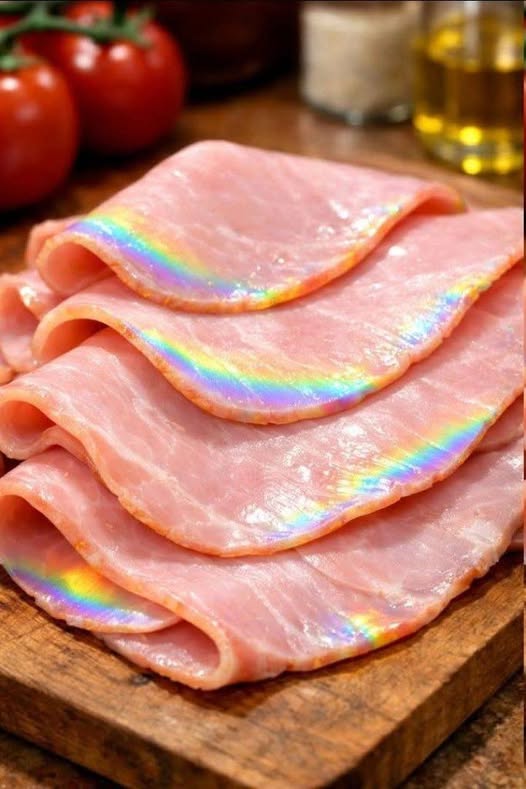
Noticed a rainbow-like or shiny color on your deli ham? Learn why sliced ham can look iridescent, when it is completely normal, and which signs mean you should throw it away.
You open the refrigerator, pull out a package of deli ham, and notice something strange: the slices seem to have a rainbow-like shine. Depending on the angle of the light, the ham may appear green, blue, purple, pink, or even metallic.
It can look alarming at first.
But in many cases, that colorful appearance is not a sign that the ham has gone bad.
The phenomenon is known as iridescence, and it can occur naturally in meat. The U.S. Department of Agriculture’s Food Safety and Inspection Service (USDA FSIS) explains that when light hits a slice of meat, it can separate into rainbow-like colors. Meat pigments and processing can also contribute to an iridescent or greenish appearance. Importantly, USDA says iridescence itself does not indicate that the meat is unsafe.
So how can you tell the difference between harmless iridescence and actual spoilage?
Let’s take a closer look.
What Causes the Rainbow Shine on Deli Ham?
The rainbow effect is usually caused by the way light interacts with the surface of the sliced meat.
When deli ham is cut into thin slices, the muscle fibers and surface structure can reflect light in particular directions. Under certain lighting, those reflections may produce colors resembling a rainbow or an oily sheen.
The effect can become especially noticeable when you tilt the slice or move it underneath a bright kitchen light.
USDA notes that meat contains different pigments that can contribute to an iridescent or greenish cast, particularly following processing and exposure to heat.
This means that a slice can look green, purple, blue, pink, or rainbow-colored without necessarily being spoiled.
Is Rainbow-Colored Ham Safe to Eat?
Iridescence alone does not mean deli ham is spoiled.
This is one of the most important points.
People sometimes assume that any unusual color means bacteria or mold are growing on the meat. However, USDA specifically states that a color change by itself does not necessarily indicate spoilage.
Instead of judging the ham solely by its color, check several factors:
- How does it smell?
- Does the surface feel normal?
- Has it been refrigerated properly?
- How long has the package been open?
- Is there mold?
- Is the package damaged or swollen?
- Is the meat unusually slimy or sticky?
These clues provide a much better indication of whether the product should be discarded.
How to Tell Iridescence From Spoilage
A harmless rainbow sheen generally has a very different appearance from obvious spoilage.
Signs That May Indicate Normal Iridescence
The ham may be experiencing normal iridescence if:
- The colors appear mostly when light hits the slice at a particular angle.
- The surface still looks smooth and normal.
- The ham has its usual smell.
- There is no visible mold.
- The meat isn’t unusually slimy.
- The rainbow effect changes or disappears when you move the slice.
- The ham has been kept properly refrigerated.
In this situation, the rainbow appearance itself isn’t necessarily a reason to throw the ham away.
Warning Signs That the Ham May Be Spoiled
On the other hand, don’t ignore other signs of deterioration.
According to USDA guidance, meat that has spoiled may develop an off odor and can become sticky, tacky, or slimy.
Throw the ham away if you notice things such as:
1. A Strong or Unpleasant Smell
Fresh deli ham should have a characteristic smell appropriate to the product.
If it smells sour, rotten, rancid, sulfur-like, or otherwise distinctly unpleasant, don’t taste it to see whether it’s still good.
Discard it.
2. Slimy or Sticky Texture
A rainbow reflection is very different from a genuinely slimy surface.
If the ham feels unusually slippery, sticky, or tacky, that’s a warning sign.
USDA specifically identifies sliminess and stickiness as characteristics associated with spoilage.
3. Mold
If you see visible mold on deli ham, don’t simply cut off the affected portion and eat the rest.
Because deli meat is a moist, ready-to-eat food, the safest choice is to discard the product.
4. Unusual Discoloration Along With Other Changes
Color alone isn’t enough to establish spoilage.
However, if unusual discoloration appears together with an unpleasant odor, slimy texture, or other deterioration, the safest decision is to throw the ham away.
How Long Does Deli Ham Last in the Refrigerator?
Storage time is extremely important.
USDA FSIS recommends keeping opened packages of lunch meat or deli-sliced lunch meat refrigerated for 3 to 5 days. The refrigerator should be maintained at 40°F (4.4°C) or below.
For unopened packaged lunch meat, USDA says it can generally be refrigerated for up to two weeks, unless the product’s labeling gives a different storage instruction or use-by date.
So if you’ve had an opened package sitting in the refrigerator for more than several days, don’t rely on the rainbow appearance alone to decide whether it’s safe.
When in doubt, discard it.
What If the Ham Was Just Opened?
If you opened a fresh package today and immediately noticed a rainbow-like reflection, that’s much more consistent with normal iridescence—especially if:
- the package was properly refrigerated,
- the meat smells normal,
- the texture is normal,
- there is no mold, and
- the appearance changes as the lighting angle changes.
USDA explains that light hitting sliced meat can produce exactly this type of rainbow-like appearance.
Why Does the Color Change When You Move the Slice?
This is actually one of the useful clues.
With iridescence, the colors can appear stronger from one angle and weaker from another.
For example, a slice may look completely pink when lying flat but show green, blue, purple, or golden reflections when tilted toward a window or kitchen light.
That’s because you’re seeing reflected light rather than necessarily seeing a new substance growing on the meat.
This is similar to the colorful effect sometimes seen on other types of cooked or processed meat.
Does Cooking the Ham Make Spoiled Ham Safe?
It’s important not to assume that heating questionable deli meat automatically makes it safe.
If food shows clear signs of spoilage—such as an off odor, slimy texture, or mold—don’t try to rescue it by cooking it.
Cooking is not a substitute for proper storage and food-quality assessment.
If you’re uncertain about meat that has been improperly stored or has obvious spoilage signs, the safest option is disposal.
What About Deli Ham for Pregnant People?
Pregnant people need to take extra care with deli meats because ready-to-eat refrigerated meats can be associated with Listeria monocytogenes, a foodborne pathogen of particular concern during pregnancy.
If you’re pregnant, follow current guidance from your healthcare professional and your local food-safety authority regarding deli meat, including whether it should be reheated before eating.
The rainbow appearance itself is not what creates the concern; proper handling, storage, and preparation are the important issues.
Don’t Use Color Alone to Judge Meat
One of the biggest misconceptions about meat is that a strange color automatically means it has spoiled.
USDA explains that color changes can occur naturally and that color alone doesn’t establish spoilage. Spoilage is more concerning when color changes occur alongside an unpleasant odor or a sticky/slimy texture.
That’s why it’s better to consider the whole picture.
Think of it as a simple checklist:
Color + smell + texture + storage time + storage temperature.
Together, these clues are much more useful than color alone.
What Should You Do With Your Ham?
If the only unusual thing you notice is a rainbow-like shine, don’t panic.
First, examine it under normal lighting.
Then check the smell and texture.
If everything else seems normal and the ham has been stored properly, the rainbow effect may simply be iridescence.
But if you notice an unpleasant odor, sliminess, stickiness, mold, or evidence that the ham was stored improperly, it’s better to throw it away.
How to Store Deli Ham Properly
To help maintain quality and reduce food-safety risks:
Keep It Cold
Your refrigerator should be at 40°F (4.4°C) or below.
Keep the Package Sealed
After opening deli meat, close the package securely or transfer the slices to a clean, airtight container.
Don’t Leave It Sitting Out
Return deli meat to the refrigerator promptly after serving.
Track When You Opened It
Writing the opening date on the package can make it easier to remember how long it has been refrigerated.
Follow the Package Instructions
If the manufacturer provides a shorter storage recommendation or a specific use-by date, follow the label.
Frequently Asked Questions
Is rainbow-colored deli ham automatically spoiled?
No. A rainbow-like sheen can be normal iridescence caused by light interacting with the meat’s surface. USDA states that iridescence itself does not indicate reduced safety or quality.
Why does my ham look green or purple?
Meat pigments, processing, and the way light reflects from the surface can create greenish, purple, or rainbow-like colors.
Should I throw away ham that looks shiny?
Not necessarily. If the shine is simply iridescent and the ham has normal smell and texture and has been stored correctly, the appearance alone isn’t proof of spoilage.
What does spoiled deli ham smell like?
A distinctly unpleasant, sour, rotten, rancid, or otherwise abnormal odor is a warning sign. USDA identifies off odors as one of the signs that meat may have spoiled.
How long does opened deli ham last?
USDA recommends refrigerating opened lunch meat or deli-sliced lunch meat for 3–5 days at 40°F (4.4°C) or below.
Can I eat ham if it is slightly discolored?
Color alone doesn’t necessarily mean spoilage. However, if discoloration occurs together with an off smell, sticky or slimy texture, or visible deterioration, discard the meat.
Final Takeaway
That surprising rainbow-like shine on deli ham is often a harmless optical effect called iridescence. The USDA specifically explains that light can create rainbow colors on meat and that iridescence itself does not mean the meat is unsafe.
The important thing is to look beyond the color.
If the ham has been properly refrigerated, smells normal, has a normal texture, and shows no mold or other signs of deterioration, the rainbow sheen may simply be part of the way the sliced meat reflects light.
But if the ham smells bad, feels sticky or slimy, shows mold, or has been stored longer than recommended, don’t take the risk—throw it away.
When it comes to questionable food, it’s always better to be safe than sorry.