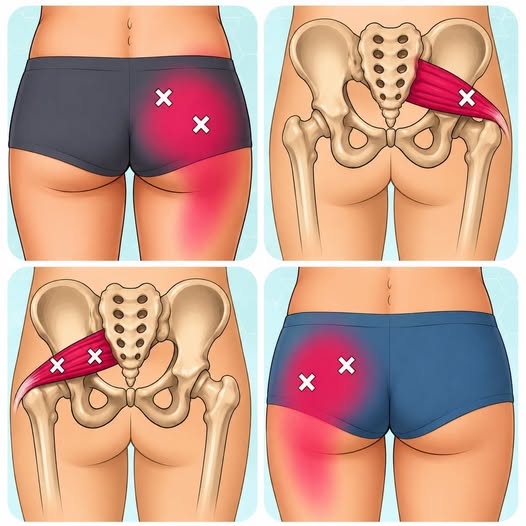
Discover gentle yoga stretches that may help ease some sciatica discomfort, improve flexibility, and support mobility. Learn which movements to try and when to stop and seek medical advice.
Sciatica can cause pain that starts in the lower back and travels through the buttocks and down one leg. Some people may also experience tingling, numbness, or weakness.
Gentle movement can help some people manage symptoms, but there isn’t one stretch that works for everyone. The right exercises depend on what’s causing the nerve irritation.
1. Child’s Pose
Child’s Pose provides a gentle stretch for the lower back, hips, and thighs.
How to do it:
Kneel on a comfortable surface.
Slowly move your hips toward your heels.
Lean your upper body forward.
Rest your forehead comfortably.
Hold for about 20–30 seconds while breathing slowly.
Don’t force the position if it increases pain traveling down your leg.
2. Gentle Figure-Four Stretch
This stretch targets the muscles around the buttocks and hips.
Lie on your back with both knees bent. Place one ankle over the opposite knee, creating a figure-four shape. Gently draw the supporting leg toward your chest until you feel a comfortable stretch in the buttock.
Hold briefly, then switch sides.
3. Knee-to-Chest Stretch
Lie comfortably on your back with your legs relaxed.
Slowly bring one knee toward your chest and hold it gently with your hands. Keep the other leg in a comfortable position.
Hold for several seconds, then slowly return to the starting position and repeat on the other side.
4. Cat-Cow Movement
This gentle movement can help maintain mobility in the spine.
Start on your hands and knees, keeping your hands beneath your shoulders and your knees beneath your hips.
Slowly round your back and then return toward a neutral position. Keep the movements controlled and comfortable rather than trying to achieve a deep stretch.
5. Gentle Hamstring Stretch
Tight hamstrings can contribute to discomfort around the lower back and legs.
One option is to lie on your back and use a towel around your foot to gently raise one leg.
Keep the movement slow and avoid bouncing or forcing the leg upward.
Tips for Practicing Safely
The goal is not to push through pain. A gentle stretch may feel mildly challenging, but sharp pain, increased tingling, numbness, or an electric-shock sensation traveling down the leg is a reason to stop.
For many people, a combination of gentle mobility, strengthening exercises, and regular physical activity may be more useful than stretching alone.
When Should You See a Doctor?
Seek urgent medical attention if back or leg pain occurs with loss of bladder or bowel control, numbness around the groin or anus, or significant or worsening weakness in the legs.
If your symptoms persist, become worse, or interfere with everyday activities, a doctor or physical therapist can help identify the underlying cause and recommend exercises appropriate for you.
Bottom line: Gentle yoga may help some people manage sciatica-related discomfort, but exercises should be adapted to your symptoms. Stop any movement that makes your symptoms significantly worse, and don’t use stretching as a substitute for medical evaluation when warning signs are present.