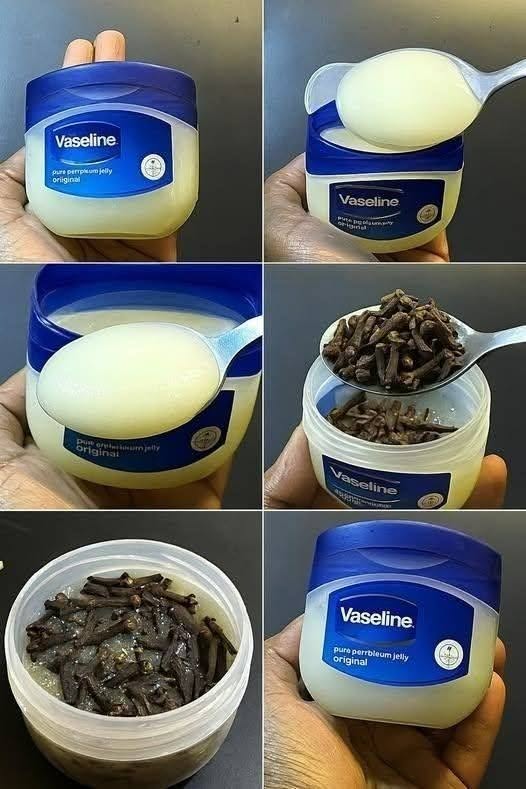
Discover how a simple clove and petroleum jelly salve can be prepared at home and learn what it may and may not do for dry skin, rough areas, and everyday skin care.
Sometimes the simplest household ingredients can become useful additions to a basic skin-care routine. Cloves and petroleum jelly are two inexpensive ingredients that many people already have at home.
Cloves contain aromatic compounds and naturally occurring antioxidants, while petroleum jelly works mainly as an occlusive moisturizer, helping reduce water loss from the skin.
Together, they can make an interesting homemade salve—but it is important to understand its limitations and use it safely.
What Makes Petroleum Jelly Useful?
Petroleum jelly is widely used to protect dry skin because it forms a protective layer over the surface.
This barrier can help reduce moisture loss and make rough, dry areas feel softer.
It can be particularly useful on areas such as:
- Dry hands
- Rough elbows
- Dry heels
- Chapped areas of skin
- Rough patches caused by environmental dryness
Petroleum jelly doesn’t “repair” every skin problem, but it can be an effective basic moisturizer and protective barrier.
What Do Cloves Add?
Cloves are an aromatic spice containing compounds such as eugenol.
Eugenol has been studied for its antioxidant and antimicrobial properties, but that doesn’t mean rubbing concentrated clove preparations on the skin will treat infections or other medical conditions.
Clove can also be irritating to sensitive skin, particularly when concentrated.
For that reason, a homemade clove preparation should be used cautiously.
How to Make a Simple Clove-Infused Petroleum Jelly
A gentler approach is to infuse a small amount of petroleum jelly rather than applying concentrated clove oil directly to the skin.
Ingredients
- 2–3 whole cloves
- 2 tablespoons petroleum jelly
- A small clean heat-safe container
Method
- Crush the cloves lightly to release some of their aromatic compounds.
- Place the petroleum jelly and cloves in a heat-safe container.
- Warm the mixture gently using a double-boiler method for several minutes. Do not overheat it.
- Allow it to cool.
- Strain out the cloves using a clean fine strainer or clean cloth.
- Transfer the finished salve into a clean, dry container.
- Allow it to cool completely before using.
Because homemade preparations don’t contain preservatives, make a small batch and keep it clean and dry. If the mixture develops an unusual smell, appearance, or contamination, discard it.
How to Use It
Before applying the salve to a larger area, perform a small patch test.
Apply a tiny amount to an inconspicuous area of skin and wait to see whether irritation develops.
If your skin tolerates it, a small amount can be applied to dry areas.
There’s no need to apply a thick layer. A thin coating is generally enough to create the protective effect of petroleum jelly.
What Can It Help With?
The most dependable benefit in this mixture comes from the petroleum jelly, which helps protect and moisturize dry skin.
It may make rough skin feel:
- Softer
- Smoother
- Less dry
- More comfortable
The clove component mainly contributes its aromatic and potentially antioxidant properties, but evidence is not strong enough to claim that a homemade clove salve can cure skin diseases or dramatically transform the skin.
Important Safety Precautions
Clove can irritate the skin, especially in concentrated forms.
Avoid applying homemade clove preparations:
- Inside the eyes
- Inside the nose or mouth
- On broken or bleeding skin
- On fresh burns
- On active rashes without knowing their cause
- On areas with signs of infection
Stop using the product if you experience burning, redness, itching, swelling, or a worsening rash.
Do not apply undiluted clove essential oil directly to the skin. Essential oils are highly concentrated and can cause irritation or allergic reactions.
Don’t Expect a Miracle Cure
Homemade salves are often promoted online as treatments for everything from wrinkles to infections, joint pain, fungus, and other medical conditions.
Those claims should be treated carefully.
A clove-and-petroleum-jelly salve may be a simple option for basic dry-skin care, but it shouldn’t replace medical treatment for eczema, fungal infections, wounds, persistent rashes, or other skin conditions.
A Simple Addition to a Skin-Care Routine
If your goal is simply to keep dry skin protected and moisturized, petroleum jelly alone is already a well-established option.
Adding clove can make the preparation more aromatic, but it also introduces a greater possibility of irritation. Therefore, people with sensitive skin may prefer to skip the clove and use plain petroleum jelly.
Final Thoughts
The clove and petroleum jelly salve is an easy homemade preparation that combines an aromatic spice with a well-known skin-protective ingredient.
Its most reliable role is as a moisture-locking salve for dry, rough skin. The clove should be viewed as an optional ingredient rather than a miracle treatment.
As with any homemade skin remedy, moderation and a patch test are important. If a skin problem is persistent, painful, infected-looking, or getting worse, it’s better to have it properly evaluated rather than relying on a DIY remedy.