Can a mineral really remove age spots? Learn what nutrients such as zinc and copper can—and cannot—do for age spots, plus proven ways to reduce their appearance safely.
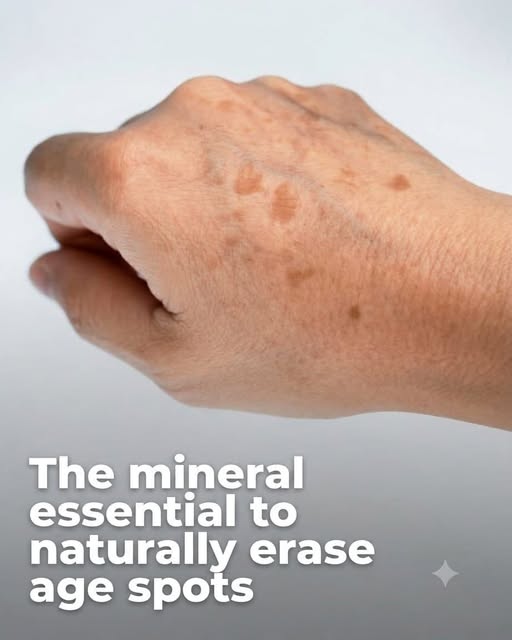
Age spots, also called solar lentigines, are flat brown or darker patches that commonly appear on areas of skin exposed to sunlight, such as the face, hands, shoulders, and arms.
You may see claims that one particular mineral can “remove” age spots naturally. However, there is no mineral proven to erase age spots on its own.
Is Zinc the #1 Mineral?
Zinc is important for healthy skin, including normal wound healing and cell function. However, taking extra zinc or applying zinc-containing products isn’t an established treatment for removing existing age spots.
Getting enough zinc through a balanced diet is useful, but more isn’t necessarily better. Excessive zinc supplementation can cause side effects and interfere with copper absorption.
What About Copper?
Copper also plays a role in normal connective-tissue formation and pigmentation-related biological processes. But there is no good evidence that taking copper supplements will safely remove age spots.
Supplementing with copper without a medical reason can be harmful, so it shouldn’t be used as a DIY treatment for pigmentation.
What Actually Helps Fade Age Spots?
If your goal is to make sun spots less noticeable, approaches with better evidence include:
1. Daily Sunscreen
Sun exposure can make pigmentation darker and contribute to new spots. Use a broad-spectrum SPF 30 or higher, apply enough, and reapply when appropriate.
2. Retinoids
Topical retinoids can encourage skin-cell turnover and may gradually improve uneven pigmentation. They can irritate the skin, so they should be introduced carefully.
3. Vitamin C
Topical vitamin C may help brighten uneven pigmentation for some people. Results generally take time and depend on the formulation and consistency of use.
4. Professional Treatments
A dermatologist may recommend treatments such as laser therapy, cryotherapy, chemical peels, or other procedures, depending on the type and location of the pigmentation.
Important: Not Every Dark Spot Is an Age Spot
A new, changing, irregular, bleeding, itching, or rapidly growing dark spot should not simply be treated at home. Some skin cancers can resemble harmless pigmentation.
A dermatologist can examine a suspicious spot and determine whether further testing is necessary.
The Bottom Line
There isn’t a scientifically established “#1 mineral” that removes age spots. Zinc and copper are important nutrients for normal body and skin function, but supplements shouldn’t be considered a treatment for solar lentigines.
For fading existing spots and preventing new ones, sun protection and evidence-based dermatological treatments are much more reliable than mineral supplements.