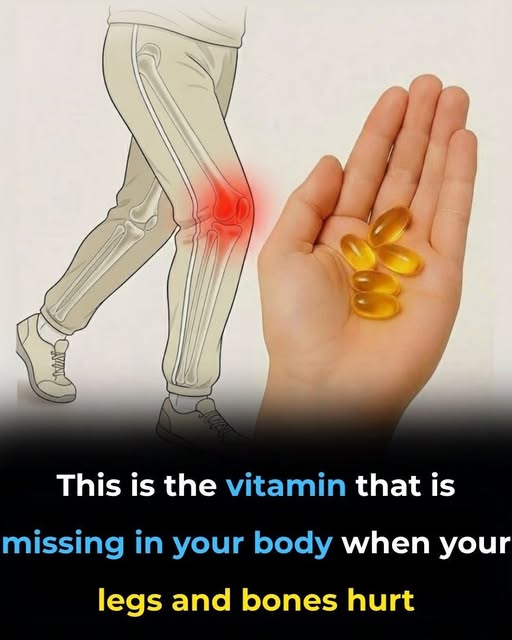
Leg and bone pain can have many causes. Learn which vitamin deficiencies may contribute to muscle or bone discomfort, what symptoms to watch for, and when medical evaluation is important.
The Vitamin Your Body May Lack When Your Legs and Bones Hurt
Pain in the legs or bones can sometimes be associated with a vitamin or mineral deficiency, but there isn’t one vitamin that explains every case. The cause can range from muscle strain and arthritis to nerve problems, medication effects, or nutritional deficiencies.
One nutrient doctors commonly consider is vitamin D.
Vitamin D and Bone Health
Vitamin D helps the body absorb calcium, which is essential for maintaining strong bones. Significant vitamin D deficiency can contribute to poor bone mineralization and may cause bone pain, muscle weakness, or aches, particularly in the back, hips, pelvis, and legs.
People at higher risk of vitamin D deficiency can include those who get little sunlight, have limited dietary sources of vitamin D, or have certain medical conditions that affect absorption.
Other Nutrients Can Matter Too
Vitamin D isn’t the only possibility.
- Vitamin B12: Deficiency can affect the nerves and may cause numbness, tingling, weakness, or balance problems.
- Calcium: Low calcium levels can contribute to muscle cramps and other symptoms, although many cases have causes other than dietary deficiency.
- Magnesium: Severe deficiency can cause muscle cramps, weakness, and abnormal muscle contractions.
Because these symptoms overlap considerably, taking supplements based only on leg pain isn’t a good idea.
When Should You Get Checked?
Persistent, unexplained, or worsening pain deserves medical evaluation. A healthcare professional may review your symptoms, medications, diet, and medical history and may recommend blood tests such as vitamin D, B12, calcium, or other tests when appropriate.
Seek prompt medical attention if leg pain is accompanied by significant swelling, redness or warmth in one leg, sudden weakness, severe pain, chest pain, or difficulty breathing.
Bottom Line
Vitamin D deficiency is one possible nutritional contributor to bone and muscle pain, but leg pain does not automatically mean you’re deficient in vitamin D. Finding the underlying cause is more important than simply taking a supplement.