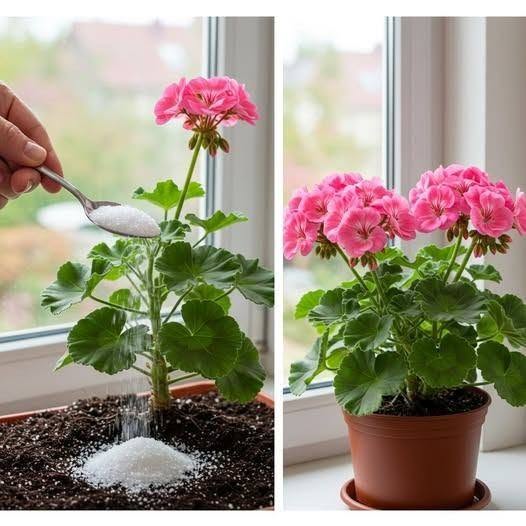
Learn how to water geraniums correctly for lush foliage and abundant flowers. Discover simple watering, sunlight, feeding, and pruning tips for healthier geraniums.
Geraniums are among the most rewarding flowering plants to grow. With enough sunlight, good drainage, regular feeding, and the right watering routine, they can produce colorful flowers for much of the growing season.
But there is one mistake that can quickly leave geraniums looking weak and producing fewer flowers: watering too often.
If you want a geranium that stays leafy and produces plenty of blooms, the goal isn’t to keep the soil constantly wet. It’s to give the plant a thorough drink when it actually needs one and then allow excess water to drain away.
The Best Way to Water Geraniums
Instead of giving your geranium a tiny amount of water every day, check the soil first.
Push your finger about 2–3 cm (roughly 1 inch) into the topsoil. If it feels dry at that depth, the plant may be ready for watering.
When watering, pour slowly around the base of the plant until water begins to come out of the drainage holes.
Then allow the pot to drain completely.
Don’t leave the pot sitting in a saucer full of water.
Constantly saturated soil can deprive the roots of oxygen and increase the risk of root problems.
Water the Soil, Not the Leaves
Whenever possible, direct water toward the soil around the base of the plant.
Repeatedly soaking the foliage and flowers can keep them wet for too long and may encourage fungal problems, especially when air circulation is poor.
Morning is generally a good time to water because the plant has plenty of time to dry during the day.
Sunlight Is Essential for Flowers
Water alone won’t make a geranium bloom heavily.
Geraniums generally perform best with plenty of bright light and several hours of direct sunlight, although the exact amount depends on the species, climate, and growing conditions.
If your plant has lots of leaves but very few flowers, insufficient light may be one reason.
A bright, sunny location can make a major difference in flowering.
Don’t Forget Drainage
Excellent drainage is just as important as proper watering.
Make sure the container has drainage holes and that the potting mix doesn’t remain soggy after watering.
A lightweight, well-draining potting mix can help prevent water from accumulating around the roots.
If the soil becomes compacted and stays wet for days, consider repotting the plant into a more suitable mix.
Feed for More Flowers
Geraniums use nutrients while producing new leaves and flowers.
During active growth, a balanced or flowering-plant fertilizer can be useful when applied according to the product’s label.
Avoid assuming that more fertilizer means more flowers. Excess fertilizer can damage roots and encourage excessive leafy growth at the expense of healthy flowering.
Remove Faded Flowers
One of the easiest ways to keep geraniums looking attractive is to remove spent blooms.
Once a flower cluster has faded, gently remove it along with the appropriate stem according to the plant’s growth habit.
Regular deadheading encourages the plant to put its energy into new growth rather than seed production.
Give Leggy Plants a Trim
If your geranium becomes tall, thin, or sparse, pruning can encourage a bushier appearance.
Trim overly long stems with clean scissors or pruning shears, ideally during active growth.
New shoots can develop from the remaining stems, helping the plant become fuller over time.
What If the Leaves Turn Yellow?
Yellow leaves don’t automatically mean your geranium needs more water.
They can be associated with several factors, including:
- Overwatering
- Poor drainage
- Insufficient light
- Nutrient problems
- Natural aging of older leaves
- Temperature stress
Check the soil before watering again rather than following a rigid schedule.
A Simple Geranium Routine
For healthy, flower-filled geraniums, remember these basic principles:
Check the soil → water thoroughly → let excess water drain → provide plenty of light → feed appropriately → remove faded flowers.
There is no magic watering ingredient that guarantees flowers all year. Geraniums respond best to consistent care and conditions suited to their variety.
The Bottom Line
If your geraniums aren’t flowering as much as you’d like, don’t immediately reach for a complicated homemade fertilizer.
Start with the basics.
Give them enough sunlight, water deeply when the soil begins to dry, provide good drainage, feed during active growth, and remove spent flowers.
With the right balance of moisture and light, a healthy geranium can stay lush and reward you with an impressive display of blooms throughout the growing season.
Do your geraniums flower better when you water them less frequently? Share your experience with other gardeners!