Have you ever noticed a strange, dark-colored insect crawling along a wall, floor, bathroom, or near a window and wondered whether it is dangerous?
A viral warning post may tell you that finding an insect like this is a serious sign and that you should immediately be concerned. But before you panic, it is important to identify what you are actually looking at.
Warning! If You Find This Insect in Your Home, Here’s What It Really Means
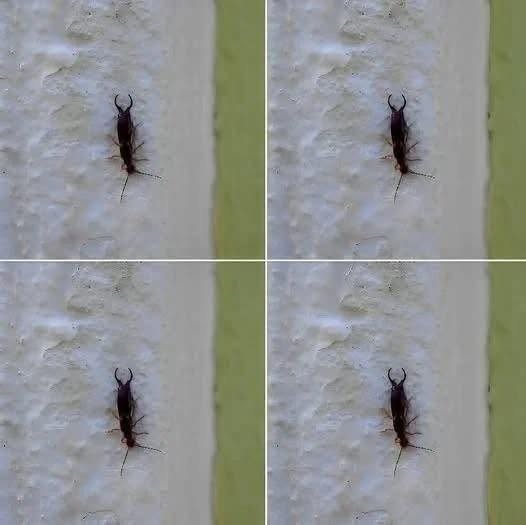
Based on the photograph provided, the insect appears to be an earwig, an insect recognized by the distinctive pair of curved, pincer-like structures at the end of its abdomen. These structures are called forceps or cerci.
The exact species cannot be confirmed from this photograph alone, but the appearance is consistent with an earwig.
What Is an Earwig?
Earwigs belong to the insect order Dermaptera. They are generally flattened, elongated insects with six legs, long antennae, and characteristic forceps at the rear of the body.
The forceps are probably the feature that makes the insect look frightening. However, they are primarily used for defense and courtship, rather than attacking humans.
Earwigs are mostly outdoor insects. They commonly hide in dark, damp places such as:
- Under leaves
- Beneath stones and boards
- In garden debris
- Under mulch
- Around decaying plant material
- In cracks and crevices
- Near damp foundations
They are generally more active at night and spend much of the daytime hiding.
Does an Earwig Mean Something Is Wrong With Your House?
Not necessarily.
Finding a single earwig indoors does not automatically mean that your house has an infestation, structural problem, or dangerous pest.
Earwigs can enter buildings accidentally or while looking for suitable shelter. They may be attracted to cool, dark, or moist conditions, particularly when outdoor conditions become very hot, dry, or otherwise unfavorable.
So seeing one on a wall, as in the photograph, is usually not a reason to panic.
If you repeatedly find large numbers of them, however, it is worth investigating the conditions around your home.
Why Are Earwigs Coming Inside?
One of the biggest factors is moisture.
Earwigs prefer damp environments, so areas around leaking pipes, outdoor taps, air-conditioning units, poorly drained areas, gardens, mulch, and wet organic material can provide attractive habitat.
They may also enter through very small openings around:
- Doors
- Windows
- Pipes
- Wiring
- Cracks in walls
- Damaged screens
- Gaps around foundations
Outdoor lighting can also attract some night-active earwigs toward buildings.
Can Earwigs Crawl Into Your Ear?
This is one of the biggest myths surrounding this insect.
The name “earwig” comes from an old superstition that these insects deliberately entered people’s ears while they were sleeping and could eventually reach the brain.
There is no scientific basis for the idea that earwigs deliberately crawl into people’s ears or bore into the brain. Modern entomology sources specifically describe this as a myth.
That does not mean an insect could never accidentally enter an ear—small insects can occasionally do so—but an earwig is not seeking out human ears.
Are Earwigs Dangerous to Humans?
Generally, no.
Earwigs are not venomous insects and are not considered a significant health hazard to people. They do not sting.
Their intimidating pincers can be used defensively if the insect is captured or squeezed. Some species may pinch, but this is not normally a serious danger.
In other words, the scary-looking forceps in the photograph are not evidence that the insect is dangerous.
What Do Earwigs Eat?
Earwigs have a varied diet.
Depending on the species, they may feed on:
- Decaying plant material
- Fungi
- Algae
- Small insects
- Aphids
- Mites
- Dead organic matter
- Flowers and tender plant material
Some species can therefore be useful predators or scavengers, while others may occasionally damage garden plants.
Their presence outdoors is not automatically a bad thing.
Can Earwigs Damage Your Home?
Usually, earwigs are considered nuisance or accidental invaders when they enter houses.
They generally do not establish large indoor populations in normal, dry household conditions. Instead, they tend to wander inside from outdoor habitats.
If you are repeatedly finding them indoors, the more useful question is not “Why is this dangerous insect here?” but:
“What conditions around my home are allowing them to enter?”
That shift in perspective can make pest control much easier.
What Should You Do If You Find One?
If you find a single earwig like the one shown in the photograph, there is usually no need for drastic action.
You can simply:
- Sweep it outside.
- Vacuum it up if necessary.
- Check nearby windows and doors for gaps.
- Look for damp areas around the room.
- Keep outdoor debris and leaves away from the building.
- Make sure water drains away from the foundation.
Extension pest-management guidance generally recommends reducing moisture, shelter, and entry points before relying on insecticides.
How to Stop Earwigs From Coming Inside
1. Reduce Moisture
Check for leaking taps, pipes, drains, gutters, or areas where water collects close to the building.
Earwigs are strongly associated with moist environments, so reducing unnecessary moisture can make the area less attractive to them.
2. Seal Entry Points
Inspect:
- Door thresholds
- Window frames
- Wall cracks
- Pipe openings
- Damaged screens
- Gaps around exterior walls
Weather-stripping, caulking, and repairing screens can help prevent insects from wandering indoors.
3. Remove Outdoor Hiding Places
Leaves, wood piles, boards, dense vegetation, mulch, and other organic debris can provide excellent shelter for earwigs.
Keeping these materials away from the immediate foundation area can reduce the number of insects around the house.
4. Manage Outdoor Lighting
Because earwigs are active at night and some can be attracted to lights, reducing unnecessary lighting near doors and windows may help reduce their movement toward the house.
5. Remove Indoor Earwigs
If you find one indoors, a vacuum cleaner, broom, or dustpan is usually sufficient.
Indoor pesticide treatment is generally not the first solution because new insects can continue entering from outside.
When Should You Be Concerned?
One earwig is not normally a reason for concern.
You should investigate further if you are suddenly finding large numbers of them throughout the house.
Look particularly for:
- Persistent moisture
- Leaking plumbing
- Damp basements or ground-floor areas
- Poor drainage
- Large amounts of mulch or leaf litter next to the house
- Gaps around doors and windows
- Outdoor hiding places immediately beside the building
A large number of earwigs usually tells you more about the environment around the building than about a hidden danger to your family.
The Truth Behind the Viral “WARNING” Posts
The dramatic wording used in viral insect posts can make an ordinary household insect sound much more dangerous than it really is.
A photograph of an unfamiliar insect followed by phrases such as “Warning!”, “If you see this, don’t touch it!”, or “You need to know what this means!” is designed to create curiosity and fear.
But the correct response should always begin with identification, not panic.
In this particular photograph, the prominent rear pincers strongly suggest an earwig. And according to university extension and museum sources, earwigs are generally nuisance insects rather than dangerous household pests.
Final Verdict
If you find an insect resembling the one in the photograph, don’t panic.
It appears to be an earwig, identifiable by its elongated body and distinctive forceps at the rear. Earwigs normally live outdoors in damp, sheltered environments and may occasionally wander into houses.
They are not known for deliberately entering people’s ears, they are not venomous, and an occasional earwig indoors does not mean that your home has a dangerous infestation.
The most sensible approach is simple:
Remove the insect, reduce moisture, clear outdoor hiding places, and seal gaps through which insects can enter.
And if you are seeing many of them repeatedly, that is the point at which you should inspect the area around your home for moisture, vegetation, debris, and entry points.
The insect may look scary—but the photograph itself is not evidence of a dangerous infestation.