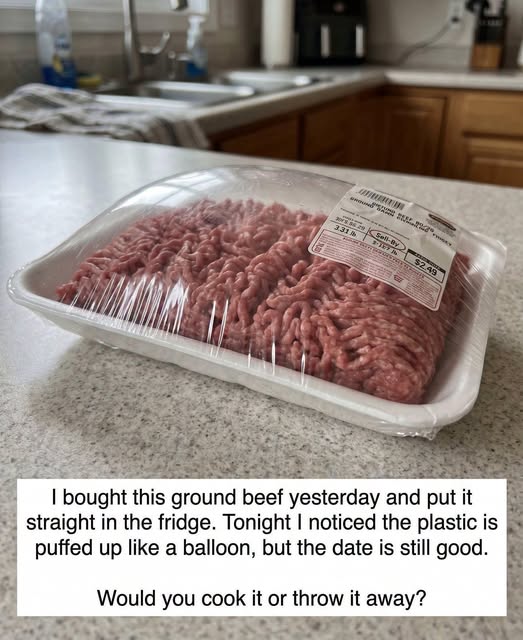
Puffed ground beef packaging before the sell-by date can be a warning sign. Learn what swelling may mean, when the meat should be discarded, and how to handle it safely.
What to Do With Puffed Ground Beef Packaging Before the Sell-By Date
You open the refrigerator and notice something unusual: the package of ground beef looks puffed, swollen, or inflated, even though the sell-by date is still several days away. Should you cook it, smell it, or simply throw it away?
When it comes to raw ground beef, it is better to be cautious. A swollen package can sometimes occur because of the type of packaging used, but unexpected or significant swelling may indicate that something has gone wrong with the product or packaging.
Why Does Ground Beef Packaging Become Puffed?
Ground beef is often sold in sealed plastic trays or vacuum/modified-atmosphere packaging. These packages can contain gases designed to help maintain the meat’s appearance and quality.
However, noticeable swelling can also occur when microorganisms produce gases inside the package. You cannot determine whether the meat is safe simply by looking at the sell-by date.
The important question is whether the package looks normal for the type of packaging or has become unusually swollen.
Does the Sell-By Date Mean the Beef Is Safe?
Not necessarily.
A sell-by date is primarily intended to help retailers manage inventory. It does not mean that food remains safe regardless of how it has been stored or whether the packaging has changed.
Temperature control is also extremely important. Raw ground beef should remain properly refrigerated, and leaving it at unsafe temperatures can allow bacteria to multiply even before the printed date.
So, if the package is unusually swollen, don’t rely on the date alone.
What Should You Do With a Swollen Package?
If you notice significant or unexpected puffing, the safest approach is to avoid eating the meat.
Don’t puncture the package to release the air. Don’t taste the beef, and don’t assume that cooking will automatically make questionable meat safe.
If you recently purchased it, consider taking it back to the store for a refund or replacement. If you need to dispose of it, place it securely in the trash while avoiding contact between the raw meat and other foods.
What If It Smells Bad?
An unusual, sour, rotten, or otherwise unpleasant odor is another reason to avoid the meat.
However, don’t use smell as your only safety test. Some dangerous bacteria may not produce an obvious smell or visible change.
Likewise, color alone isn’t always a reliable indicator. Ground beef can naturally change color as it is exposed to oxygen, so color should be considered together with packaging condition, storage history, and other signs of spoilage.
What If the Package Is Leaking?
A leaking package deserves extra caution.
Raw beef juices can contaminate refrigerator shelves, drawers, countertops, and other foods. If the package is leaking:
- Keep it away from ready-to-eat foods.
- Place it in a leak-proof container or bag.
- Clean and sanitize any surface that came into contact with the raw juices.
- Wash your hands thoroughly after handling it.
- If the meat also appears swollen, damaged, or otherwise abnormal, don’t eat it.
What About Slight Puffing?
Not every slightly raised package automatically means spoiled meat.
Some commercially packaged meats are intentionally packaged with gases that can make the package look somewhat different from traditional vacuum-sealed packaging. The appearance can also change during transportation or refrigeration.
That’s why the type of packaging matters.
If you are unsure whether the amount of swelling is normal for that particular product, the safest choice is to check the manufacturer’s guidance or contact the retailer rather than taking a chance with raw ground beef.
Can Cooking Make Spoiled Ground Beef Safe?
Cooking ground beef thoroughly is essential for reducing the risk from many harmful bacteria, but you shouldn’t use cooking as a way to rescue meat that appears spoiled or has been mishandled.
Some microorganisms can produce substances that aren’t necessarily eliminated simply because the meat reaches a cooking temperature.
For questionable meat, the safest strategy is prevention: when in doubt, throw it out.
How to Store Ground Beef Safely
To reduce the risk of spoilage:
- Keep raw ground beef refrigerated at 40°F (4°C) or below.
- Refrigerate it promptly after purchasing.
- Keep it separated from ready-to-eat foods.
- Store it on the lowest refrigerator shelf to prevent juices from dripping onto other foods.
- If you won’t use it soon, freeze it.
- Thaw frozen beef safely in the refrigerator, cold water, or the microwave—not on the kitchen counter.
- Wash your hands, utensils, and surfaces after handling raw meat.
The Bottom Line
A sell-by date should never override obvious changes in the condition of the package. If ground beef has become unusually puffed, leaking, damaged, or otherwise suspicious, don’t open it just to investigate and don’t taste it.
A small change in package appearance may sometimes be related to the packaging method, but significant or unexpected swelling is a reason to be cautious.
When you’re uncertain about the safety of raw ground beef, replacing the package is far better than risking foodborne illness.